News
Showing 200 articles
January 16, 2026
-
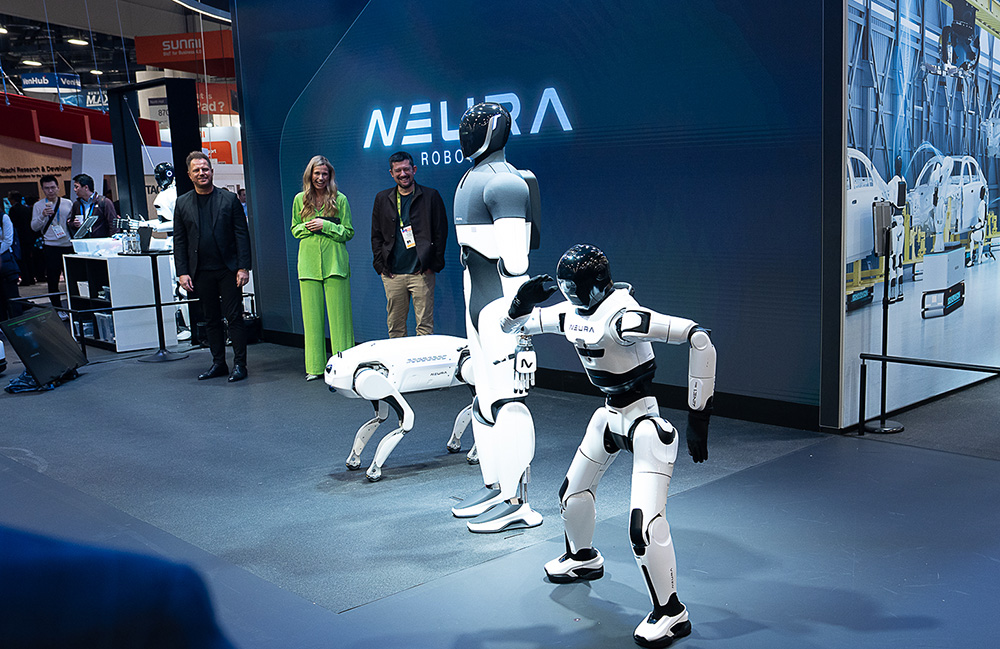 NEURA Robotics partners with Bosch to advance German-made robotics
NEURA Robotics and Bosch plan to co-develop AI-based core and functional software, as well as intuitive user interfaces.
- Humanoid Market to Reach $200B by 2035 Barclays Says
The humanoid robotics market is on track to reach $200 billion by 2035, according to a report from Barclays. Zornitsa Todorova, team director for Thematic FICC Research at Barclays, discusses with Ed Ludlow on "Bloomberg Tech." (Source: Bloomberg)
-
 IEEE Medal of Honor Recipient Is Nvidia’s CEO Jensen Huang
Jensen Huang, cofounder and CEO of Nvidia, is the 2026 IEEE Medal of Honor recipient. The IEEE honorary member is being recognized for his “leadership in the development of graphics processing units and their application to scientific computing and artificial intelligence.” The news was announced on 6 January by IEEE’s president and CEO, Mary Ellen Randall, at the Consumer Electronics Show in Las Vegas. Huang helped found Nvidia in 1993. Under his direction, the company introduced the programmable GPU six years later. The device sparked extraordinary advancements that have transformed fields including artificial intelligence, computing, and medicine—influencing how technology improves society. “[Receiving the IEEE Medal of Honor] is an incredible honor, ” Huang said at the CES event. “I thank [IEEE] for this incredible award that I receive on behalf of all the great employees at Nvidia.” With a US $2 million prize the award underscores IEEE’s commitment to celebrating visionaries who drive the future of technology for the benefit of humanity. “The IEEE Medal of Honor is the pinnacle of recognition and our most prestigious award,” Randall said at the event. “[Jensen] Huang’s leadership and technical vision have unlocked a new era of innovation. “His vision and subsequent development of [Nvidia’s first GPU hardware] is emblematic of the [award].” Huang’s impact on technology Huang’s impact has been acknowledged beyond the realm of engineering. He was named as one of the “Architects of AI,” a group of eight tech leaders who were collectively named Time magazine’s 2025 Person of the Year. He was also featured on a 2021 cover of Time magazine, was named the world’s top-performing CEO for 2019 by Harvard Business Review, and was Fortune’s 2017 Businessperson of the Year. He is also an IEEE–Eta Kappa Nu eminent member. This year’s IEEE Medal of Honor, along with other high-profile IEEE awards, will be presented during the IEEE Honors Ceremony, to be held in April in New...
-
 Video Friday: Bipedal Robot Stops Itself From Falling
Video Friday is your weekly selection of awesome robotics videos, collected by your friends at IEEE Spectrum robotics. We also post a weekly calendar of upcoming robotics events for the next few months. Please send us your events for inclusion. ICRA 2026: 1–5 June 2026, VIENNA Enjoy today’s videos! This is one of the best things I have ever seen. [ Kinetic Intelligent Machine LAB ] After years of aggressive testing and pushing the envelope with U.S. Army and Marine Corps partners, the Robotic Autonomy in Complex Environments with Resiliency (RACER) program approaches its conclusion. But the impact of RACER will reverberate far beyond the program’s official end date, leaving a legacy of robust autonomous capabilities ready to transform military operations and inspire a new wave of private-sector investment. [ DARPA ] Best-looking humanoid yet. [ Kawasaki ] COSA (Cognitive OS of Agents) is a physical-world-native Agentic OS that unifies high-level cognition with whole-body motion control, enabling humanoid robots to think while acting in real environments. Powered by COSA, Oli becomes the first humanoid agent with both advanced loco-manipulation and high-level autonomous cognition. [ LimX Dynamics ] Thanks, Jinyan! The 1X World Model’s latest update is a paradigm shift in robot learning: NEO now uses a physics-grounded video model (World Model) to turn any voice or text prompt into fully autonomous action, even for completely novel tasks and objects NEO has never seen before. By leveraging internet-scale video data fine-tuned on real robot experience, NEO can visualize future actions, predict outcomes, and execute them with humanlike understanding–all without prior examples. This marks the critical first step in NEO being able to collect data on its own to master new tasks all by itself. [ 1X ] I’m impressed by the human who was mocapped for this. [ PNDbotics ] We introduce the GuideData Dataset, a collection of qualitative data, focusing on the interactions betwee...
-
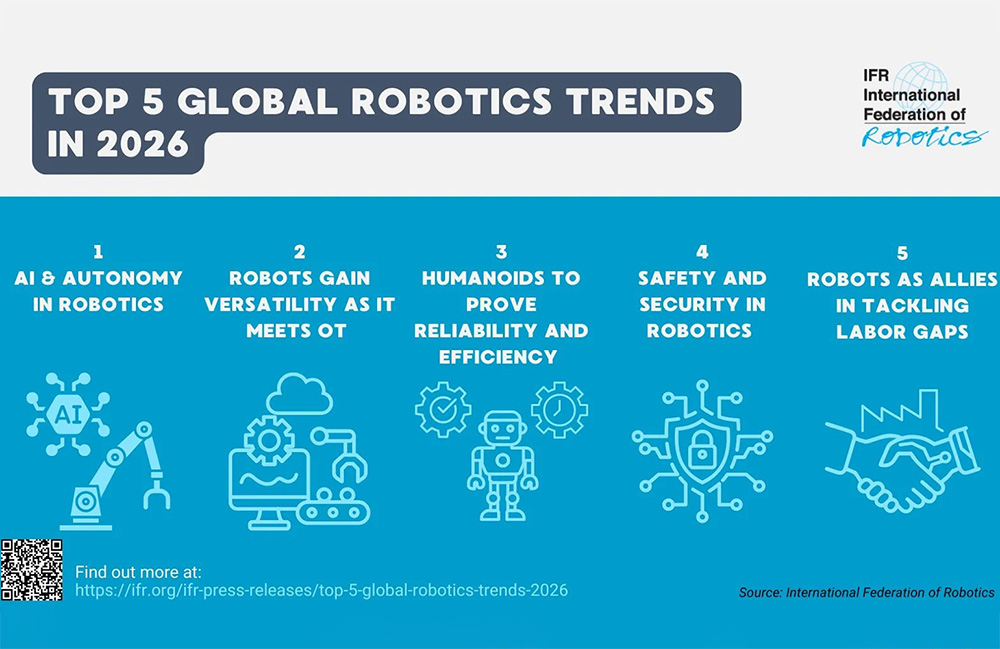 IFR names top 5 global robotics trends of 2026
The IFR has made its predictions of the top 5 robotics industry trends for 2026, including an increased focus on cybersecurity. The post IFR names top 5 global robotics trends of 2026 appeared first on The Robot Report.
-
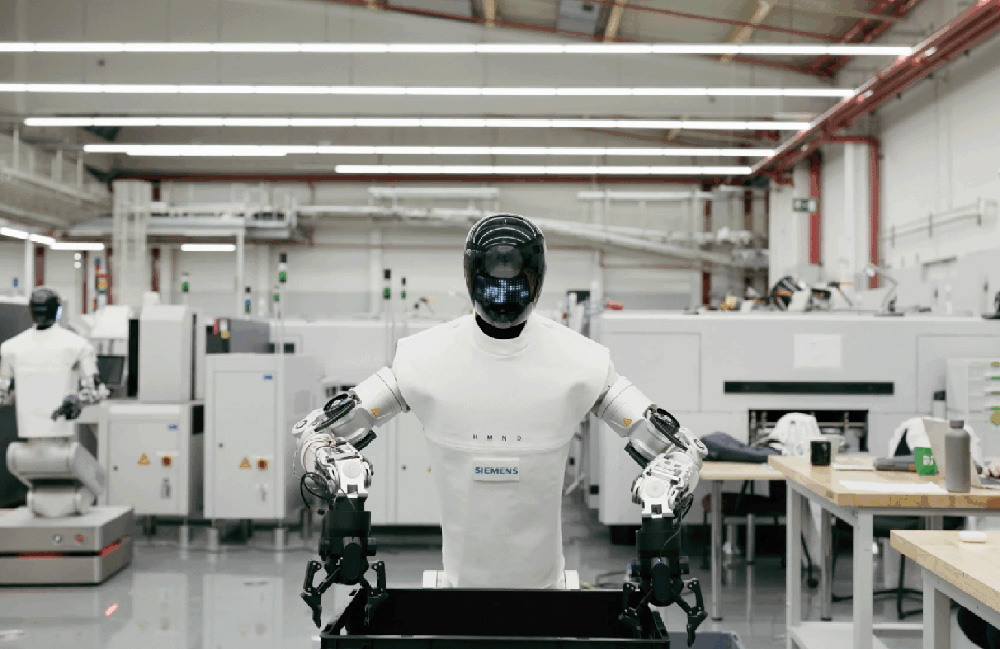 Humanoid and Siemens proof of concept shows the way to industrial deployments
Humanoid successfully demonstrated its HMND 01 Alpha wheeled mobile manipulator at a Siemens production facility in Germany. The post Humanoid and Siemens proof of concept shows the way to industrial deployments appeared first on The Robot Report.
-
 Humanoid and Siemens proof of concept shows the way to industrial deployments
Humanoid successfully demonstrated its HMND 01 Alpha wheeled mobile manipulator at a Siemens production facility in Germany.
-
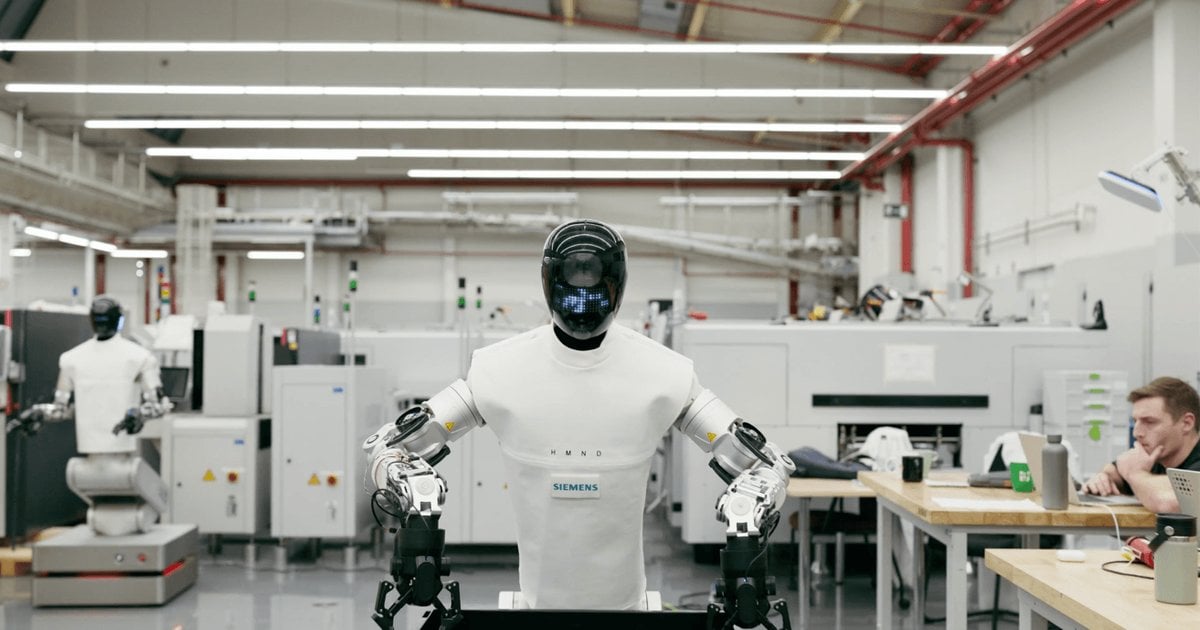 Automation: The Humanoid Robots Inside Siemens’ Factory
Siemens and robotics company Humanoid have successfully trialled human-like robots in an electronics factory in Germany to automate repetitive tasks
-
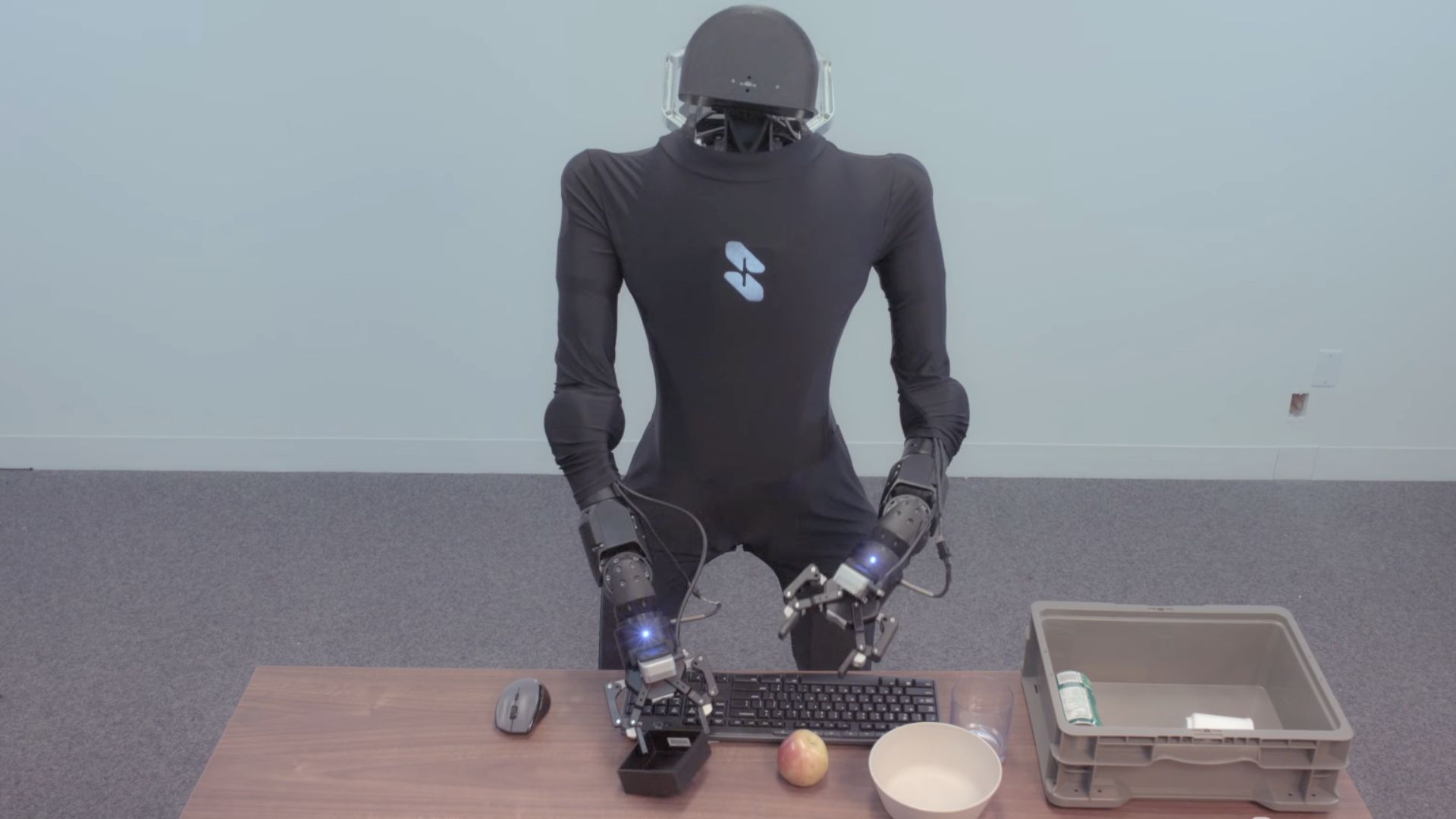 Skild AI brain lets robots watch videos to master everyday tasks
New AI model lets robots learn from human videos, handling tasks from cooking to assembly with minimal training and strong adaptability.
-
 HMND 01: UK Humanoid robot shows logistics readiness at Siemens plant
Humanoid and Siemens complete a live factory trial using a humanoid robot, marking an early step toward real-world industrial deployment.
-
 Hot Wearables From CES, Ikea Ups Its Smart Home Offerings, Humanoid Robots at CES | Tech Today
Kara Tsuboi covers today's top tech stories: New wearables are vying for your wrists and fingers; Ikea's smart lamps and speakers launch at reasonable prices; and a humanoid robot is ready to work assembly lines.
-
 CES recap: New wearables, Ikea's smart home and lots of humanoid robots | Tech Today
Kara Tsuboi covers today's top tech stories: New wearables are vying for your wrists and fingers; Ikea's smart lamps and speakers launch at reasonable prices; and a humanoid robot is ready to work assembly lines.
-
 Robot Talk Episode 140 – Robot balance and agility, with Amir Patel
Claire chatted to Amir Patel from University College London about designing robots with the agility and manoeuvrability of a cheetah. Amir Patel is an Associate Professor of Robotics & AI in the Department of Computer Science at University College London (UCL). His research uses robotics methods—sensor fusion, computer vision, mechanical modelling, and optimal control—to understand […]
-
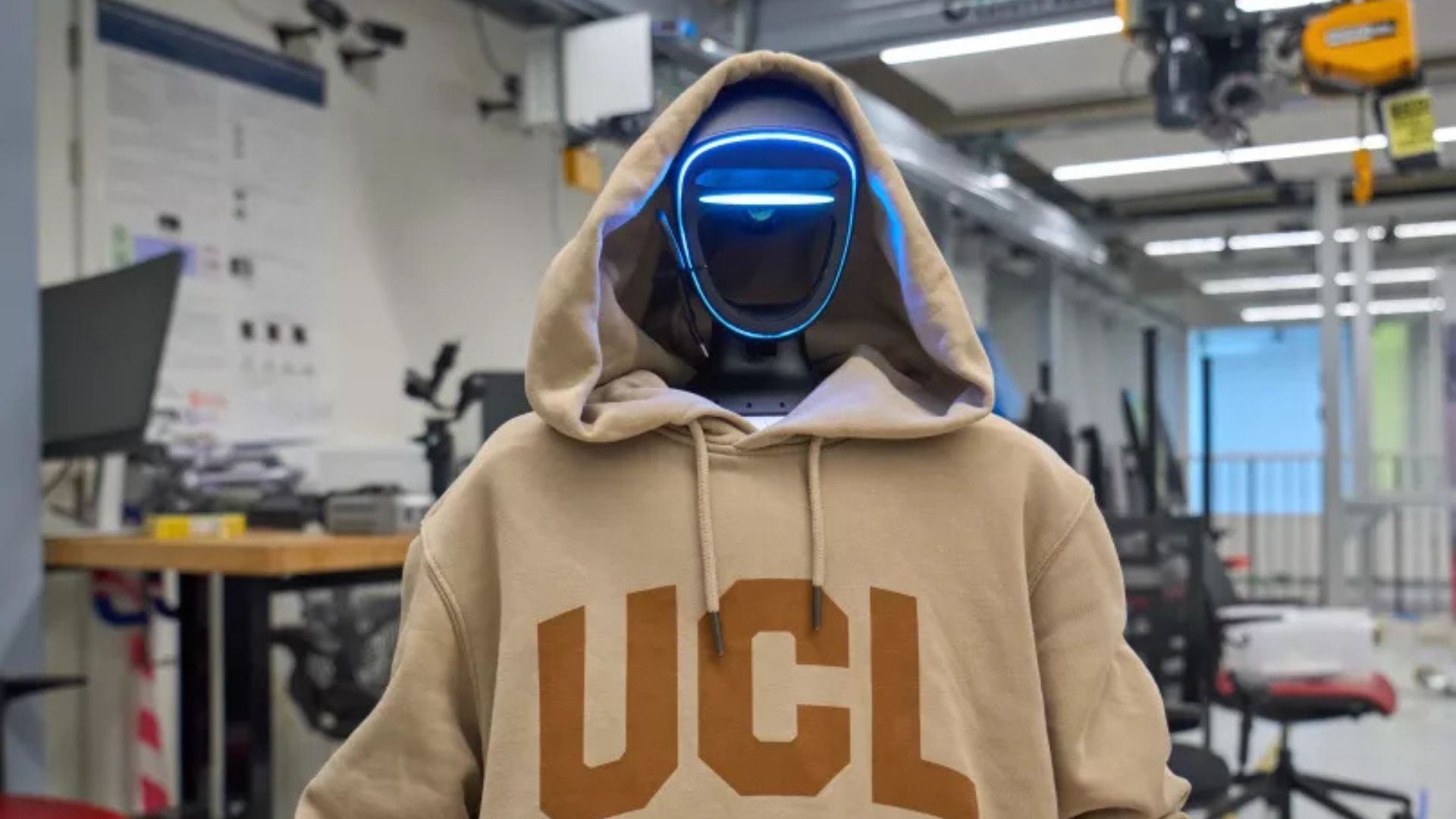 UK lab’s humanoid robots get NVIDIA grant to turn sound into motion
The research aims to achieve audio-driven interaction with humanoid robots using NVIDIA's compute resources.
-
 Battery Manufacturer to Deploy Humanoid Robots on the Assembly Line
LUOYANG, China—CATL has become the first battery manufacturer to deploy humanoid robots at scale on the assembly line, replacing humans in critical tasks.
-
 The breakthrough that makes robot faces feel less creepy
Humans pay enormous attention to lips during conversation, and robots have struggled badly to keep up. A new robot developed at Columbia Engineering learned realistic lip movements by watching its own reflection and studying human videos online. This allowed it to speak and sing with synchronized facial motion, without being explicitly programmed. Researchers believe this breakthrough could help robots finally cross the uncanny valley.
- Hyundai Poaches Former Tesla Robotics Guru as it Maps Out Atlas Humanoid Growth
Hyundai Motor Group ($HYMLF) stepped up its push into humanoid robotics today after poaching the former vice president in charge of Tesla’s ($TSLA) Optimus robot. H...
- 1X says it's moving away from using humans to train its humanoid robot
Humanoid robot companies employ armies of human operators to train their machines by doing tasks like squatting and washing dishes.
-
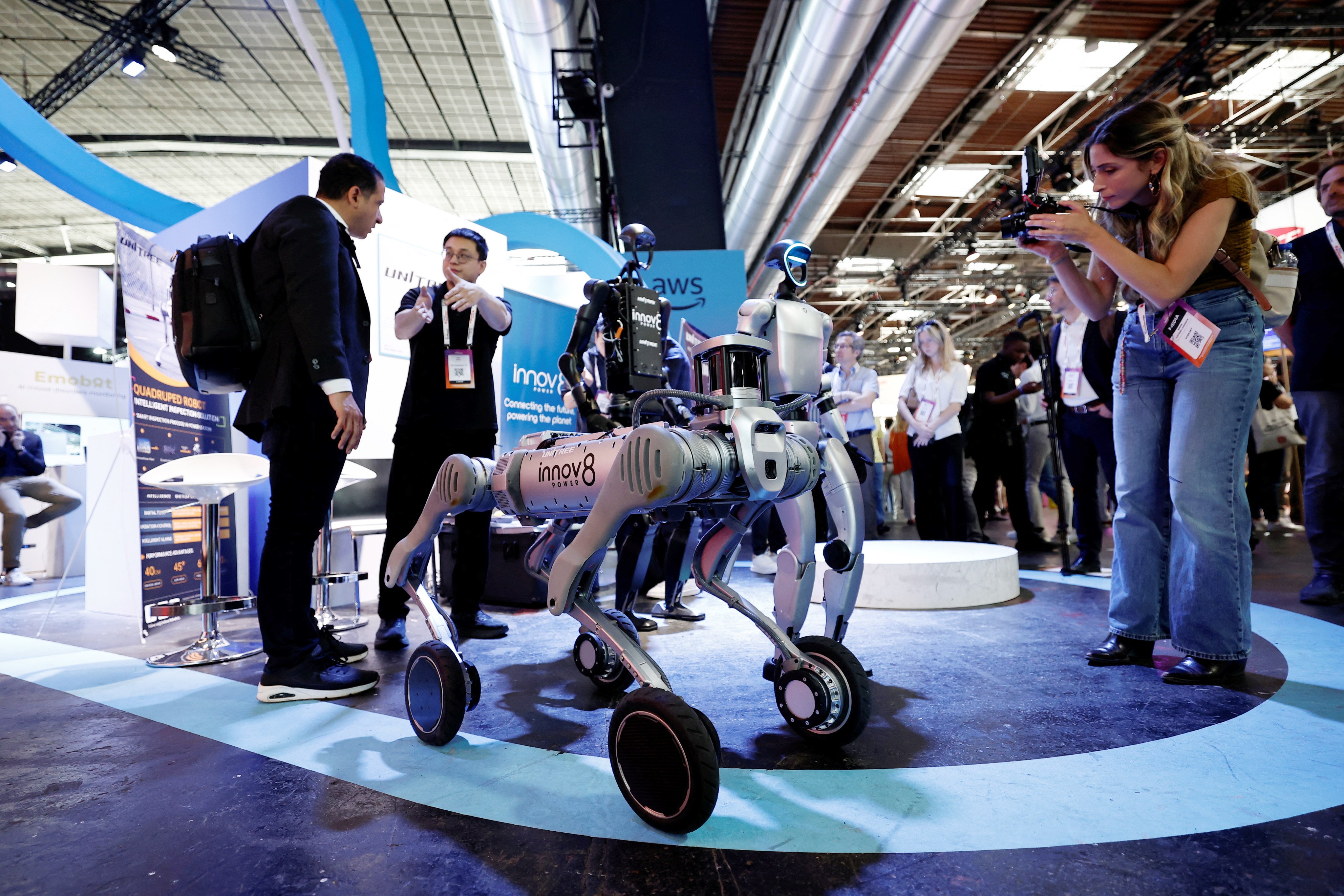 China dominates global humanoid robot market with over 80% of installations
AgiBot and Unitree help China capture bulk of global deployments in 2025 as market heads for sixfold growth by 2027, report says.
- Hyundai Motor Group to appoint former head of Tesla's humanoid robot program as adviser
South Korea's Hyundai Motor Group said on Friday it plans to appoint Milan Kovac, the former head of Tesla's humanoid robot program, as an adviser as it seeks to bolster its competitiveness in robotics and artificial intelligence.
- AGIBOT's Humanoid Robots Take Home Multiple Best of CES 2026 Awards Following U.S. Debut
AGIBOT, a leading robotics company specializing in embodied intelligence, today marked its official entry into the U.S. market at CES 2026 with the debut of the industry's most complete humanoid and quadruped robotics lineup to date. Showcasing the AGIBOT A2 Series, X2 Series, G2 Series, and D1 Series, AGIBOT gained widespread recognition from prominent media outlets at CES 2026. Underscoring the company's growing influence in the global robotics industry, AGIBOT took home several Best of CES 20
-
 AI will transform the ‘human job’ and enhance skills, says science minister
Patrick Vallance says robots would take away ‘repetitive’ tasks, but Sadiq Khan warns AI will usher in ‘new era of mass unemployment’
-
 How about a humanoid robot as your running partner?
A new video released by California-based tech firm Figure AI shows its humanoid robot out for a run with workers from the firm. The robot’s running style looks steady and natural as it jogs along with three guys (or four if you count the person recording it). It even raises the idea of one day […]
- Humanoid and Siemens complete proof of concept to test humanoid robot
Humanoid, a UK-based AI and robotics company, and Siemens, a leading technology company, have successfully completed a proof of concept (POC) demonstrating the use of humanoid robots in industrial logistics. Humanoid’s HMND 01 wheeled Alpha robot was deployed in real operations at a Siemens facility, marking a significant step toward the deployment of humanoid robots...
-
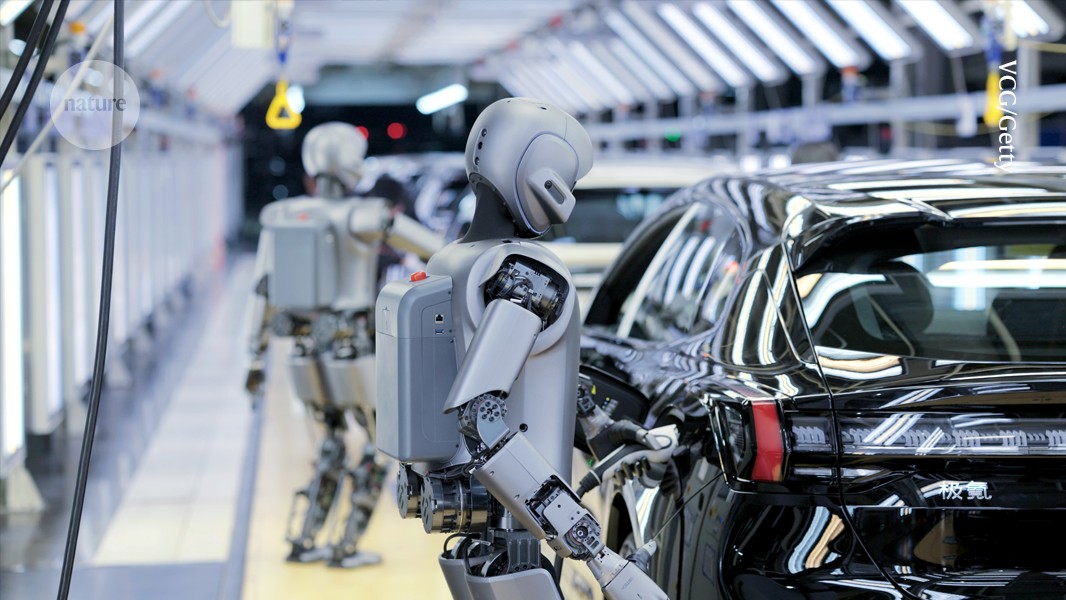 Humanoid robots step up their game: how useful are the latest droids?
Nature - Chinese factories have embraced the machines, but many activities still require human operators.

January 15, 2026
-
 Siemens completes pilot test of humanoid robot
Humanoid says its HMND 01 wheeled Alpha robot picked totes from a storage stack, transported them to a conveyor, and placed them at the designated pickup point for human operators.
-
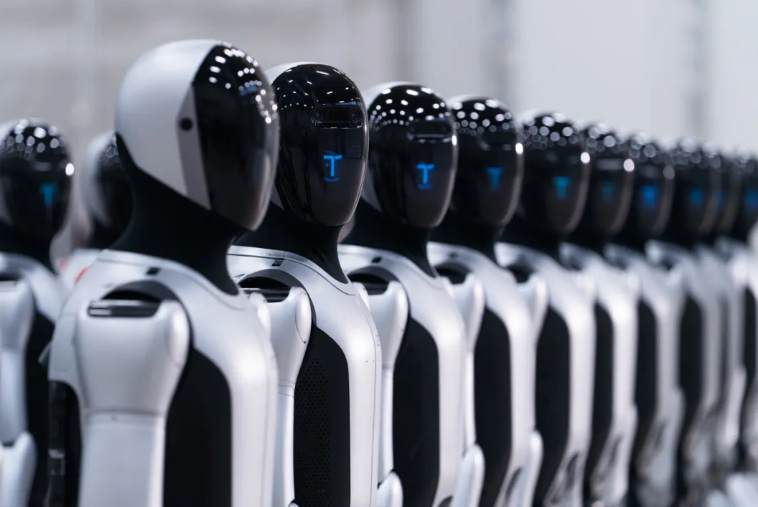 To jointly enhance the quality of humanoid robots and components, UBTECH and NRT&E Guangzhou enter a strategic partnership
img:-moz-broken {-moz-force-broken-image-icon:1;min-width:24px;min-height:24px} ...
-
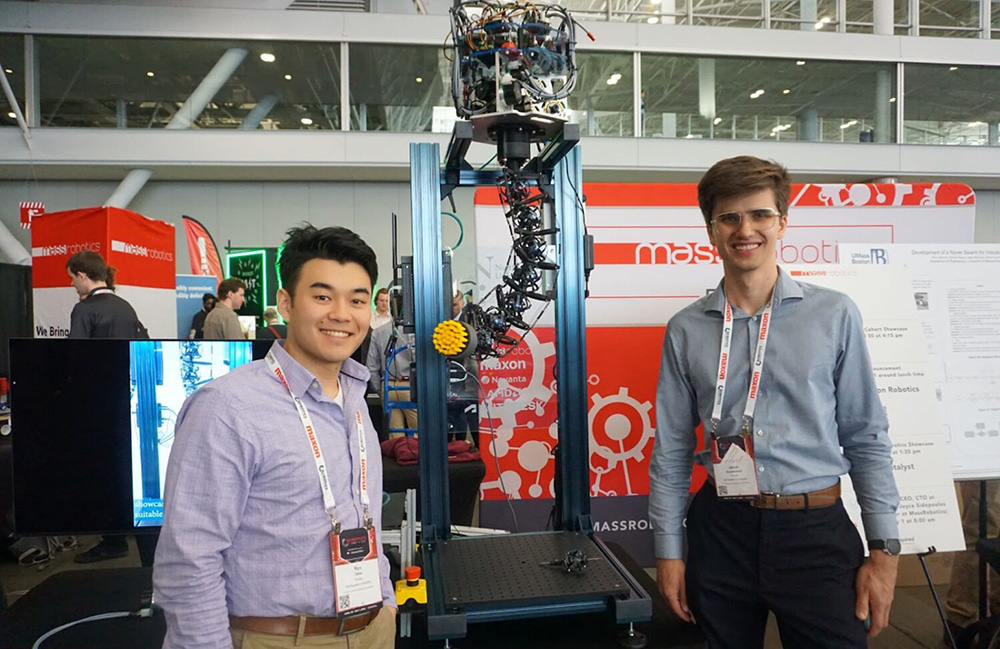 MassRobotics opens applications for fourth Form and Function Robotics Challenge
The latest MassRobotics Form and Function challenge will culminate with in-person demonstrations at the Robotics Summit & Expo. The post MassRobotics opens applications for fourth Form and Function Robotics Challenge appeared first on The Robot Report.
-
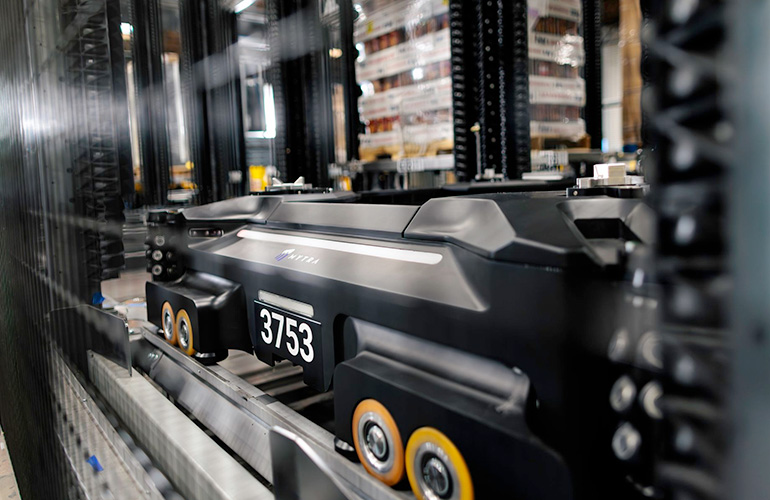 Mytra closes $120M funding for pallet-storing robots
Mytra Robotics has Series C funding to scale its automated warehouse storage and retrieval systems, whose shuttles can move loaded pallets. The post Mytra closes $120M funding for pallet-storing robots appeared first on The Robot Report.
-
 Robots are the future of manufacturing. What happens to human workers?
Companies from around the world traveled to the Consumer Electronics Show in Las Vegas this month to show off their latest tech. But one category always catches everyone’s eye: robots. Ever since Karel Čapek introduced the word “robot” in his 1920 play “R.U.R.,” or Rossum’s Universal Robots, people have fantasized about a world run by...
-
 How to Gain Footing in AI as the Ground Keeps Shifting
The newly released Preparing for a Career as an AI Developer guide from the IEEE Computer Society argues that the most durable path to artificial intelligence jobs is not defined by mastering any single tool or model. Instead, it depends on cultivating a balanced mix of technical fundamentals and human-centered skills—capabilities that machines are unlikely to replace. AI is reshaping the job market faster than most academic programs and employers can keep up with, according to the guide. AI systems now can analyze cybercrime, predict equipment failures in manufacturing, and generate text, code, and images at scale, leading to mass layoffs across much of the technology sector. It has unsettled recent graduates about to enter the job market as well as early-career professionals. Yet the demand for AI expertise remains strong in the banking, health care, retail, and pharmaceutical industries, whose businesses are racing to deploy generative AI tools to improve productivity and decision-making—and keep up with the competition. The uneven landscape leaves many observers confused about how best to prepare for a career in a field that is redefining itself. Addressing that uncertainty is the focus of the guide, which was written by San Murugesan and Rodica Neamtu. Murugesan, an IEEE life senior member, is an adjunct professor at Western Sydney University, in Penrith, Australia. Neamtu, an IEEE member, is a professor of teaching and a data-mining researcher at Worcester Polytechnic Institute, in Massachusetts. The downloadable 24-page PDF outlines what aspiring AI professionals should focus on, which skills are most likely to remain valuable amid rapid automation, and why AI careers are increasingly less about building algorithms in isolation and more about applying them thoughtfully across domains. The guide emphasizes adaptability as the defining requirement for entering the field, rather than fluency in any particular programming language or framework. Why AI careers ...
-
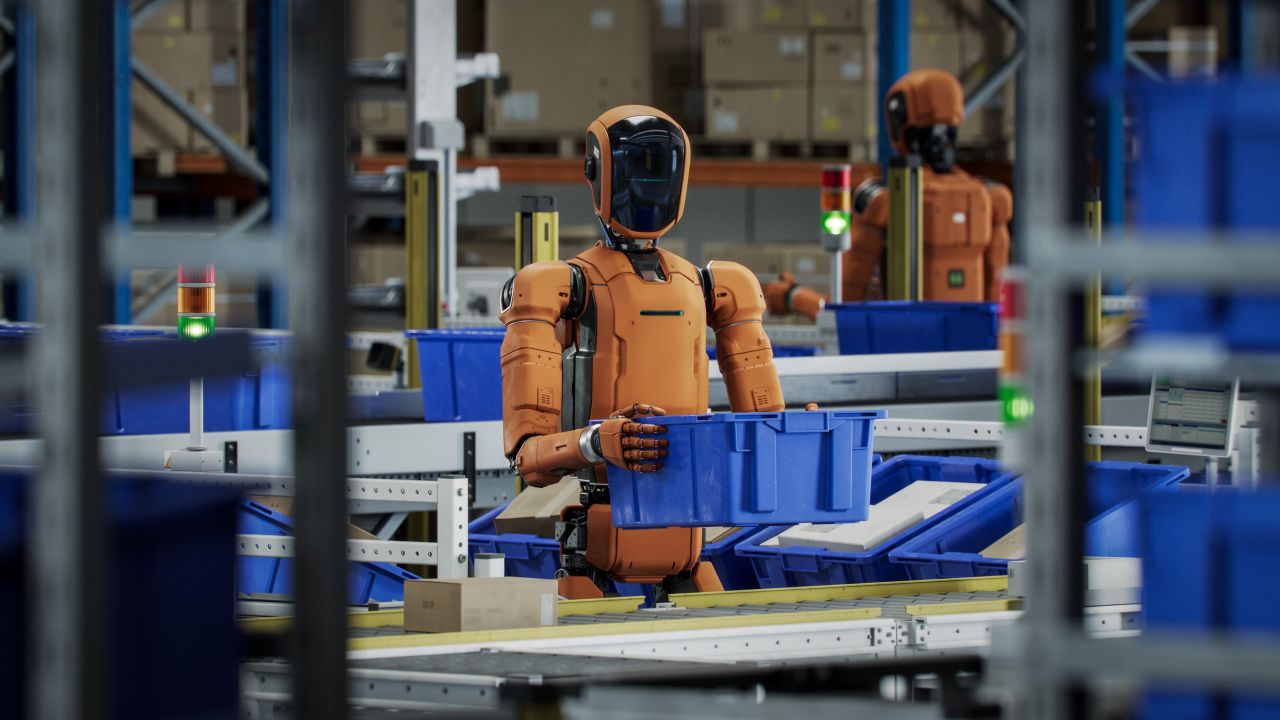 Humanoid Robot Actuator Market Could Approach $10B by 2031
Increased deployment of humanoid robots across sectors is causing a boom in actuator demand.
-
 China leads world in robotics and other physical AI patents: analysis
US companies close 2nd in emerging artificial intelligence race, South Korea distant 3rd
-
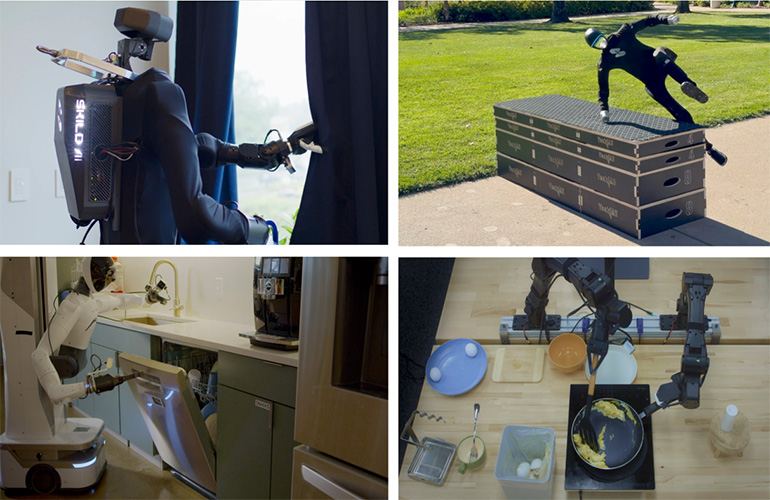 Skild AI raises $1.4B to build ‘omni-bodied’ robot brain
Skild AI has received investment from SoftBank, NVIDIA, Bezos Expeditions, and more as it builds a brain to operate any robot. The post Skild AI raises $1.4B to build ‘omni-bodied’ robot brain appeared first on The Robot Report.
January 14, 2026
-
 Caterpillar partners with NVIDIA to lay the foundation for autonomous systems
Caterpillar plans to make upgrades with NVIDIA to ensure that its assets are ready for AI-assisted and potentially autonomous operations. The post Caterpillar partners with NVIDIA to lay the foundation for autonomous systems appeared first on The Robot Report.
-
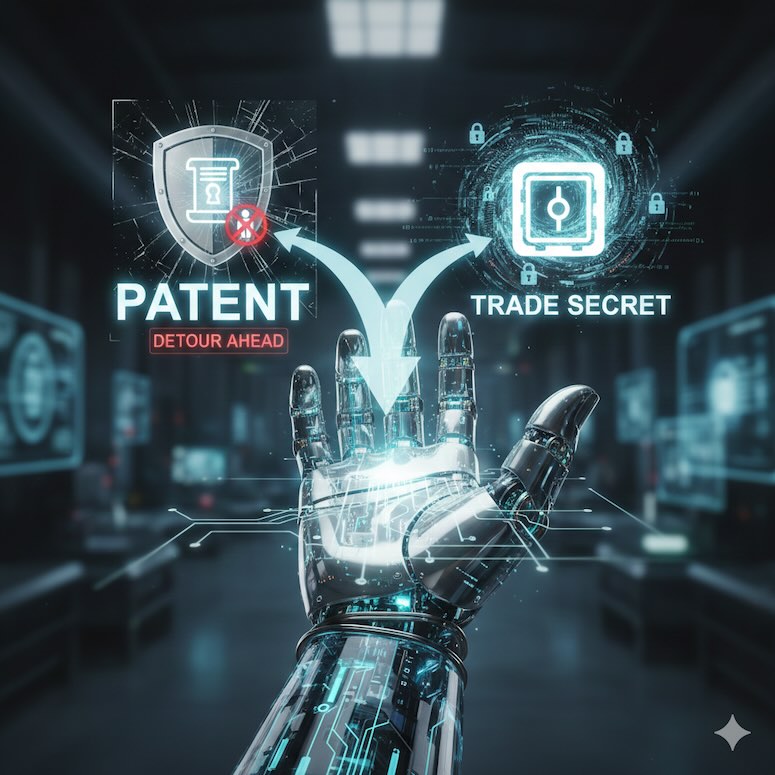 Patents vs. trade secrets in the age of AI robotics
Greenberg Traurig shares insights about how to choose the right IP strategy when algorithms, and not humans, drive innovation The post Patents vs. trade secrets in the age of AI robotics appeared first on The Robot Report.
-
 The Ultimate 3D Integration Would Cook Future GPUs
Peek inside the package of AMD’s or Nvidia’s most advanced AI products, and you’ll find a familiar arrangement: The GPU is flanked on two sides by high-bandwidth memory (HBM), the most advanced memory chips available. These memory chips are placed as close as possible to the computing chips they serve in order to cut down on the biggest bottleneck in AI computing—the energy and delay in getting billions of bits per second from memory into logic. But what if you could bring computing and memory even closer together by stacking the HBM on top of the GPU? Imec recently explored this scenario using advanced thermal simulations, and the answer—delivered in December at the 2025 IEEE International Electron Device Meeting (IEDM)—was a bit grim. 3D stacking doubles the operating temperature inside the GPU, rendering it inoperable. But the team, led by Imec’s James Myers, didn’t just give up. They identified several engineering optimizations that ultimately could whittle down the temperature difference to nearly zero. 2.5D and 3D Advanced Packaging Imec started with a thermal simulation of a GPU and four HBM dies as you’d find them today, inside what’s called a 2.5D package. That is, both the GPU and the HBM sit on substrate called an interposer, with minimal distance between them. The two types of chips are linked by thousands of micrometer-scale copper interconnects built into the interposer’s surface. In this configuration, the model GPU consumes 414 watts and reaches a peak temperature of just under 70 °C—typical for a processor. The memory chips consume an additional 40 W or so and get somewhat less hot. The heat is removed from the top of the package by the kind of liquid cooling that’s become common in new AI data centers. RELATED: Future Chips Will Be Hotter Than Ever “While this approach is currently used, it does not scale well for the future—especially as it blocks two sides of the GPU, limiting future GPU-to-GPU connections inside the package,” Yukai Chen, a se...
-
 Stretchable OLEDs Just Got a Huge Upgrade
Wearable displays are catching up with phones and smartwatches. For decades, engineers have sought OLEDs that can bend, twist, and stretch while maintaining bright and stable light. These displays could be integrated into a new class of devices—woven into clothing fabric, for example, to show real-time information, like a runner’s speed or heart rate, without breaking or dimming. But engineers have always encountered a trade-off: The more you stretch these materials, the dimmer they become. Now, a group co-led by Yury Gogotsi, a materials scientist at Drexel University in Philadelphia, has found a way around the problem by employing a special class of materials called MXenes—which Gogotsi helped discover—that maintain brightness while being significantly stretched. The team developed an OLED that can stretch to twice its original size while keeping a steady glow. It also converts electricity into light more efficiently than any stretchable OLED before it, reaching a record 17 percent external quantum efficiency—a measure of how efficiently a device turns electricity into light. The “Perfect Replacement” Gogotsi didn’t have much experience with OLEDs when, about five years ago, he teamed up with Tae-Woo Lee, a materials scientist at Seoul National University, to develop better flexible OLEDs, driven by the ever-increasing use of flexible electronics like foldable phones. Traditionally, the displays are built from multiple stacked layers. At the base, a cathode supplies electrons that enter the adjacent organic layers, which are designed to conduct this charge efficiently. As the electrons move through these layers, they meet positive charge injected by an indium tin oxide (ITO) film. The moment these charges combine, the organic material releases energy as light, creating the illuminated pixels that make up the image. The entire structure is sealed with a glass layer on top. The ITO film—adhered to the glass—serves as the anode, allowing current to pass through th...
-
 Pebble Brings Open Wearables to Your Wrist (or Finger)
History repeated itself at CES 2026. At this year’s event, Pebble—a popular but short-lived smartwatch pioneer of the 2010s—was on the show floor displaying its latest wearables, much as it had a decade ago. And the person providing that demonstration was again Eric Migicovsky, Pebble’s original founder. Of course, not everything is the same. Pebble’s first launch followed a startup playbook. The company received VC funding, grew to several hundred employees, and quickly sold to Fitbit in 2016. This time around, Pebble is more like a passion project. The company is self-funded with just five full-time employees, PebbleOS is open source, and Migicovsky’s goal is not to revolutionize wearables but instead to return them to their roots. “I had a box of Pebbles, and I used them. Over the years, eventually, I realized I would have to use someone else’s smartwatch. I tried everything. And I found I have a very esoteric set of needs,” said Migicovsky. Pebble returns with not one, but three gadgets Pebble’s big CES 2026 reveal was the Pebble Round 2, a smartwatch with a 1.3-inch circular e-paper display. It ditches some common wearable features, like a heart rate monitor, to deliver an ultrathin 8.1-millimeter profile. However, Pebble also showed two other wearables that were announced in the months before the show: the Pebble Time 2 and the Pebble Index. The Pebble Time 2 is a larger smartwatch with a 1.5-inch rectangular e-paper display, a heart rate monitor, and a speaker. The Pebble Index is a ring with a microphone, a battery, and a button, and is meant as a companion device for quick audio notes. What these devices share is Migicovsky’s “esoteric” approach to wearable design. “I don’t want a smartphone on my wrist. I want a companion to my smartphone. I like my smartphone, so I don’t go for a run and expect it to do everything. And I also don’t want to worry about it as another gadget that needs to be charged every day.” That last part is key for Migicovsky and a s...
-
 Taking humanoid soccer to the next level: An interview with RoboCup trustee Alessandra Rossi
A core objective of RoboCup is to promote and advance robotics and AI research through the challenges offered by its various leagues. The ultimate goal of the soccer competition is that, by 2050, a team of fully autonomous humanoid robots will defeat the most recent winner of the FIFA World Cup. To bring this vision […]
January 13, 2026
-
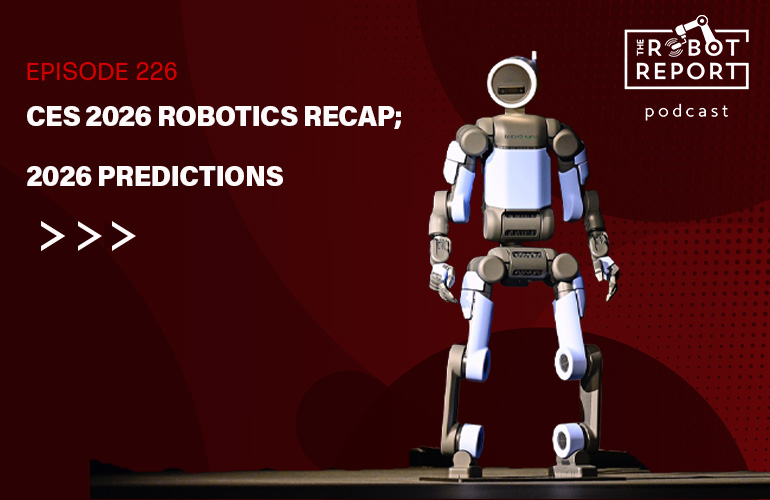 CES 2026 robotics recap; industry experts make predictions
Catch up on CES 2026 robotics highlights; explore more 2026 predictions; and analyze major acquisitions by Mobileye, Oshkosh, and Amazon. The post CES 2026 robotics recap; industry experts make predictions appeared first on The Robot Report.
-
 A3 releases full three-part national safety standard for industrial robots
A3 has published a comprehensive three-part national safety standard governing the manufacture, integration, and use of industrial robotics. The post A3 releases full three-part national safety standard for industrial robots appeared first on The Robot Report.
-
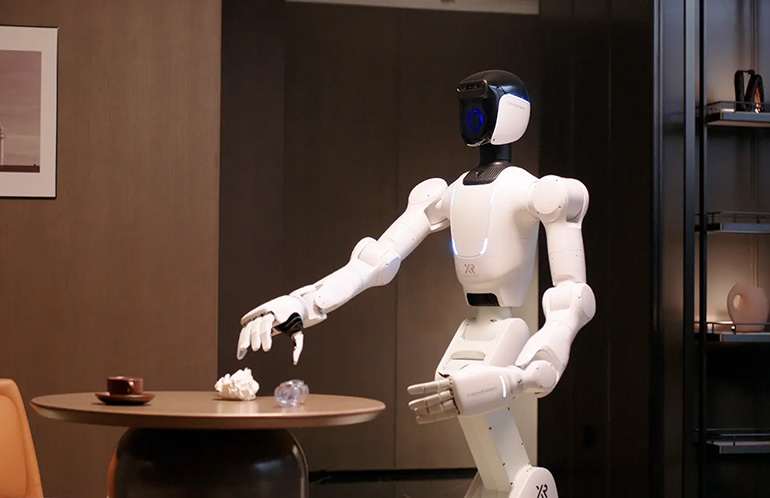 X Square Robot secures $140M in funding for AI foundation models
X Square Robot has raised $140 million to build the WALL-A model for general-purpose robots just four months after raising $100 million. The post X Square Robot secures $140M in funding for AI foundation models appeared first on The Robot Report.
-
 Meet the Two Members Petitioning to Be President-Elect Candidates
The IEEE Board of Directors has received petition intentions from IEEE Senior Member Gerardo Barbosa and IEEE Life Senior Member Timothy T. Lee as candidates for 2027 IEEE president-elect. The petitioners are listed in alphabetical order and indicate no preference. The winner of this year’s election will serve as IEEE president in 2028. For more information about the petitioners and Board-nominated candidates, visit ieee.org/pe27. You can sign their petitions at ieee.org/petition. Signatures for IEEE president-elect candidate petitions are due 10 April at 12:00 p.m. EST/16:00 p.m. UTC. IEEE Senior Member Gerardo Barbosa Gerardo Sosa Barbosa is an expert in information technology management and technology commercialization, with a career spanning innovation, entrepreneurship,and an international perspective. He began his career designing radio-frequency identification systems for real-time asset tracking and inventory management. In 2014 he founded CLOUDCOM, a software company that develops enterprise software to improve businesses’ billing and logistics operations, and serves as its CEO. Barbosa’s IEEE journey began in 2009 at the IEEE Monterrey (Mexico) Section, where he served as chair and treasurer. He led grassroots initiatives with students and young professionals. His leadership positions in IEEE Region 9 include technical activities chair and treasurer. As the 2019—2020 vice chair and 2021—2023 treasurer of IEEE Member and Geographic Activities, Barbosa became recognized as a trusted, data-driven, and collaborative leader. He has been a member of the IEEE Finance Committee since 2021 and is now its chair due to his role as IEEE treasurer on the IEEE Board of Directors. He is deeply committed to the responsible stewardship of IEEE’s global resources, ensuring long-term financial sustainability in service of IEEE’s mission. IEEE Life Senior Member Timothy T. Lee Nikon/CES Lee is a Technical Fellow at Boeing in Southern California with expertise in microelect...
-
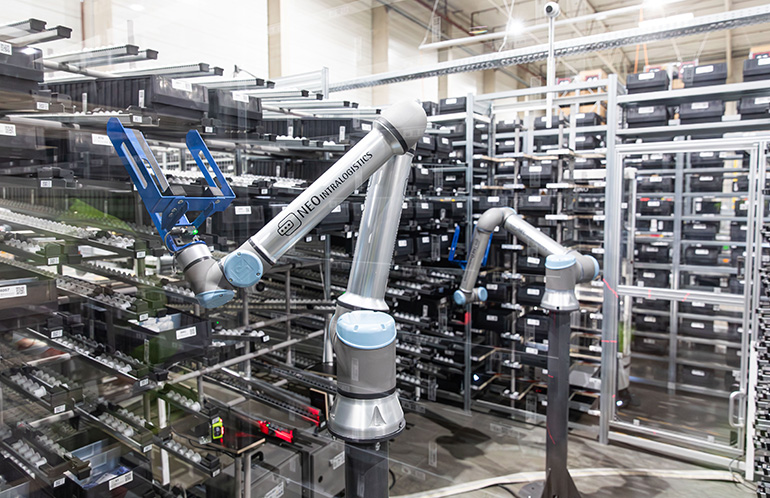 4 physical AI predictions for 2026 — and beyond, from UR
Trends such as industry-specific AI and a new data economy will affect physical AI in 2026, says a Universal Robots executive. The post 4 physical AI predictions for 2026 — and beyond, from UR appeared first on The Robot Report.
-
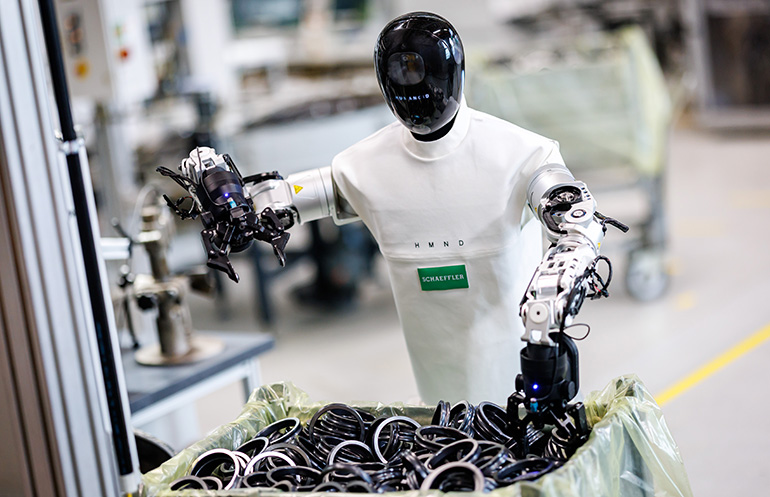 Schaeffler to deploy hundreds of Humanoid robots in its factories
Schaeffler will provide actuators for Humanoid's systems, which will be available through a robotics-as-a-service model. The post Schaeffler to deploy hundreds of Humanoid robots in its factories appeared first on The Robot Report.
January 12, 2026
-
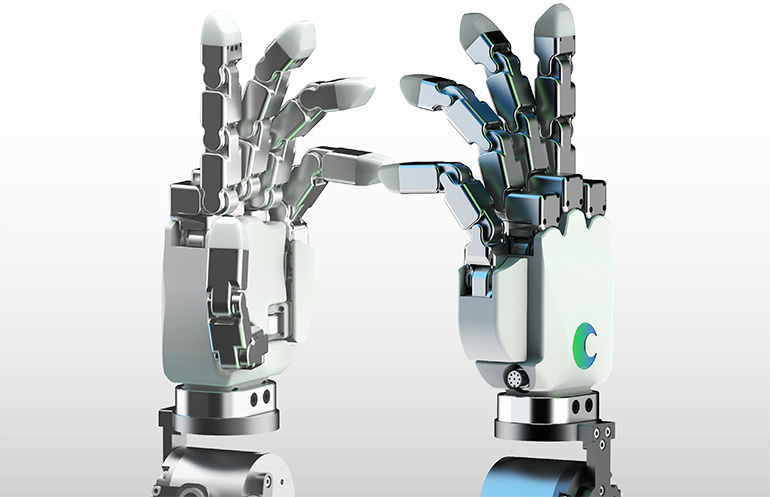 TESOLLO uses own actuator in DG-5F-S humanoid robotic hand
TESOLLO said the technology it developed in house enables a smaller and lighter 20-DoF robot hand. The post TESOLLO uses own actuator in DG-5F-S humanoid robotic hand appeared first on The Robot Report.
-
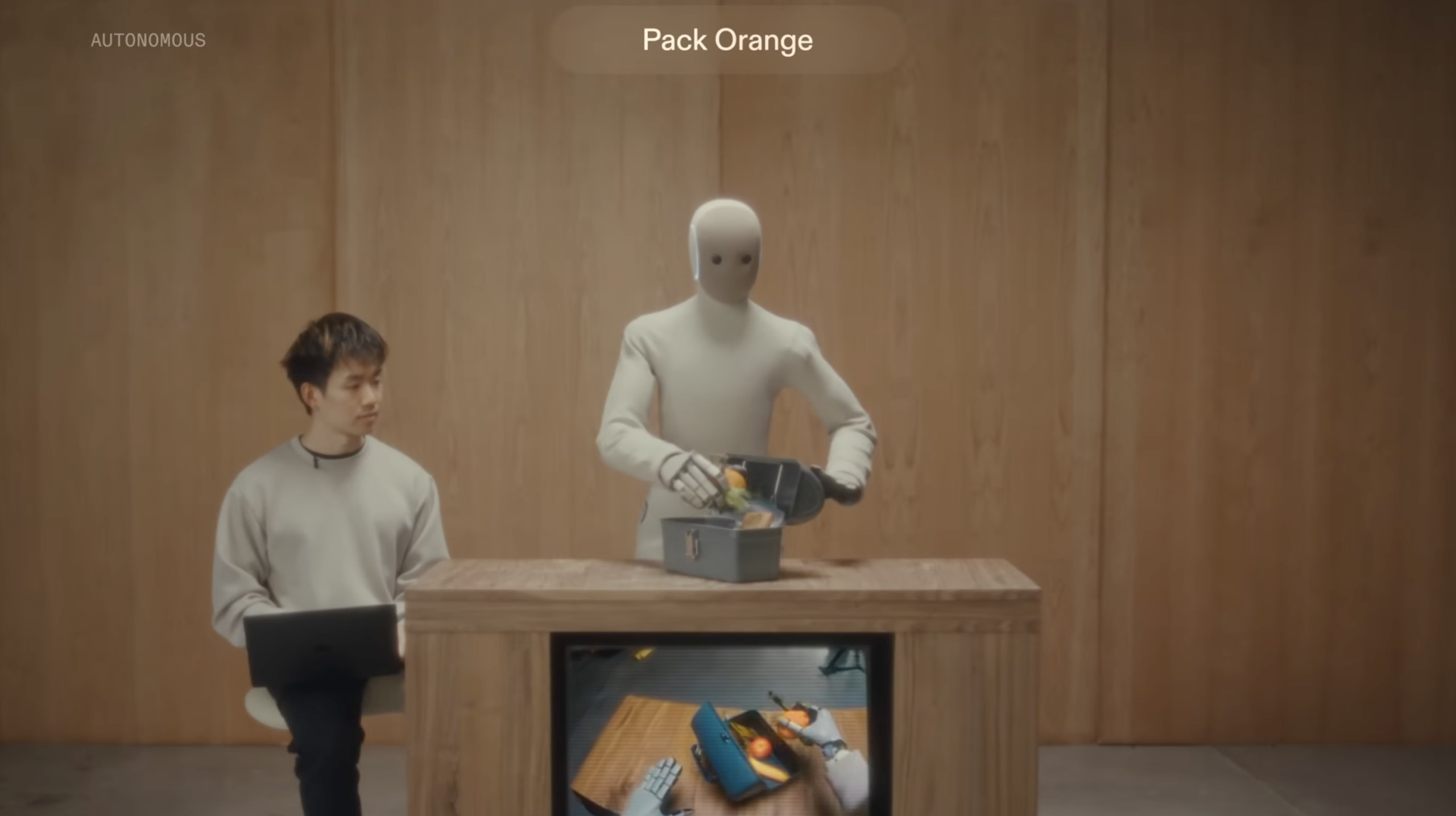 1X says NEO is “starting to learn on its own” with a new video based World Model
1X Technologies has announced what it calls a major update to its humanoid AI stack: the 1X World Model (1XWM), designed to let NEO turn natural language prompts into new robot skills on demand, including tasks it has never been explicitly trained on The post 1X says NEO is “starting to learn on its own” with a new video based World Model appeared first on Humanoid.guide.
-
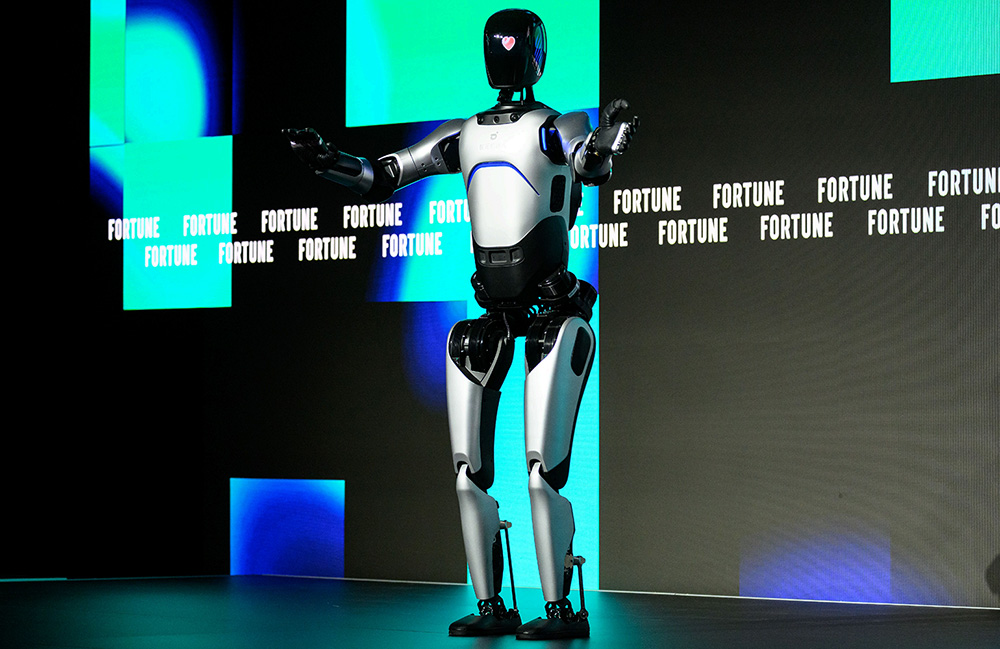 AGIBOT makes its U.S. debut with more than 5,100 robots shipped
A recent report from Omdia sheds light on the wider humanoid robot market and where AGIBOT fits into it. The post AGIBOT makes its U.S. debut with more than 5,100 robots shipped appeared first on The Robot Report.
-
 Machine-Learning System Monitors Patient Pain During Surgery
This article is part of our exclusive IEEE Journal Watch series in partnership with IEEE Xplore. In the operating room, patients undergoing procedures with local anesthesia, while still conscious, may have difficulty expressing their levels of pain. Some, such as infants or people with dementia, may not be able to communicate these feelings at all. In the search for a better way to monitor patients’ pain, a team of researchers has developed a contactless method that analyzes a combination of patients’ heart rate data and facial expressions to estimate the pain they’re feeling. The approach is described in a study published 14 November in the IEEE Open Journal of Engineering in Medicine and Biology. Bianca Reichard, a researcher at the Institute for Applied Informatics in Leipzig, Germany, notes that camera-based pain monitoring sidesteps the need for patients to wear sensors with wires, such as ECG electrodes and blood pressure cuffs, which could interfere with the delivery of medical care. To create their contactless approach, the researchers created a machine-learning algorithm capable of analyzing aspects of pain that can be detected visually by a camera. First, the algorithm analyzes the nuances of a person’s facial expressions to estimate their pain levels. The system also uses heart rate data via a technique called remote photoplethysmogram (rPPG), which involves shining a light on a person’s skin. The amount of light reflected back can be used to detect changes in blood volume within their vessels. The researchers initially considered 15 different heart-rate variability parameters measured by rPPG to include in their model and selected the top seven that are statistically most relevant to pain prediction, such as heart rate maximums, minimums, and intervals. Pain-Prediction Model Training Datasets The team used two different datasets to train and test their pain-prediction model. One is a well-established and widely used database that measures pain called ...
-
 Researchers Beam Power From a Moving Airplane
On a blustery November day, a Cessna turboprop flew over Pennsylvania at 5,000 meters, in crosswinds of up to 70 knots—nearly as fast as the little plane was flying. But the bumpy conditions didn’t thwart its mission: to wirelessly beam power down to receivers on the ground as it flew by. The test flight marked the first time power has been beamed from a moving aircraft. It was conducted by the Ashburn, Va.-based startup Overview Energy, which emerged from stealth mode in December by announcing the feat. But the greater purpose of the flight was to demonstrate the feasibility of a much grander ambition: to beam power from space to Earth. Overview plans to launch satellites into geosynchronous orbit (GEO) to collect unfiltered solar energy where the sun never sets and then beam this abundance back to humanity. The solar energy would be transferred as near-infrared waves and received by existing solar panels on the ground. The far-flung strategy, known as space-based solar power, has become the subject of both daydreaming and serious research over the past decade. Caltech’s Space Solar Power Project launched a demonstration mission in 2023 that transferred power in space using microwaves. And terrestrial power beaming is coming along too. The U.S. Defense Advanced Research Projects Agency (DARPA) in July 2025 set a new record for wirelessly transmitting power: 800 watts over 8.6 kilometers for 30 seconds using a laser beam. But until November, no one had actively beamed power from a moving platform to a ground receiver. Wireless Power Beaming Goes Airborne Overview’s test transferred only a sprinkling of power, but it did it with the same components and techniques that the company plans to send to space. “Not only is it the first optical power beaming from a moving platform at any substantial range or power,” says Overview CEO Marc Berte, “but also it’s the first time anyone’s really done a power beaming thing where it’s all of the functional pieces all working tog...
-
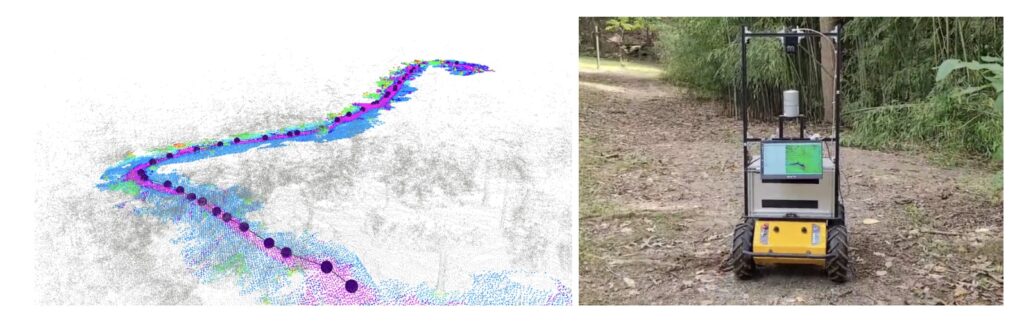 Robots to navigate hiking trails
If you’ve ever gone hiking, you know trails can be challenging and unpredictable. A path that was clear last week might be blocked today by a fallen tree. Poor maintenance, exposed roots, loose rocks, and uneven ground further complicate the terrain, making trails difficult for a robot to navigate autonomously. After a storm, puddles can […]
- Chinese humanoid robots lead US rivals in 2025 global shipments
Chinese vendors surpassed US peers in 2025 humanoid robot shipments, using CES 2026 demonstrations to win overseas customers and accelerate commercial deployments. The post Chinese humanoid robots lead US rivals in 2025 global shipments appeared first on Humanoid.guide.
January 11, 2026
-
 Chilean Telescope Array Gets 145 New Powerful Amplifiers
For decades, scientists have observed the cosmos with radio antennas to visualize the dark, distant regions of the universe. This includes the gas and dust of the interstellar medium, planet-forming disks, and objects that cannot be observed in visible light. In this field, the Atacama Large Millimeter/Submillimeter Array (ALMA) in Chile stands out as one of the world’s most powerful radio telescopes. Using its 66 parabolic antennas, ALMA observes the millimeter and submillimeter radiation emitted by cold molecular clouds from which new stars are born. Each antenna is equipped with high-frequency receivers for 10 wavelength ranges, 35 to 50 gigahertz and 787 to 950 GHz, collectively known as Band 1. Thanks to the Fraunhofer Institute for Applied Solid State Physics (IAF) and the Max Planck Institute for Radio Astronomy, ALMA has received an upgrade with the addition of 145 new low-noise amplifiers (LNAs). These amplifiers are part of the facilities’ Band 2 coverage, ranging from 67 to 116 GHz on the electromagnetic spectrum. This additional coverage will allow researchers to study and gain a better understanding of the universe. In particular, they hope to gain new insights into the “cold interstellar medium”: The dust, gas, radiation, and magnetic fields from which stars are born. In addition, scientists will be able to study planet-forming disks in better detail. Last, but certainly not least, they will be able to study complex organic molecules in nearby galaxies, which are considered precursors to the building blocks of life. In short, these studies will allow astronomers and cosmologists to witness how stars and planetary systems form and evolve, and how the presence of organic molecules can lead to the emergence of life. Advanced Amplifiers Enhance ALMA Sensitivity Each LNA includes a series of monolithic microwave integrated circuits (MMICs) developed by Fraunhofer IAF using the semiconducting material indium gallium arsenide. MMICs are based on metamorphi...
January 10, 2026
- Humanoid Robots Dominate CES 2026 With Demos and Industry Signals
At CES 2026, major tech firms showcased humanoid robots performing tasks, highlighting near term capabilities, partnerships, and constraints shaping real world deployment. The post Humanoid Robots Dominate CES 2026 With Demos and Industry Signals appeared first on Humanoid.guide.
-
 Nvidia’s New Rubin Architecture Thrives on Networking
Earlier this week, Nvidia surprise-announced their new Vera Rubin architecture (no relation to the recently unveiled telescope) at the Consumer Electronics Show in Las Vegas. The new platform, set to reach customers later this year, is advertised to offer a tenfold reduction in inference costs and a fourfold reduction in how many GPUs it would take to train certain models, as compared to Nvidia’s Blackwell architecture. The usual suspect for improved performance is the GPU. Indeed, the new Rubin GPU boasts 50 quadrillion floating-point operations per second (petaFLOPS) of 4-bit computation, as compared to 10 petaflops on Blackwell, at least for transformer-based inference workloads like large language models. However, focusing on just the GPU misses the bigger picture. There are a total of six new chips in the Vera Rubin-based computers: the Vera CPU, the Rubin GPU, and four distinct networking chips. To achieve performance advantages, the components have to work in concert, says Gilad Shainer, senior vice president of networking at Nvidia. “The same unit connected in a different way will deliver a completely different level of performance,” Shainer says. “That’s why we call it extreme co-design.” Expanded “in-network compute” AI workloads, both training and inference, run on large numbers of GPUs simultaneously. “Two years back, inferencing was mainly run on a single GPU, a single box, a single server,” Shainer says. “Right now, inferencing is becoming distributed, and it’s not just in a rack. It’s going to go across racks.” To accommodate these hugely distributed tasks, as many GPUs as possible need to effectively work as one. This is the aim of the so-called scale-up network: the connection of GPUs within a single rack. Nvidia handles this connection with their NVLink networking chip. The new line includes the NVLink6 switch, with double the bandwidth of the previous version (3,600 gigabytes per second for GPU-to-GPU connections, as compared to 1,800 GB/s for ...
- Chinese humanoid robots draw attention across CES show floor
Chinese humanoid robots featured prominently at CES, highlighting advances in dexterity, autonomy, and cost that signal growing competition in global humanoid robotics. The post Chinese humanoid robots draw attention across CES show floor appeared first on Humanoid.guide.
January 9, 2026
- Teleoperated humanoids box at CES side event in Las Vegas arena
At a CES side event, schoolchild sized humanoid robots boxed under human teleoperation, highlighting control latency, balance, and safety limits in live demos. The post Teleoperated humanoids box at CES side event in Las Vegas arena appeared first on Humanoid.guide.
-
 Video Friday: Robots Are Everywhere at CES 2026
Video Friday is your weekly selection of awesome robotics videos, collected by your friends at IEEE Spectrum robotics. We also post a weekly calendar of upcoming robotics events for the next few months. Please send us your events for inclusion. ICRA 2026: 1–5 June 2026, VIENNA Enjoy today’s videos! We’re excited to announce the product version of our Atlas® robot. This enterprise-grade humanoid robot offers impressive strength and range of motion, precise manipulation, and intelligent adaptability—designed to power the new industrial revolution. [ Boston Dynamics ] I appreciate the creativity and technical innovation here, but realistically, if you’ve got more than one floor in your house? Just get a second robot. That single-step sunken living room though.... [ Roborock ] Wow, SwitchBot’s CES 2026 video shows almost as many robots in their fantasy home as I have in my real home. [ SwitchBot ] What is happening in robotics right now that I can derive more satisfaction from watching robotic process automation than I can from watching yet another humanoid video? [ ABB ] Yes, this is definitely a robot I want in close proximity to my life. [ Unitree ] The video below demonstrates a MenteeBot learning, through mentoring, how to replace a battery in another MenteeBot. No teleoperation is used. [ Mentee Robotics ] Personally, I think we should encourage humanoid robots to fall much more often, just so we can see whether they can get up again. [ Agility Robotics ] Achieving long-horizon, reliable clothing manipulation in the real world remains one of the most challenging problems in robotics. This live test demonstrates a strong step forward in embodied intelligence, vision-language-action systems, and real-world robotic autonomy. [ HKU MMLab ] Millions of people around the world need assistance with feeding. Robotic feeding systems offer the potential to enhance autonomy and quality of life for individuals with impairments and reduce caregiver workload. However, their ...
-
 CES 2026: The First Solid-State Vehicle May Be a Motorcycle
In a global race to get solid-state batteries on the road, few would bet on two tiny companies in Estonia, known for their innovative hubless, in-wheel electric motors and motorcycles. Yet these upstarts have apparently done what Tesla, BYD and other EV-and-battery titans have been unable to do. To be fair, building a relative handful of batteries for a low-volume motorcycle is a whole different ball game from, say, Toyota having to validate and stand behind thousands or millions of car batteries under warranty. Nevertheless, Verge Motorcycles and its tech spin-off, Donut Lab, are claiming a checkered flag at CES 2026 in Las Vegas: The Verge TS Pro motorcycle will begin shipping with Donut Lab’s solid-state batteries in the first quarter of this year, founders of the two companies told IEEE Spectrum. All other Verge bikes will follow with their own solid-state packs, to be built in Finland, just across the Gulf of Finland from Estonia. Short riding range and frequent, lengthy charging stops have been big bummers for electric motorcycles. Their whispery hum may be welcome while pulling into a quiet subdivision at 3 a.m. But these green machines have struggled to convert riders who crave the shriek of a 1-liter sport bike at 14,000 rpm, or the “potato-potato” rumble of a Harley V-twin. Leaving the shrieking and rumbling aside, the Verge-Donut team say their bikes, motors, and batteries overcome those challenges. The TS will integrate batteries with no lithium or liquid electrolyte to conduct ions, replaced by ceramics that trim weight and improve safety, charging performance and charging speeds. Buyers can choose between a 20.2- or a 33.3-kilowatt-hour battery pack, with a claimed energy density of 400 watt-hours per kilogram. That’s a healthy jump over the roughly 200–300 Wh/kg of typical lithium EV batteries. And with its Donut Lab motor whirring away inside it, the signature hubless rear wheel of the TS Pro, like the “light cycle” from the movie Tron, will turn ...
-
 Robot Talk Episode 139 – Advanced robot hearing, with Christine Evers
Claire chatted to Christine Evers from University of Southampton about helping robots understand the world around them through sound. Christine Evers is an Associate Professor in Computer Science and Director of the Centre for Robotics at the University of Southampton. Her research pushes the boundaries of machine listening, enabling robots to make sense of life […]
January 7, 2026
-
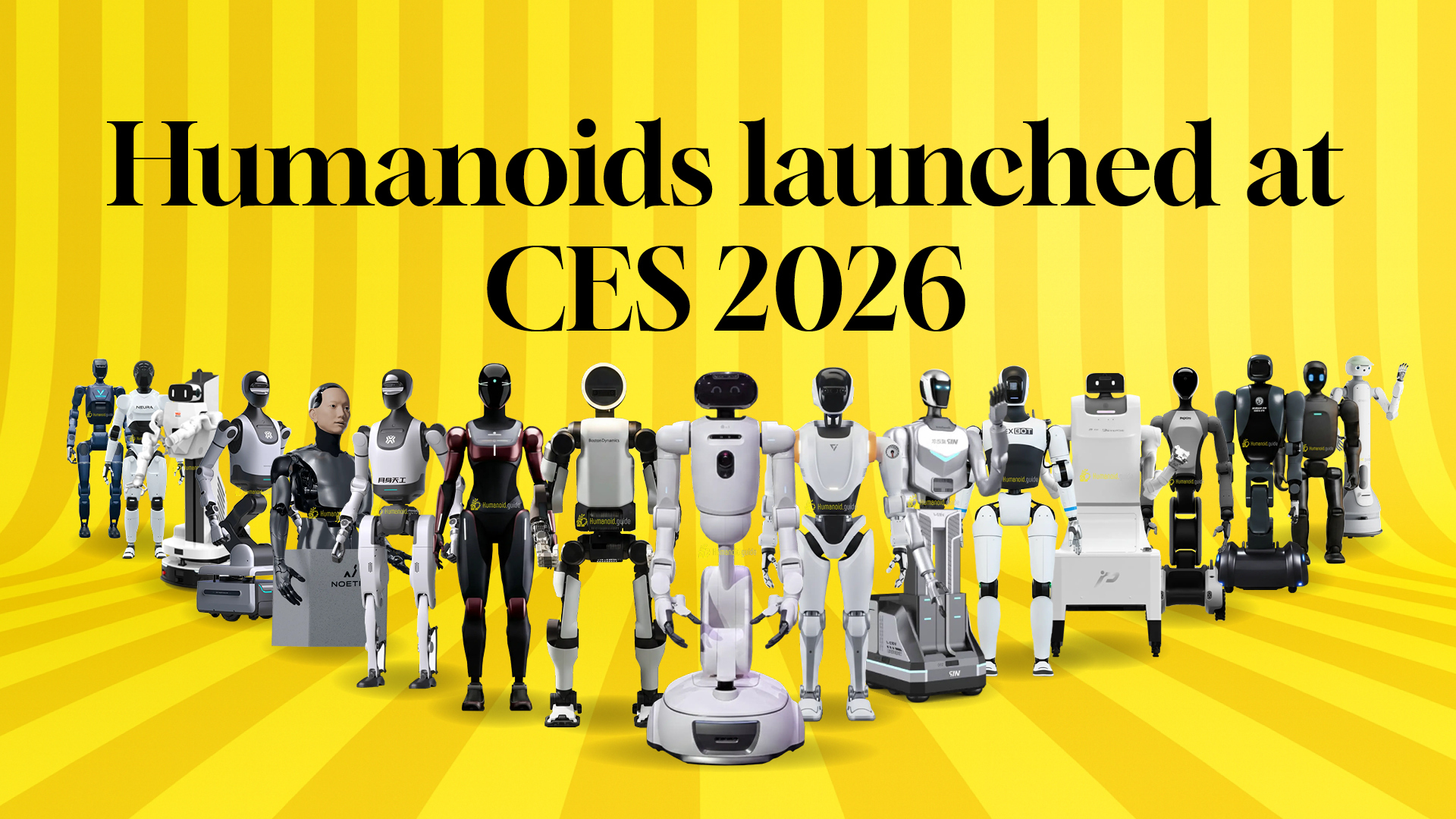 Humanoids conquered CES 2026
CES 2026: A New Era for Humanoid Robots – What We Saw in Las VegasAll 16 robots have now been added to the humanoid Guide and you will find links below. CES 2026 in Las Vegas reaffirmed that humanoid robotics is no longer niche — it’s booming. From dynamic industrial assistants to agile entertainment bots,... The post Humanoids conquered CES 2026 appeared first on Humanoid.guide.
-
 Meet the IEEE Board-Nominated Candidates for President-Elect
The IEEE Board of Directors has nominated IEEE Senior Member David Alan Koehler and IEEE Life Fellow Manfred “Fred” J. Schindler as candidates for 2027 IEEE president-elect. IEEE Senior Member Gerardo Barbosa and IEEE Life Senior Member Timothy T. Lee are seeking nomination by petition. A separate article will be published in The Institute at a later date. The winner of this year’s election will serve as IEEE president in 2028. For more information about the election, president-elect candidates, and the petition process, visit the ieee.org/elections. IEEE Senior Member David Alan Koehler Steven Miller Photography Koehler is a subject matter expert with almost 30 years of experience in establishing condition-based maintenance practices for electrical equipment and managing analytical laboratories. He has presented his work at global conferences and published articles in technical publications related to the power industry. Koehler is an executive advisor at Danovo Energy Solutions. An active volunteer, he has served in every geographical unit within IEEE. His first leadership position was chair of the Central Indiana Section from 2012 to 2014. He served as 2019–2020 director of IEEE Region 4, vice chair of the 2022 IEEE Board of Directors Ad Hoc Committee on the Future of Engagement, 2022 vice president of IEEE Member and Geographic Activities, and chair of the 2024 IEEE Board of Directors Ad Hoc Committee on Leadership Continuity and Efficiency. He served on the IEEE Board of Directors for three different years. He has been a member of the IEEE-USA, Member and Geographic Activities, and Publication Services and Products boards. Koehler is a proud and active member of IEEE Women In Engineering and IEEE-Eta Kappa Nu, the honor society. IEEE Life Fellow Manfred “Fred” J. Schindler Steven Miller Photography Schindler, an expert in microwave semiconductor technology, is an independent consultant supporting clients with technical expertise, due diligence, and project m...
-
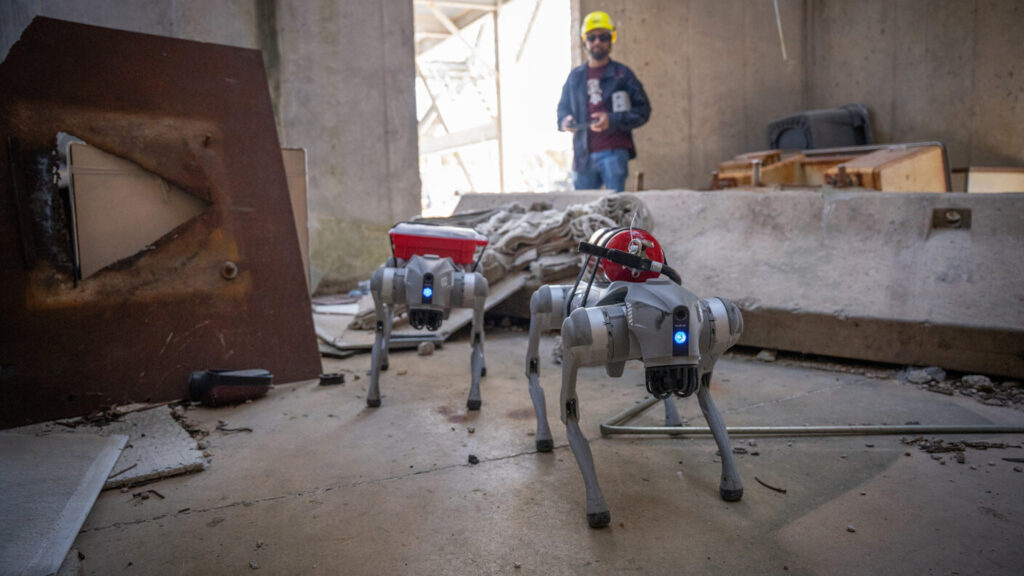 Meet the AI-powered robotic dog ready to help with emergency response
Prototype robotic dogs built by Texas A&M University engineering students and powered by artificial intelligence demonstrate their advanced navigation capabilities. Photo credit: Logan Jinks/Texas A&M University College of Engineering. By Jennifer Nichols Meet the robotic dog with a memory like an elephant and the instincts of a seasoned first responder. Developed by Texas A&M University […]
January 6, 2026
-
 The goal was simple: To find out what was possible
Boston Dynamics has long been the world leader in mobile robotics, but their latest announcement marks a historic shift. The transition of the Atlas robot from a research platform to a fully electric, commercial-grade humanoid is more than just a technical upgrade – it is the beginning of a new industrial revolution. Designed for the... The post The goal was simple: To find out what was possible appeared first on Humanoid.guide.
January 5, 2026
- Claims of $20,000 Humanoid Home Robots Target 2026 Debut Market
A New York Post report claims humanoid robots for household tasks could reach consumers in 2026 at around $20,000, raising questions about readiness, scope, and timelines. The post Claims of $20,000 Humanoid Home Robots Target 2026 Debut Market appeared first on Humanoid.guide.
January 4, 2026
- China Shows Motion Controlled Humanoid Robot for Military Tasks
China demonstrated a motion controlled humanoid robot for military operations, highlighting teleoperation, dexterity, and potential roles in remote combat scenarios. The post China Shows Motion Controlled Humanoid Robot for Military Tasks appeared first on Humanoid.guide.
-
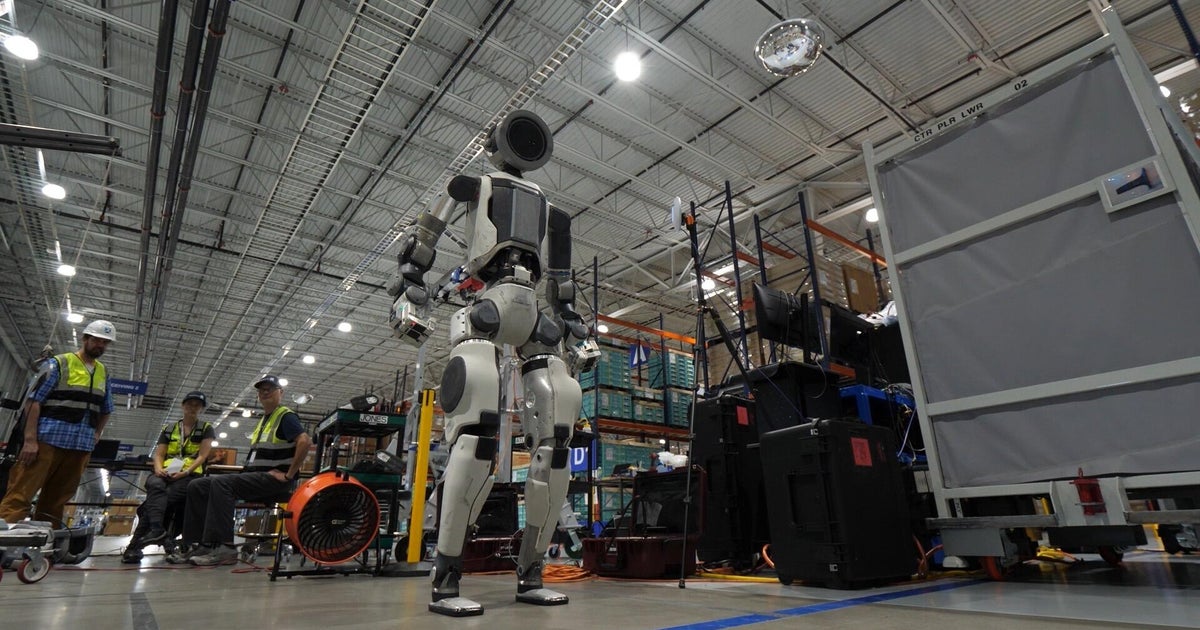 Boston Dynamics Tests Atlas Humanoid in Real World Pilot Setting
A 60 Minutes report documents Boston Dynamics running its Atlas humanoid robot in early real world tasks, highlighting progress toward industrial deployment. The post Boston Dynamics Tests Atlas Humanoid in Real World Pilot Setting appeared first on Humanoid.guide.
January 3, 2026
-
 CES 2026 Preview: E-ink Smartphone, Allergen Detector, and More
In a few days, Las Vegas will be inundated with engineers, executives, investors, and members of the press—including me—for the annual Consumer Electronics Show, one of the largest tech events of the year. If you can dream it, there’s a good chance it’ll be on display at CES 2026 (though admittedly, much of this tech won’t necessarily make it to the mainstream). There will be a range of AI toys, AI notetakers, and “AI companions,” exoskeletons and humanoid robots, and health tech to track your hormones, brain activity, and... bathroom activity. This year’s event will have keynote addresses from the CEOs of tech giants including AMD and Lenovo, and thousands of booths from companies spanning legacy brands to brand-new startups. I’m excited to stumble across unexpected new tech while wandering the show floor. But as I prepare for this year’s event, here are some of the devices that have already caught my eye. Headphones that can read your brainwaves Electroencephalography, or EEG, has been used in health care for decades to monitor neural activity. It usually involves a person wearing a whole helmet of electrodes, but scaled-down versions of the tech are now being integrated into consumer devices and may soon be ready for users. Several neurotech companies using EEG will be at CES this year. For instance, Neurable (a company we’ve had on our radar for years) is announcing a new headset with gaming brand HyperX, which is meant to help players hone their focus by tracking brain activity in real time. Neurable’s over-ear EEG headphones for everyday use are now available for preorder. Naox will also bring its in-ear EEG tech to consumer-oriented earbuds. And Elemind, another company we’ve covered, aims to help you sleep with its headband. With wearables already monitoring vital signs, sleep, and activity, 2026 may be the year our brainwaves join the list of biosignals we can track on a daily basis. A toothbrush to sniff out health issues Sonic toothbrush company Y-Brus...
January 2, 2026
-
 Video Friday: Watch Scuttle Evolve
Video Friday is your weekly selection of awesome robotics videos, collected by your friends at IEEE Spectrum robotics. We also post a weekly calendar of upcoming robotics events for the next few months. Please send us your events for inclusion. ICRA 2026: 1–5 June 2026, VIENNA Enjoy today’s videos! I always love seeing robots progress from research projects to commercial products. [ Ground Control Robotics ] Well this has to be one of the most “watch a robot do this task entirely through the magic of jump cuts” I’ve ever seen. [ UBTECH ] Very satisfying sound on this one. [ Pudu Robotics ] Welcome to the AgileX Robotics Data Collection Facility, where real robots build the foundation for universal embodied intelligence. Our core mission? Enable large-scale data sharing and reuse across dual-arm teleoperation robots of diverse morphologies, breaking down data silos that slow down AI progress. [ AgileX ] I’m not sure how much thought was put into this, but giving a service robot an explicit cat face could be a good way of moderating expectations on its behavior and interactivity. [ Pudu Robotics ] UBTECH says they have built 1,000 of their Walker S2 humanoid robots, over 500 of which are “delivered & working.” I would very much like to know what “working” means in this context. [ UBTECH ] Every story has its beginning, and ours started in 2023—a year defined by the unknown. Let technology return to passion; let trials catalyze evolution. Embracing growth, embarking on a new journey. We’ll see you at the next stop. Please, please hire someone to do some HRI (human-robot interface) design. [ PNDbotics ]
December 31, 2025
-
 The Top 6 AI Stories of 2025
Artificial intelligence in 2025 was less about flashy demos and more about hard questions. What actually works? What breaks in unexpected ways? And what are the environmental and economic costs of scaling these systems further? It was a year in which generative AI slipped from novelty into routine use. Many people got accustomed to using AI tools on the job, getting their answers from AI search, and confiding in chatbots, for better or for worse. It was a year in which the tech giants hyped up their AI agents, and the general public seemed generally uninterested in using them. AI slop also became impossible to ignore—it was even Merriam-Webster’s word of the year. Throughout it all, IEEE Spectrum’s AI coverage focused on separating signal from noise. Here are the stories that best captured where the field stands now. 1. The Best AI Coding Tools You Can Use Right Now Alamy AI coding assistants have moved from novelty to everyday infrastructure—but not all tools are equally capable or trustworthy. This practical guide by Spectrum contributing editor Matthew S. Smith evaluates today’s leading AI coding systems, examining where they meaningfully boost productivity and where they still fall short. The result is a clear-eyed look at which tools are worth adopting now, and which remain better suited to experimentation. 2. The Real Story on AI’s Water Use—and How to Tackle It Amanda Andrade-Rhoades/The Washington Post/Getty Images As AI’s energy demands raise concerns, water use has emerged as a quieter but equally pressing issue. This article explains how data centers consume water for cooling, why the impacts vary dramatically by region, and what engineers and policymakers can do to reduce the strain. Written by the AI sustainability scholar Shaolei Ren and Microsoft sustainability lead Amy Luers, the article grounds a noisy public debate in data, context, and engineering reality. 3. AI Mistakes Are Very Different from Human Mistakes iStock When AI systems fail, they d...
-
 MIT engineers design an aerial microrobot that can fly as fast as a bumblebee
With insect-like speed and agility, the tiny robot could someday aid in search-and-rescue missions.
December 30, 2025
-
 The Top 8 Semiconductor Stories of 2025
This year’s top semiconductor stories were mostly about the long and twisting trips a technology takes from idea (or even raw material) to commercial deployment. I’ve been at IEEE Spectrum long enough to have seen some of the early days of things that became commercial only this year. In chipmaking, that includes the production of the next evolution of transistor design—nanosheet transistors—and the arrival of nanoimprint lithography. In optoelectronics, it was the commercialization of optical fiber links that go directly into the processor package. Of course there were also great new technologies recently born, like growing diamond inside ICs to cool them. But there were also, unfortunately, developments that are getting in the way of moving technologies from the laboratory to the semiconductor fab. Still, if anything, the year’s best semiconductor stories showed that technology is full of fascinating tales. 1. Diamond Blankets Will Keep Future Chips Cool Peter Crowther It seems one of our readers’ favorite things was this cool idea. Perhaps you read it while chilling out with a print copy of Spectrum or maybe while on your phone and icing a sore knee. (Okay, I’ll stop.) Stanford professor Srabanti Chowdhury explained how her team has come up with a way to grow diamonds inside ICs, mere nanometers from heat-generating transistors. The result was radio devices that were more than 50 degrees Celsius cooler, and a pathway to integrate the highly heat-conductive material in 3D chips. The article was part of a special report on the problem of heat in computing that includes an article on cooling chips with lasers and other great reads. 2. The Tiny Star Explosions Powering Moore’s Law Left: Stefan Ziegenbalg; Right: ASML This one had a little bit of everything. It’s the story of how ASML figured out a key unknown in the development of one of the most crucial (and craziest) contraptions in technology today, the light source for extreme ultraviolet lithography. But it’s...
December 29, 2025
-
 The Top 7 Energy Stories of 2025
Powering the AI data center boom dominated the conversation in the global energy sector in 2025. Governments are racing to develop the most advanced AI models, and data center developers are building as fast as they can. But no one is going to get very far without finding ways to generate and move more electricity to these power guzzlers. Spectrum’s most popular energy stories in 2025 centered around that theme. Readers were particularly interested in stories about next-generation nuclear power, such as small modular reactors and salt-cooled reactors, and how those technologies might support data centers. Readers also turned to Spectrum to learn about the strain all of this is putting on electricity grids, and new technologies to solve those problems. Despite the weightiness of the energy sector’s challenges, we found some fun, off-beat stories to tell too. One American company is building the world’s largest airplane—it’s bigger than a football field—and it will have one job: to transport wind turbine blades. I don’t know what 2026 will bring, but as Spectrum’s energy editor, I’ll do my best to provide you stories that are true, useful, and engaging. Cheers to a new year in energy! 1. U.S. Pushes for Small Modular Reactors GE Vernova The world suddenly needs more power, but one solution being tested is to downsize energy generation and distribute it more widely. One example of that is small modular reactors (SMRs). These nuclear fission reactors are less than a third of the size and power output of conventional reactors. And as the April deadline approached for applying for the US $900 million the United States was offering for SMR development, readers came to Spectrum in droves to learn about the program in a news article authored by contributor Shannon Cuthrell. But the SMR money paled in comparison to the $80 billion that the United States is spending on a fleet of large-scale nuclear reactors designed by Westinghouse. Will this next group of reactors suffer ...
-
 Robohub highlights 2025
Over the course of the year, we’ve had the pleasure of working with many talented researchers from across the globe. As 2025 draws to a close, we take a look back at some of the excellent blog posts, interviews and podcasts from our contributors. Teaching robot policies without new demonstrations: interview with Jiahui Zhang and […]
December 28, 2025
-
 The Top 5 Climate Tech Stories of 2025
The skies may have rained on this year’s big climate summit in Belém, Brazil, but engineers have invented plenty of exciting climate tech this year worth celebrating. Here are some of the year’s top IEEE Spectrum climate technology stories: 1. Device Uses Wind to Create Ammonia Out of Thin Air Richard Zare, Xiaowei Song et al. Ammonia is a crucial ingredient for human civilization, powering agriculture, explosives, and next-generation cargo ships. Researchers have turned to classical laboratory chemistry and artificial intelligence in search of more efficient ammonia production. In January, freelance contributor Alfred Poor reported on a real-world demonstration of a passive technology that captures ammonia from the wind, no batteries included or needed. 2. Piezoelectric Catalyst Destroys Forever Chemicals Daniel Kunz At IEEE Spectrum, we love any story that puts electrons to good use, and freelance contributor Rachel Berkowitz found a startup using piezoelectric catalysts to zap forever chemicals that contaminate our waterways. Most systems spend a lot of energy mechanically filtering out the harmful, long-lasting chemicals, but these researchers propose to use the kinetic energy of natural water flow to drive their system, along with their clever chemical harnessing of electrons. Take that, mechanical engineers! And forever chemicals, of course. 3. First Supercritical CO2 Circuit Breaker Debuts Original photo: Emily Waltz Thought that the only greenhouse gas you had to worry about was carbon dioxide? Beware: Some fluoride-related gases have heat-trapping abilities thousands of times greater than CO2. One in particular, SF6, happens to be the main insulator in high-voltage circuit breakers necessary all across our electrical grids. Energy editor Emily Waltz had the story on how to use supercritical CO2 gas instead, keeping toxic SF6—responsible for about 1 percent of global warming in 2018—out of our supply chain and atmosphere. 4. How Much Carbon Do We Need to ...
December 27, 2025
-
 The Top 7 Consumer Electronics Stories of 2025
In 2025, many of IEEE Spectrum’s top consumer electronics stories were about creating the experience you want with technology. Open-source software offered more customization for laptops and displays, devices with less-distracting design received recognition with a new certification, and smart glasses manufacturers forged paths to figure out what users really want in the wearable tech. Other stories highlighted the fascinating fundamental tech in our smartphones, like how your new iPhone stays cool and the potential for its camera to gather information beyond what the human eye can see. And we considered the effects of U.S. tariffs from the Trump administration. We’re gearing up for a 2026 filled with many more exciting developments. In the meantime, read on for IEEE Spectrum’s most popular consumer electronics stories of the year. 1. E-Paper Display Reaches the Realm of LCD Screens Source image: Modos When hours of our days may be dominated by screens, e-paper displays offer an option easier on the eyes. Historically, these displays have been too slow for everyday computing. But this year, a small Boston-based startup called Modos created a monitor and development kit for a display with a refresh rate of 75 hertz—comparable to some basic LCD screens. That’s even fast enough for video. “Modos has a not-so-secret weapon,” contributing editor Matthew Smith writes. Specifically, an open-source display controller is key to the display’s speed. Modos completed its crowdfunding campaign, and pre-orders are scheduled to ship in late January 2026. 2. Water Vapor Could Cool Your Next iPhone IEEE Spectrum; Source images: Apple Without the proper cooling tech, high-end smartphones risk burning a hole in your pocket—literally. In the latest generation of Apple smartphones, released in September, the iPhone 17 Pro and Pro Max contain thin chambers of water that help dissipate heat through evaporation. Cooling phones with water vapor isn’t entirely new, though: High-end smartp...
December 26, 2025
-
 Video Friday: Holiday Robot Helpers Send Season’s Greetings
Video Friday is your weekly selection of awesome robotics videos, collected by your friends at IEEE Spectrum robotics. We also post a weekly calendar of upcoming robotics events for the next few months. Please send us your events for inclusion. ICRA 2026: 1–5 June 2026, VIENNA Enjoy today’s videos! Happy Holidays from Boston Dynamics! I would pay any amount of money for that lamp. [ Boston Dynamics ] What if evolution wasn’t carbon-based—but metal instead? This short film explores an alternative, iron-based evolution through robots, simulation, and real-world machines. Inspired by biological evolution, this Christmas lab film imagines a world where machines evolve instead of organisms. [ ETH Zurich Robotics System Lab ] Happy Holidays from FieldAI! [ FieldAI ] Happy Holidays from the Institute of Robotics and Machine Intelligence at Poznan University of Technology! [ Poznan University of Technology IRMI ] Happy Holidays from BruBotics! [ AugmentX ] Thanks, Bram! [ Humanoid ] Check out how SCUTTLE tackles the dull, dirty, and dangerous tasks of the pest control industry. [ Ground Control Robotics ] Happy Holidays from LimX Dynamics! [ LimX Dynamics ] Happy (actually maybe not AI?) Holidays from Kawasaki Robotics! [ Kawasaki Robotics ] Happy Holidays from AgileX Robotics [ AgileX Robotics ] Big news: Badminton just got a new training partner. Our humanoid robot can rally with a human in continuous exchanges, combining fast returns with stable movement. Peak return speed reaches 19.1 m/s. [ Phybot ] Well, here’s one way of deploying a legged robot. [ Kepler ] Today, we present the world’s first demo video of a full-size robot taking on the challenging Charleston dance. [ PNDbotics ] The DR02 humanoid robot from DEEP Robotics showcases remarkable versatility and agility. From the graceful flow of Tai Chi to the energetic moves of street dance, DR02 combines precision, strength, and artistry with ease! [ Deep Robotics ] Decreasing the Cost of Morphing in Adaptive Morp...
-
 The Top 8 Magnets and Motors Stories of 2025
Rarely a week went by in 2025 without some newsworthy development related to rare earth elements, magnets, and electric motors. IEEE Spectrum was on top of the big ones, starting with the production of industrial quantities of the rare earth oxides of neodymium and praseodymium at the Mountain Pass mine and processing facilities in California’s Mojave desert. Between 1965 and the mid-1980s, the Mountain Pass mine produced as much as 70 percent of the world’s annual supply of rare earths, which are used in nearly all powerful permanent magnets. But following a string of reversals and environmental mishaps, the facilities began a decline in the 1990s and 2000s. At the same time, Chinese producers, which were much less confined by environmental regulations, began their astonishingly rapid ascendence. Today, China controls between about 85 and 99 percent of the global market for key rare earth oxides and metals, on which huge and vital tech-based industries depend. The United States and its allies find themselves at China’s mercy for certain rare earths, including ones that are essential for motors, semiconductors, electroluminescent compounds, optoelectronics, and catalysis. They’re in critical components of countless military systems, such as ones in aircraft, submarines, weapons, and night-vision gear. For these reasons, the resumption of mass production of rare earths at Mountain Pass, which was greatly scaled up during 2025, was a major development in geopolitics. The total output of the mine and its associated processing facilities, where the rare earth ore is turned into industrially useful oxides, is small, however, compared to China’s output. The Trump administration invested a lot of time during 2025 trying to set up deals to establish rare earth supply chains that do not depend on China. This effort started puzzlingly, with some high-profile arm twisting of Ukraine, whose deposits are dismissed by mining experts, and also with overtures about annexing Gree...
December 25, 2025
-
 The Top 8 Computing Stories of 2025
This year, AI continued to loom large in the software world. But more than before, people are wrestling with both its amazing capabilities and its striking shortcomings. New research has found that AI agents are doubling the length of task they can do every seven months—an astounding rate of exponential growth. But the quality of their work still suffers, clocking in at about a 50 percent success rate on the hardest tasks. Chatbots are assisting coders and even coding autonomously, but this may not help solve the biggest and costliest IT failures, which stem from managerial failures that have remained constant for the past 20 years or more. AI’s energy demands continue to be a major concern. To try to alleviate the situation, a startup is working on cutting the heat produced in computation by making computing reversible. Another is building a computer of actual human brain cells, capable of running tests on drug candidates. And some are even considering sending data centers to the moon. 1. The Top Programming Languages 2025 iStock While the rankings of software languages this year were rather predictable—yes, Python is still No. 1—the future of software engineering is as uncertain as can be. With AI chatbots assisting many with coding tasks, or just coding themselves, it is becoming increasingly difficult to gather reliable data on what software engineers are working on day-to-day. People no longer post their questions on StackExchange or a similar site—they simply ask a chatbot. This year’s top programming languages list does its best to work with this limited data, but it also poses a question: In a world where AI writes much of our code, how will programming languages change? Will we even need them, or will the AI simply bust out optimized assembly code, without the need for abstraction? 2. How IT Managers Fail Software Projects Eddie Guy Robert Charette, lifelong technologist and frequent IEEE Spectrum contributor, wrote back in 2005 about all the known, prev...
December 24, 2025
-
 The Top 6 Robotics Stories of 2025
Usually, I start off these annual highlights posts by saying that it was the best year ever for robotics. But this year, I’m not so sure. At the end of 2024, it really seemed like AI and humanoid robots were poised to make a transformative amount of progress toward some sort of practicality. While it’s certainly true that progress has been made, it’s hard to rationalize what’s actually happened in 2025 with the amount of money and hype that has suffused robotics over the course of the year. And for better or worse, humanoids are overshadowing everything else, raising questions about what will happen if the companies building them ultimately do not succeed. We’ll be going into 2026 with both optimism and skepticism, and we’ll keep doing what we always do: talking to the experts, asking as many hard questions as we can, and making sure to share all the cool robots, even (or especially) the ones that you won’t see anywhere else. So thanks for reading, and to all you awesome robotics folks out there, thanks for sharing your work with us! IEEE Spectrum has a bunch of exciting new stuff planned for 2026, and as we close out 2025, here’s a quick look back at some of our best robotics stories of the year. 1. Reality Is Ruining the Humanoid Robot Hype Eddie Guy Humanoid robots are hard, and they’re hard in lots of different ways. For some of those ways, we at least understand the problems and what the solutions will likely involve. But there are other problems that have no clear solutions, and most humanoid companies, especially the well-funded ones, seem quite happy to wave those problems away while continuing to raise extraordinary amounts of money. We’re going to keep calling this out whenever we see it, and expect even more skepticism in 2026. 2. Exploit Allows for Takeover of Fleets of Unitree Robots CFOTO/Future Publishing/Getty Images Security is one of those pesky little things that is super important in robotics but that early-stage robotics companies typically t...
-
 The science of human touch – and why it’s so hard to replicate in robots
By Perla Maiolino, University of Oxford Robots now see the world with an ease that once belonged only to science fiction. They can recognise objects, navigate cluttered spaces and sort thousands of parcels an hour. But ask a robot to touch something gently, safely or meaningfully, and the limits appear instantly. As a researcher in […]
December 23, 2025
-
 The Top 5 Transportation Stories for 2025
IEEE Spectrum’s transportation coverage this year covered breakthroughs in electric vehicles, batteries, charging, automation, aviation, maritime tech, and more. Readers followed the race to rebuild U.S. magnet manufacturing, rethink EV-charging architecture, and reinvent automotive software. They tracked China’s sprint toward five-minute charging, the rise of high-power home chargers, and the push to automate airports. Our most-read stories also explored next-generation navigation, zero-carbon shipping fuels, record-size electric vessels, and early road tests of solid-state batteries. Read on for our roundup of the transportation stories published in 2025 that readers found most compelling. 1. Advanced Magnet Manufacturing Begins in the United States Business Wire The most-visited transportation post of the year focused on the United States’ efforts to rebuild a domestic supply of neodymium-iron-boron (NdFeB) magnets—critical components for EVs, wind turbines, HVAC systems, and many military systems. MP Materials has begun trial production at its new Texas plant, with plans to ramp up to between 1,000 and 3,000 tonnes per year and supply companies like General Motors. Other U.S. projects from e-VAC Magnetics, Noveon, USA Rare Earth, and Quadrant are also emerging. But these efforts are dwarfed by China’s rare earths industry: China makes 85 to 90 percent of NdFeB magnets and 97 percent of the underlying rare-earth metals, with individual Chinese firms producing tens of thousands of tonnes—far more than all non-Chinese plants combined. China also has massive unused refinement and production capacity, keeping global prices low. MP Materials’ unique mine-to-magnet strategy could offer intelligence and supply-chain resilience, but competing with China’s subsidies and scale will be extremely difficult. The U.S. Department of Defense may pay a premium for “friendly-nation” magnets, but cost-obsessed automakers like GM might resist higher domestic prices. 2. We’re Char...
-
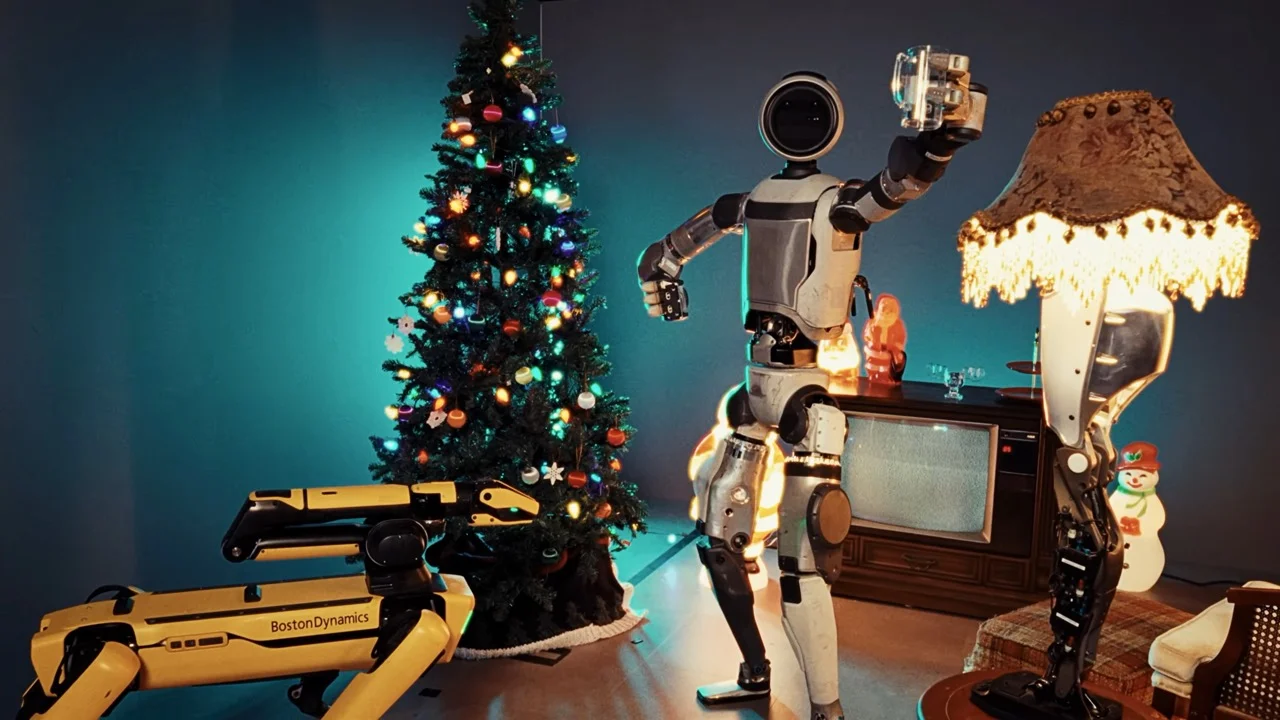 Hyundai Confirms CES 2026 Debut for Atlas and "Group-Wide" AI Robotics Strategy
The long-awaited "January Update" is official: Hyundai Motor Group will unveil its roadmap for mass robot deployment and bring the electric Atlas to the public stage for the first time in Las Vegas.
December 22, 2025
-
 Cozy Robotics: 1X Technologies Debuts Lifestyle "Home Collection"
With a new line of premium pillows and hoodies, 1X Technologies is moving beyond hardware specs to sell a lifestyle, led by the aesthetic vision of former Tesla designer Dar Sleeper.
-
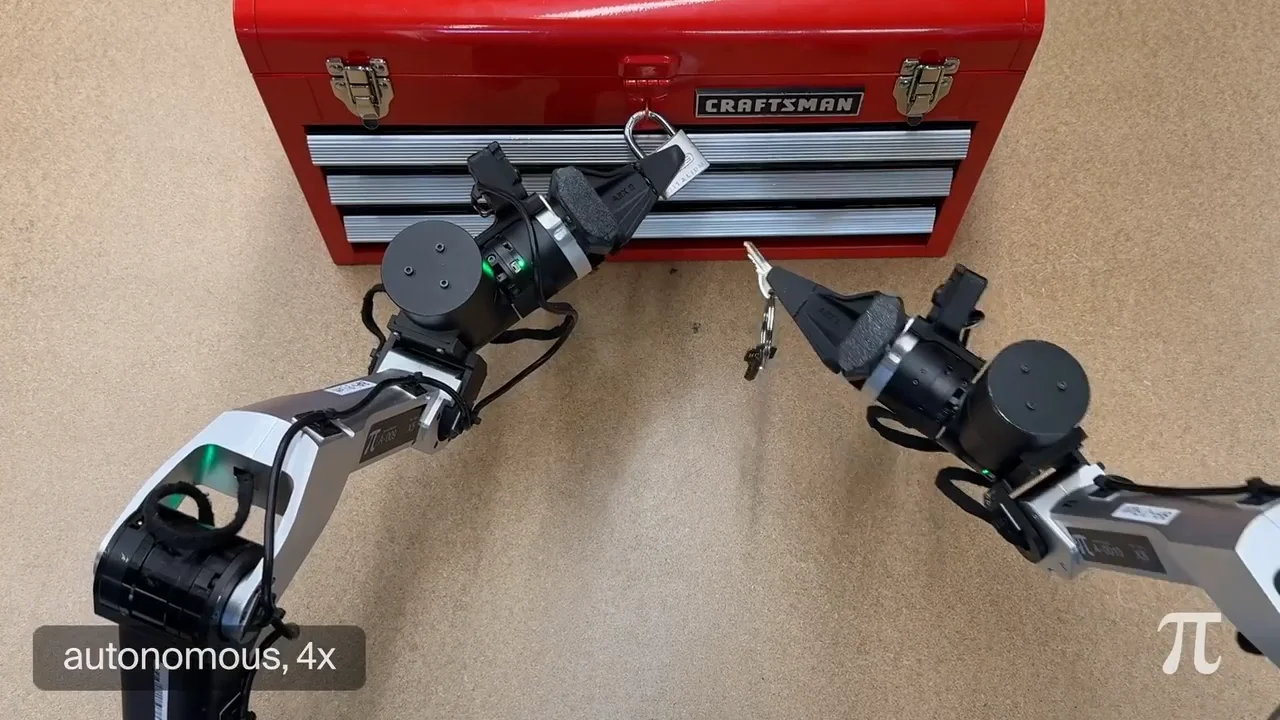 Gold Medals and Greasy Pans: Physical Intelligence Tackles the "Robot Olympics"
By fine-tuning its π0.6 foundation model, Physical Intelligence has demonstrated a wide array of "common sense" physical tasks—from making sandwiches to cleaning windows—proving that the path to general-purpose robotics lies in scaling physical data.
-
 The Top 7 Telecommunications Stories of 2025
The telecom networks originally built to carry phone calls and packets of data are in the midst of a dramatic shift. The past year saw early steps toward networks becoming a more integrated data fabric that can measure the world, process and sense collaboratively, and even stretch into outer space. The following list of key IEEE Spectrum telecom news stories from 2025 underscores the evolution the connected (and wireless) world is going through today. A larger story is emerging, in other words, of how networks are turning into instruments and engines rather than just passive pipes. And if there’s a clear starting point to watch this shift happening, it’s in the early thinking around 6G. 1. Capacity Limits in 5G Prompt a 6G Focus on Infrastructure Source image: Nokia Unlike previous step-changes in telecom’s evolution (especially the bandwidth upgrades from 3G to 4G and 4G to 5G), the key equation for 6G isn’t “5G plus faster downloads.” Nokia Bell Labs, whose president of core research Peter Vetter sat down for a conversation with Spectrum in November, is starting to test and test-deploy key pieces of 6G’s infrastructure five years before 6G devices are expected to come online. And time is tight. Because, as Vetter explains, downlinks for the must-have consumer tech of the decade ahead may not be the network’s key crunch point for too much longer. Your phone’s ability—and your future smart glasses’ ability—to download streaming video and other content is increasingly not telecom’s hardest problem. Rather, if the Internet of Things scales up as predicted, and smart home and smart city tech takes hold, before too long everything everywhere will be dialing in to 6G infrastructure for more and more sizable uplinks. And that kind of traffic surge might break telecom networks of today. Which is why smart money, beginning with but certainly not limited to Nokia Bell Labs, is on solving that massive uplink problem before it might emerge. 2. Terahertz Tech Sets Stage for ...
-
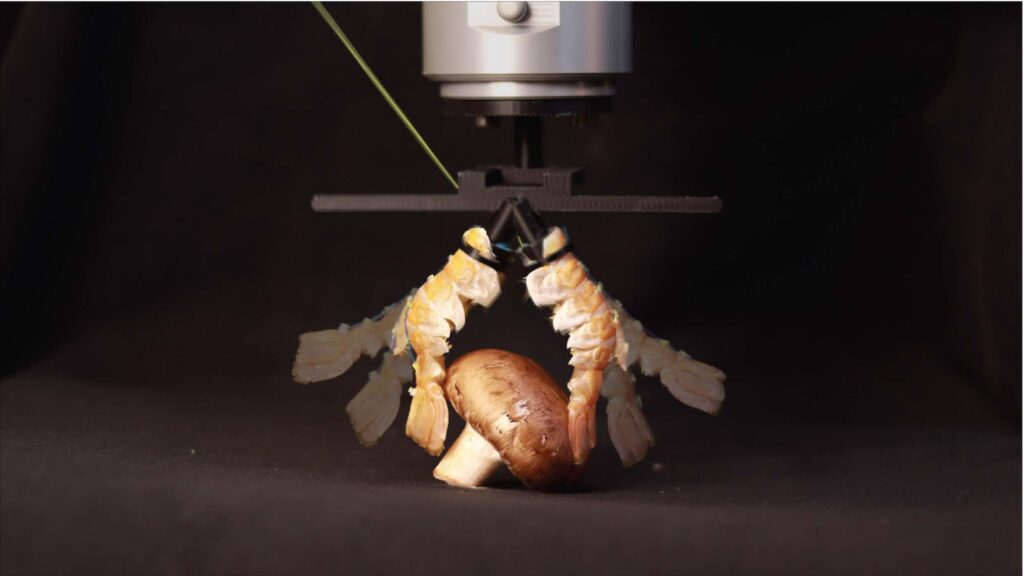 Bio-hybrid robots turn food waste into functional machines
Demonstration of the robotic gripper made from langoustine tails. 2025 CREATE Lab EPFL CC BY SA. By Celia Luterbacher Although many roboticists today turn to nature to inspire their designs, even bioinspired robots are usually fabricated from non-biological materials like metal, plastic and composites. But a new experimental robotic manipulator from the Computational Robot Design […]
December 20, 2025
-
 We Now Know How Much Faster Clocks Will Run on Mars
The most precise timekeepers ever made, atomic clocks, might one day help robotic and crewed missions on Mars stay in sync with each other, as well as enable the equivalent of GPS on the red planet. But, as Einstein made clear, time flows at different rates depending on where you are. Now, scientists have estimated the speed at which clocks tick on Mars—an average of 477-millionths of a second faster than clocks on Earth, per day. These findings might suggest ways in which future networks on Mars can avoid problems such clock differences might produce. Atomic clocks monitor the vibrations of atoms. Optical atomic clocks, which use intersecting laser beams to entrap and monitor the atoms, are currently accurate down to 1 attosecond, or a billionth of a billionth of a second. These clocks have many applications besides keeping time—for example, they are key to the precisely timed signals that GPS and other global navigation satellite systems rely on to help users pinpoint their own locations. However, because the gravity of massive objects warps spacetime, the rate of time passes different at different gravitational field strengths. In other words, the weaker a planet’s gravitational pull, the faster clocks on its surface tick. And the average strength of Mars’s gravitational pull is roughly three times as weak as Earth’s. Mars Timekeeping and GPS Technology In 2024, scientists at the National Institute of Standards and Technology (NIST) in Boulder, Colo., estimated the rate at which clocks ticked on the moon, which has an average gravitational pull about six times as weak as Earth’s. Given NASA’s plans for missions to Mars, the researchers have now analyzed timekeeping on Mars and detailed their research in a study published online on 1 December in The Astronomical Journal. “With an understanding of these relativistic effects comes the hope that humans will someday become an interplanetary species,” says Neil Ashby, a professor emeritus of physics at the Universit...
-
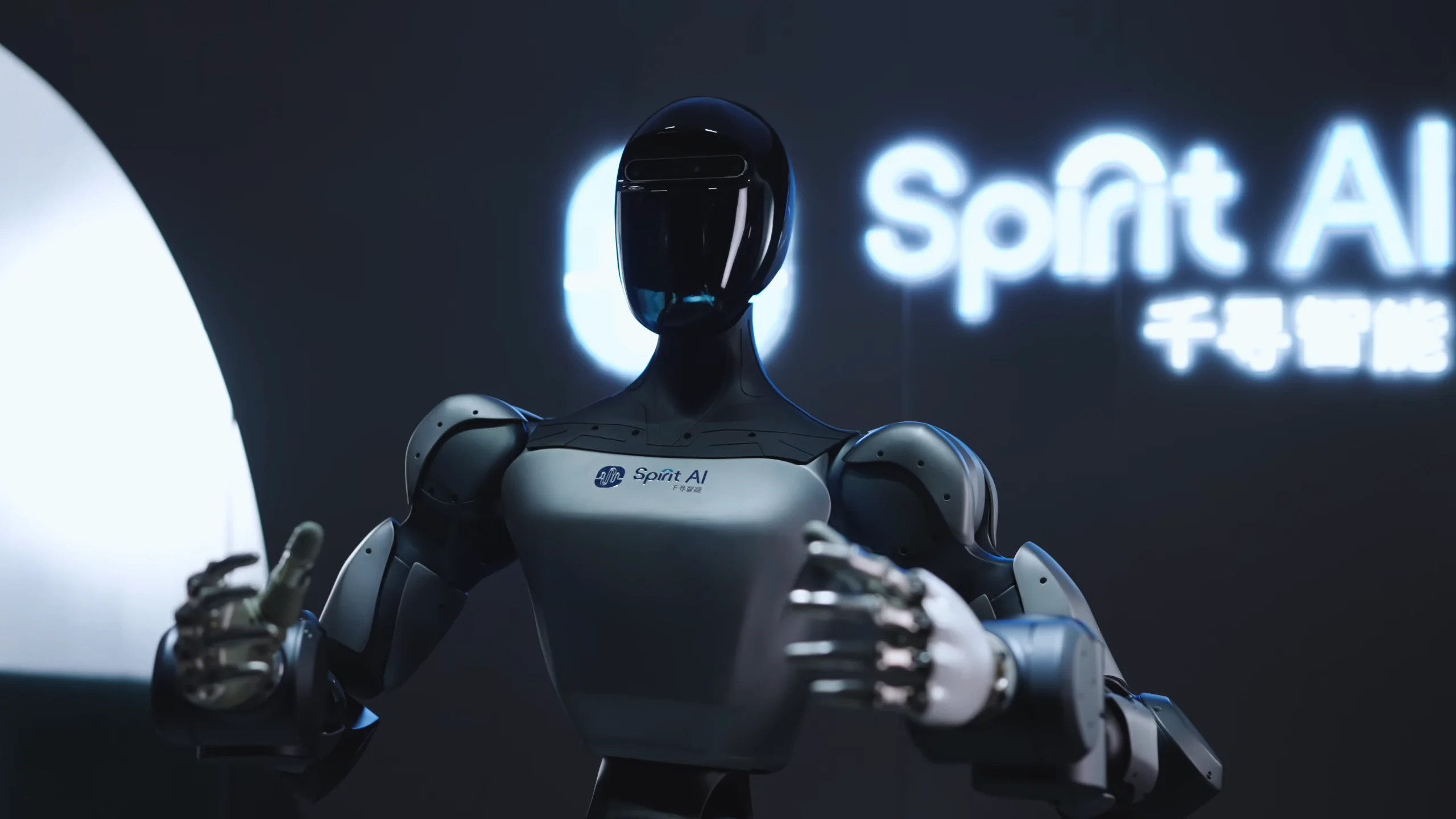 CATL Deploys Humanoid Fleet to High-Voltage Lines, Claims Production Breakthrough
The battery giant has integrated Spirit AI''s "Moz" robots into live production lines, targeting a high-risk task that blends dangerous voltage with the robotic challenge of flexible cables.
-
 DeepMind CEO Demis Hassabis: World Models and 'Infinite Training Loops' are the Keys to AGI
In a candid season finale of the Google DeepMind podcast, Demis Hassabis outlines why language models aren't enough for robotics and how the synergy between world-generators like Genie and agents like SIMA will bridge the gap to physical AI.
December 19, 2025
-
 Video Friday: Happy Robot Holidays
Video Friday is your weekly selection of awesome robotics videos, collected by your friends at IEEE Spectrum robotics. We also post a weekly calendar of upcoming robotics events. Please send us your events for inclusion. ICRA 2026: 1–5 June 2026, VIENNA Enjoy today’s videos! Happy Holidays from FZI Living Lab! [ FZI ] Thanks, Georg! Happy Holidays from Norlab! I should get a poutine... [ Norlab ] Happy Holidays from Fraunhofer IOSB! [ Fraunhofer ] Thanks, Janko! Happy Holidays from HEBI Robotics! [ HEBI Robotics ] Thanks, Trevor! Happy Holidays from the Learning Systems and Robotics Lab! [ Learning Systems and Robotics Lab ] Happy Holidays from Toyota Research Institute! [ Toyota Research Institute ] Happy Holidays from Clearpath Robotics! [ Clearpath Robotics ] Happy AI Holidays from Robotnik! [ Robotnik ] Happy AI Holidays from ABB Robotics! [ ABB Robotics ] With its unique modular configuration, TRON 2 lets you freely configure dual-arm, bipedal, or wheeled setups to fit your mission. [ LimX Dynamics ] Thanks, Jinyan! I love this robot, but can someone please explain why what happens at 2:00 makes me physically uncomfortable? [ Paper ] Thanks, Ayato! This robot, REWW-ARM, is a remote wire-driven mobile robot that separates and excludes electronics from the mobile part, so that the mobile robot can operate in harsh environments. A novel transmission mechanism enables efficient and long-distance electronics-free power transmission, closed-loop control that estimates the distal state from wire. It demonstrated locomotion and manipulation on land and underwater. [ JSK Lab ] Thanks, Takahiro! DEEP Robotics has deployed China’s first robot dog patrol team for forest fire protection in the West Lake area. Powered by embodied AI, these quadruped robots support early detection, patrol, and risk monitoring—using technology to protect nature and strengthen emergency response. [ DEEP Robotics ] In this video we show how we trained our robot to fold a towel from start to f...
-
 Robot Talk Episode 138 – Robots in the environment, with Stefano Mintchev
Claire chatted to Stefano Mintchev from ETH Zürich about robots to explore and monitor the natural environment. Stefano Mintchev is an Assistant Professor of Environmental Robotics at ETH Zürich in Switzerland. He has a Ph.D. in Bioinspired Robotics from Scuola Superiore Sant’Anna in Italy, and conducted postdoctoral research at EPFL in Switzerland, focused on bioinspired […]
-
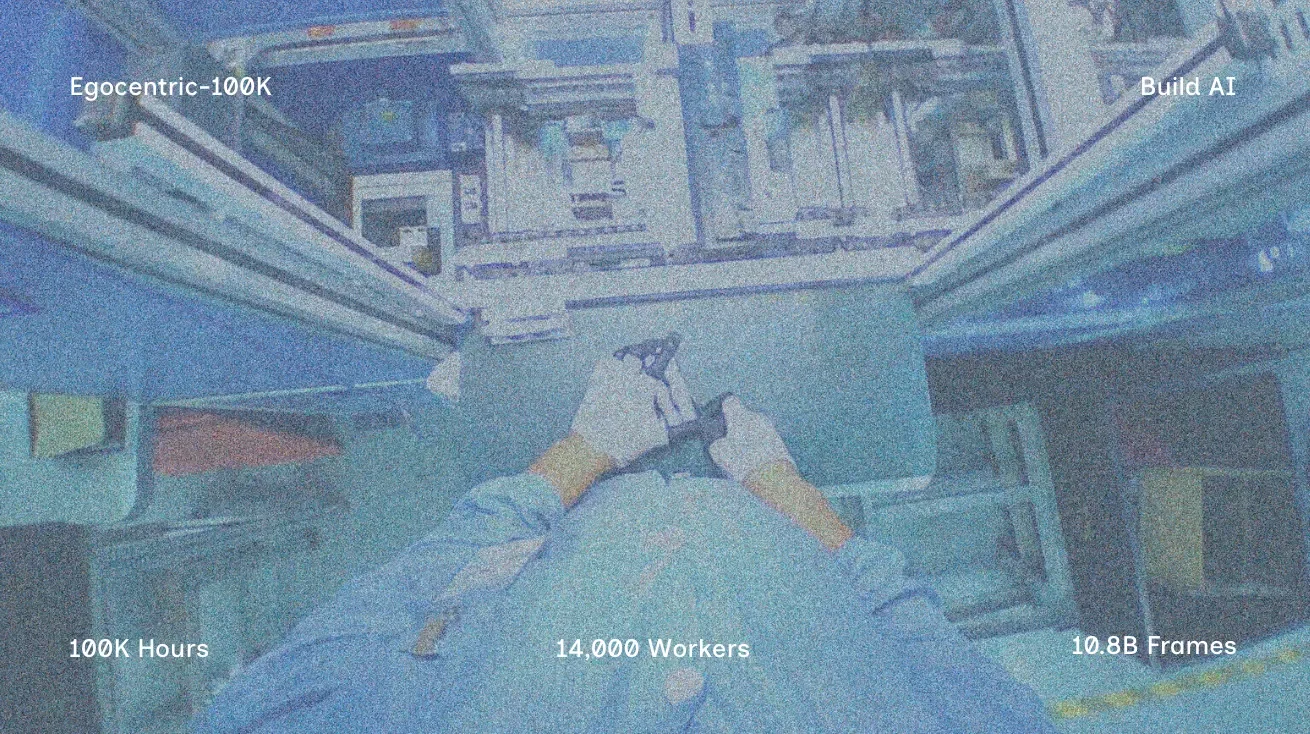 Build AI Scales to 100,000 Hours as Data Scaling Becomes Robotics’ New Frontier
With a fresh $15 million in funding and a massive new dataset, Build AI is doubling down on the bet that human video is the key to universal robot intelligence.
December 18, 2025
-
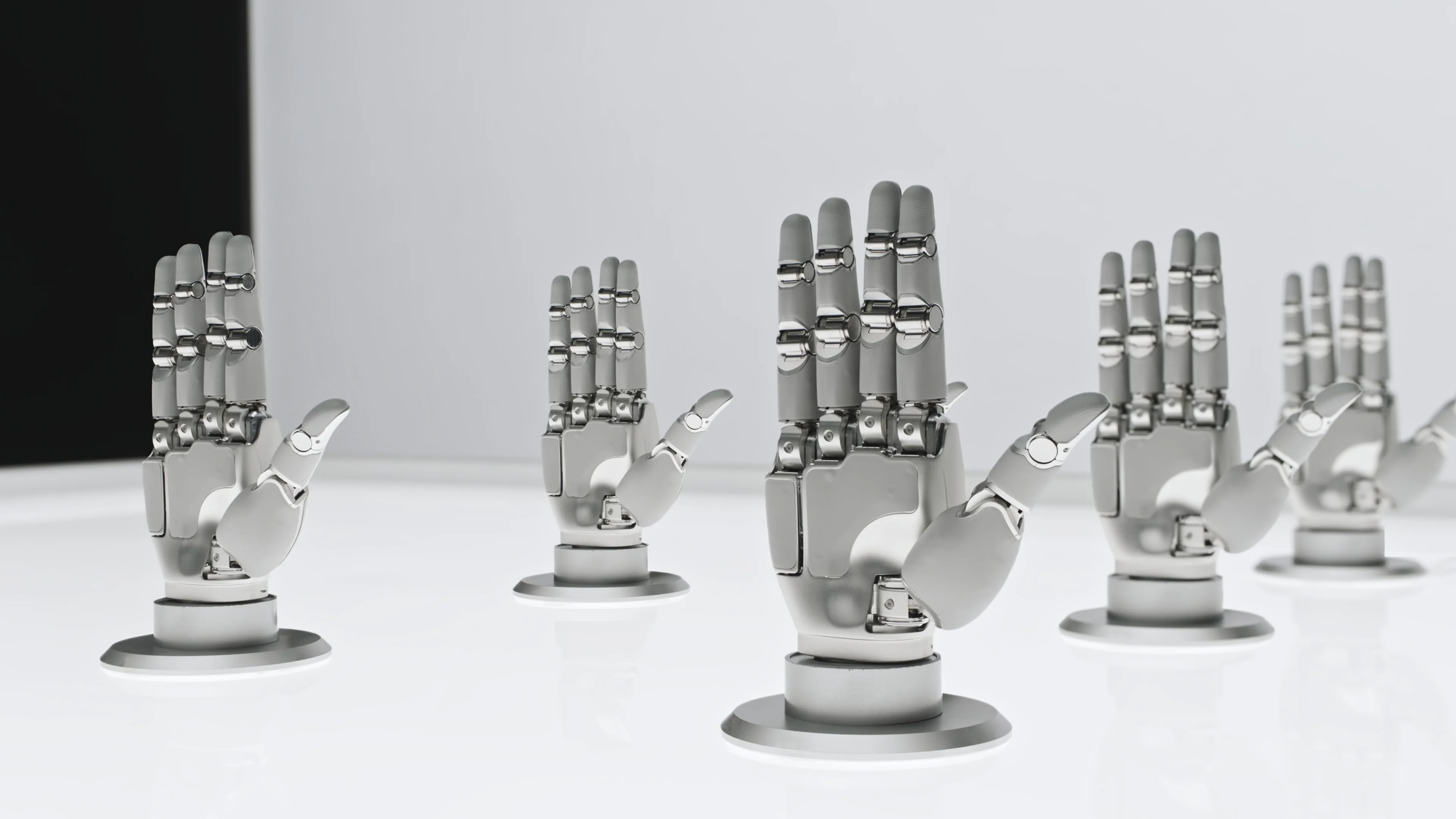 Sharpa Robotics Ramps Up Mass Production of "Vision-Based" Tactile Hand
Ahead of CES 2026, the Singapore-based robotics firm details its reliability testing and confirms a modular design for its SharpaWave end-effector.
-
 Kyocera’s Subsea Laser Link Swaps Range for Gigabit Speeds
Underwater drones may soon be able to transfer data at lightning speeds—though only if the receiver is nearby. In November, the Kyoto, Japan-based electronics maker Kyocera demonstrated a new optical underwater communications technology that boasts lab tests of up to 5.2 gigabits per second at short range. The company is promoting this new optical transmission tech to enable faster inspections of structural damage at undersea worksites—an application that requires handling and transferring large volumes of data in undersea settings. For instance, underwater inspection drones are today regularly used to gather footage of oil and gas pipes, submarine electric or communications cables, and other underwater structures. But there’s no real-time, easy way for the drones to send their large data signals through the water, unless the drone is tethered by wire. But possibly using tech like what Kyocera has developed, an underwater drone might one day gather and store its footage and then dock at a fixed underwater station on the seafloor bed to wirelessly offload its drives. From there, the data station could ship its large stores of data via cable to a buoy or ship on the surface, or a station on the ground. Kyocera will be showcasing this new technology at the consumer tech world’s largest venue, the 2026 Consumer Electronics Show, in Las Vegas next month. Why Lasers Beat Sound Underwater Transmitting data underwater today typically involves 1980s-era modem speeds. Current underwater acoustic modems, for instance, can transmit and receive signals across tens of kilometers distance—though only at the meager bit rate of a few kilobits per second. Contrast that to underwater wireless optical communication (UWOC). In offshore tests last August, Kyocera researchers achieved 0.75 Gbps throughput to a receiver 15 centimeters away—a world UWOC record, according to the company. So Kyocera researchers are now developing a 1 Gbps UWOC prototype, and they aim to introduce a 2 Gbps ...
-
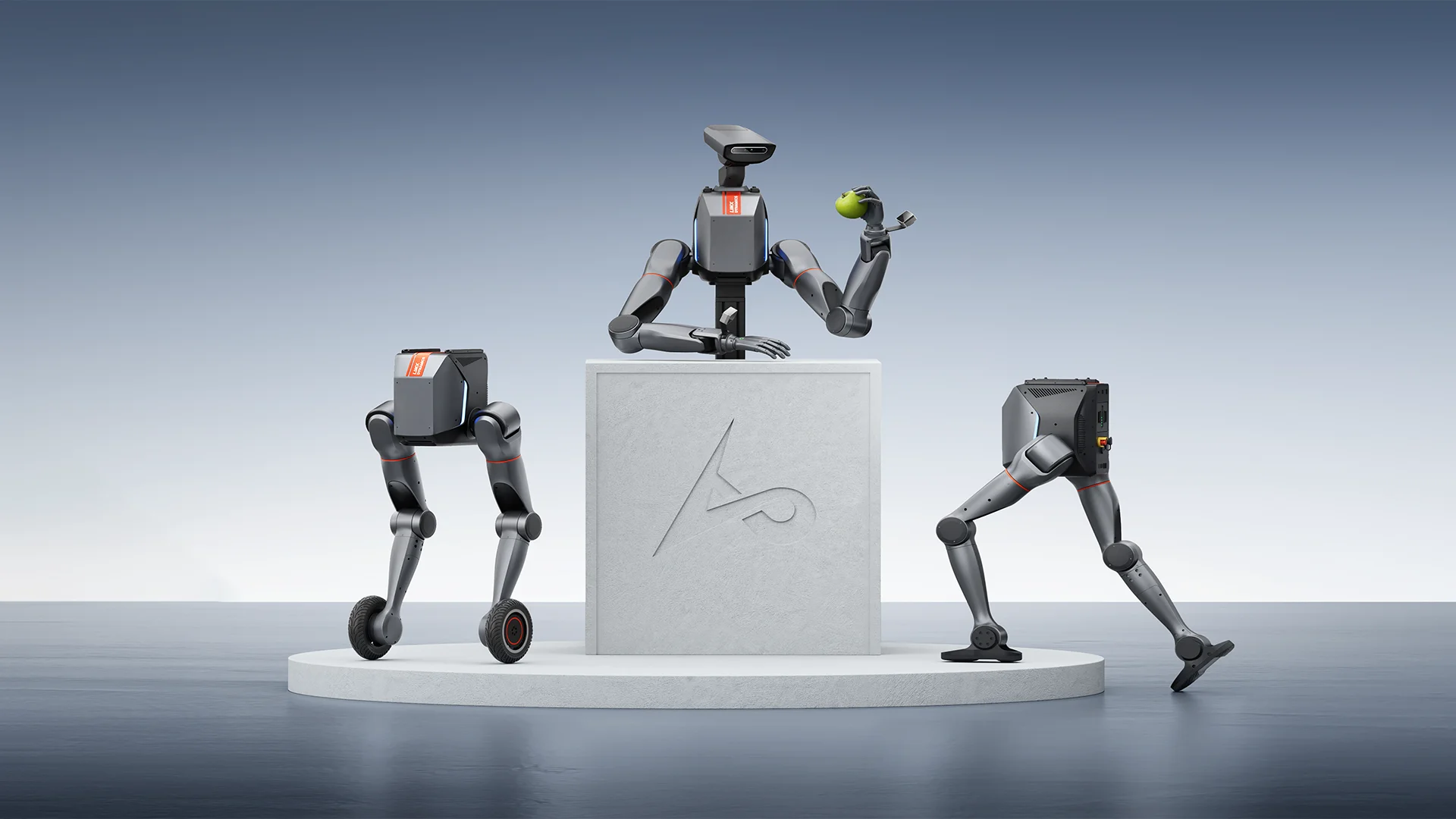 LimX Dynamics Launches TRON 2: A Modular "Shapeshifter" for Embodied AI Research
The Shenzhen robotics firm has unveiled a 3-in-1 platform that transforms from a bipedal walker to a wheeled robot or a stationary dual-arm manipulator, targeting the education and research sector with a \$25,000 price point.
-
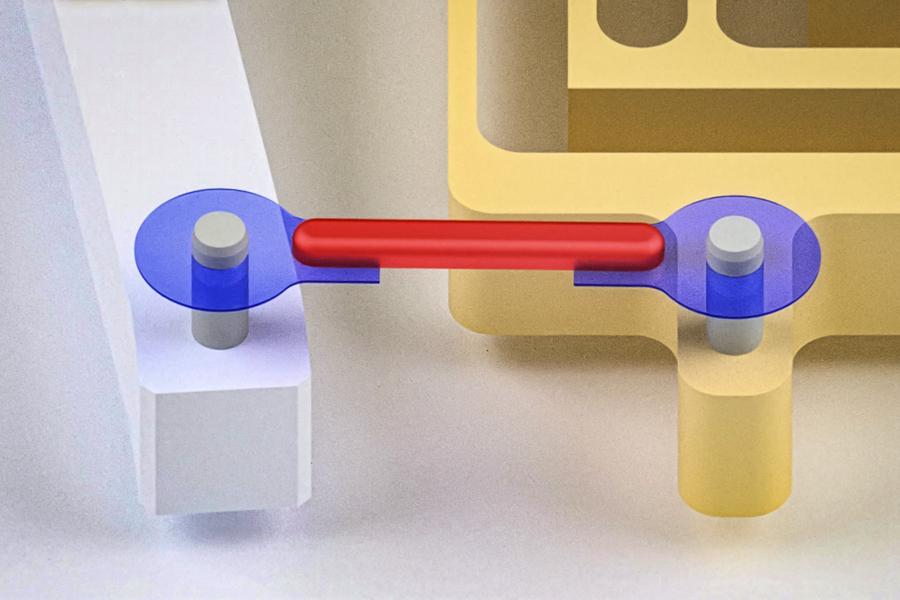 Artificial tendons give muscle-powered robots a boost
The new design from MIT engineers could pump up many biohybrid builds.
December 17, 2025
-
 Boston Dynamics Deep Dives into the ''Robot Brain'': Why Generalist Droids Are the Only Fix for Manufacturing
In a detailed new technical discussion, Atlas leadership explains why "hard automation" is failing the automotive industry and reveals the three-pillared data strategy behind the robot''s new AI brain.
-
 Physical Intelligence Finds 'Emergent' Bridge Between Human Video and Robot Action
The $5.6 billion startup reveals that sufficiently large robot models naturally learn to understand human video, potentially solving the industry's data bottleneck.
December 16, 2025
-
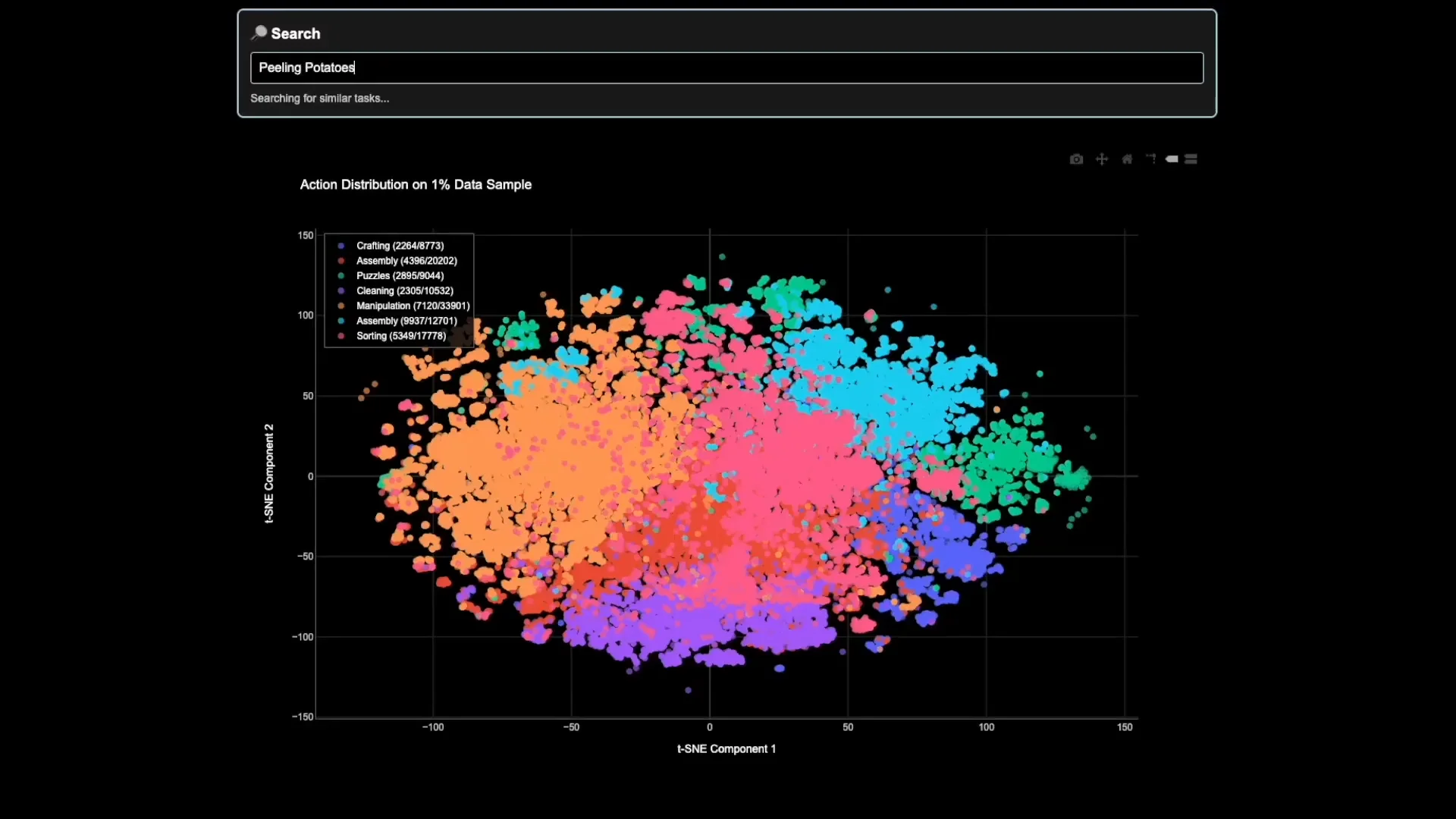 Generalist AI Releases "Science of Pretraining" Deep Dive: Why Data Quality Trumps Volume in Robotics
In a technical addendum to its GEN-0 launch, Generalist AI reveals new details on its pretraining methodology, introducing metrics like "Reverse KL" to measure model creativity and claiming infrastructure capable of absorbing 6.85 years of robot experience per day.
-
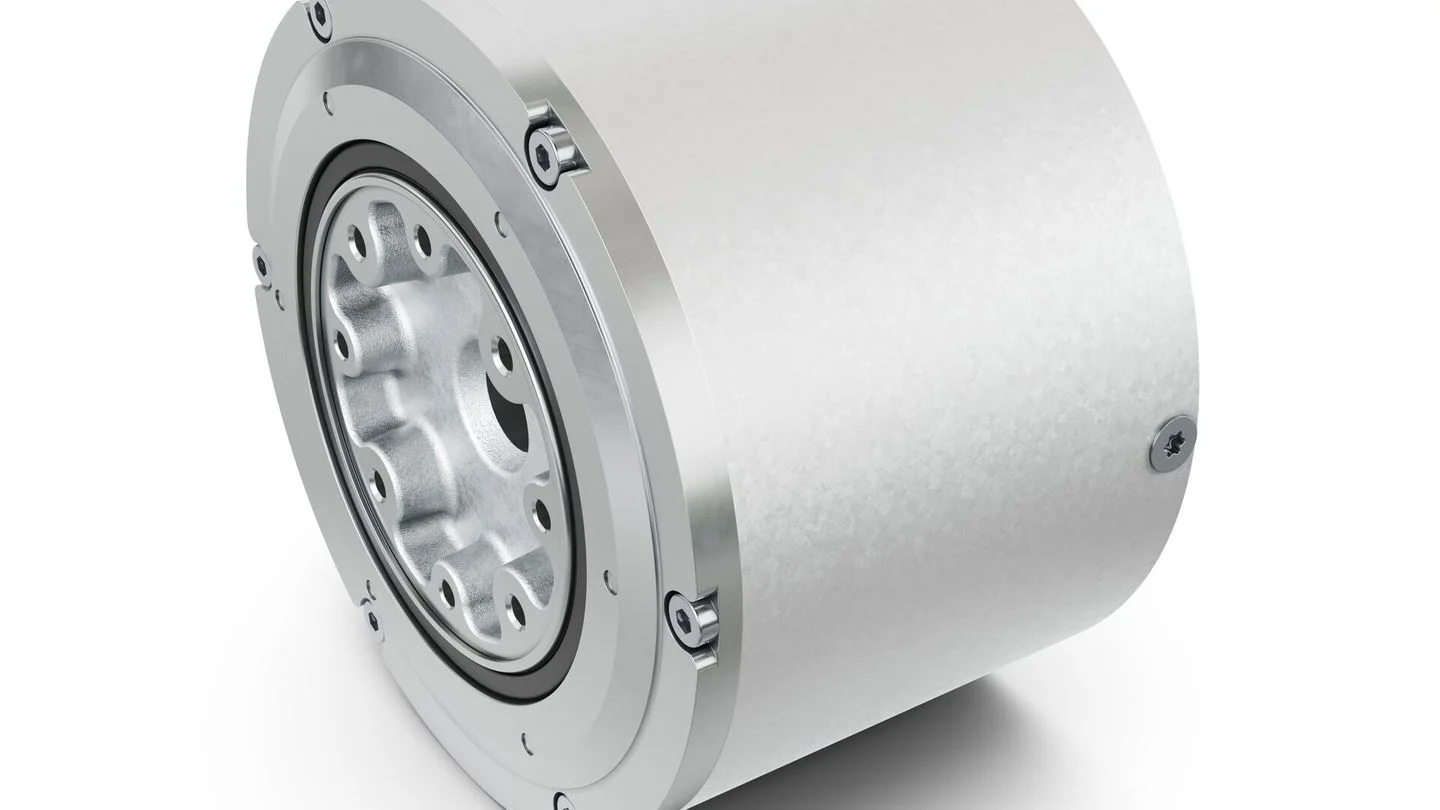 Schaeffler Unveils "All-in-One" Actuator for Humanoids, Targeting the Industry’s Supply Chain Bottleneck
Ahead of CES 2026, the German industrial giant reveals a fully integrated planetary gear actuator, cementing its dual strategy as both a user and supplier of humanoid hardware.
-
 Neura Robotics Moves Humanoid R&D to Zurich, Tapping into Europe’s "Robotics Valley"
German robotics unicorn Neura Robotics has opened a major new development center in Zurich, relocating the R&D for its 4NE-1 humanoid to the Swiss city. The move highlights Zurich''s growing status as a global hub for embodied AI, joining neighbors like Disney Research and Flexion.
December 15, 2025
-
 Texas Instruments Deploys UBTECH Humanoids in Strategic Semiconductor Push
US chip giant Texas Instruments has partnered with UBTECH Robotics to deploy Walker S2 units on its production lines, marking the humanoid maker's entry into the high-precision semiconductor sector.
-
 Generations in Dialogue: Human-robot interactions and social robotics with Professor Marynel Vasquez
Generations in Dialogue: Bridging Perspectives in AI is a podcast from AAAI featuring thought-provoking discussions between AI experts, practitioners, and enthusiasts from different age groups and backgrounds. Each episode delves into how generational experiences shape views on AI, exploring the challenges, opportunities, and ethical considerations that come with the advancement of this transformative technology. Human-robot […]
-
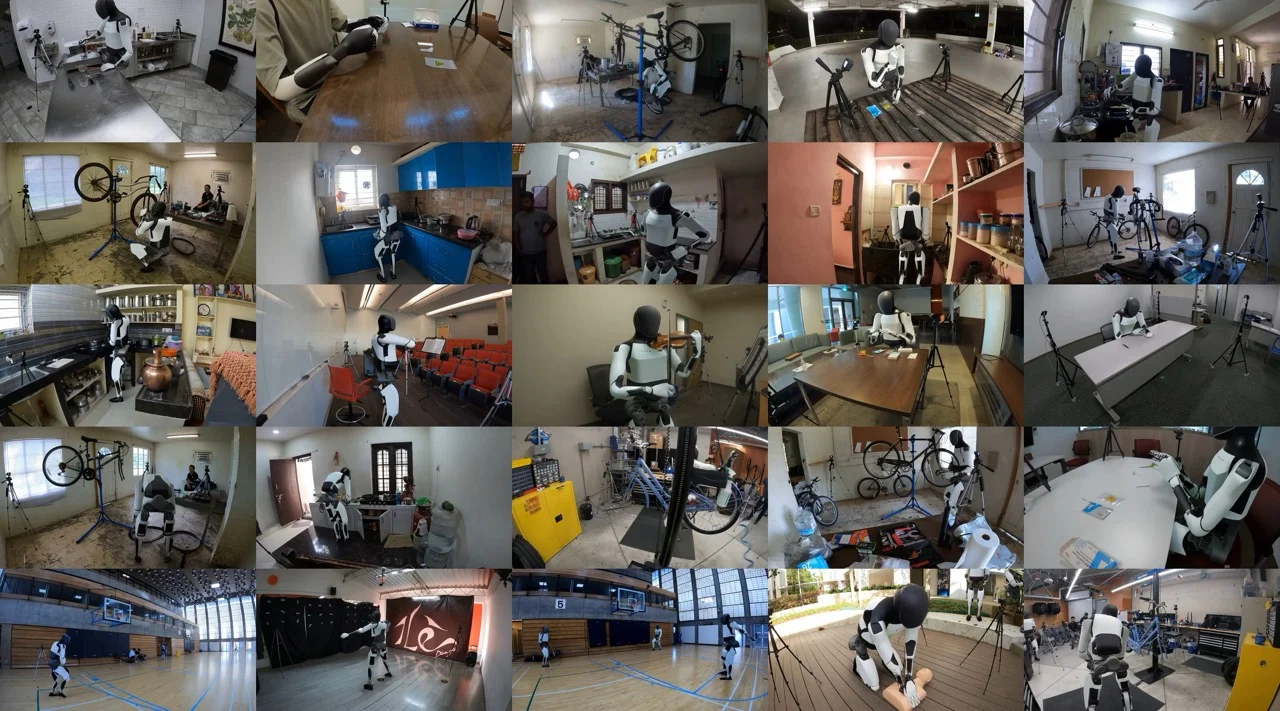 Research Spotlight: X-Humanoid ‘Robotizes’ Human Videos to Train the Next Generation of Androids
Researchers from the National University of Singapore have developed a generative video pipeline that converts third-person human activity footage into synthetic training data for humanoid robots, effectively bridging the embodiment gap at scale.
-
 Noetix Secures 1,000-Unit Order for ‘Bumi’ Humanoid in Strategic AI Deal
Data analytics firm HCR has committed to purchasing 1,000 units of the low-cost robot while providing its "HCR-X" brain for vertical market applications.
December 13, 2025
-
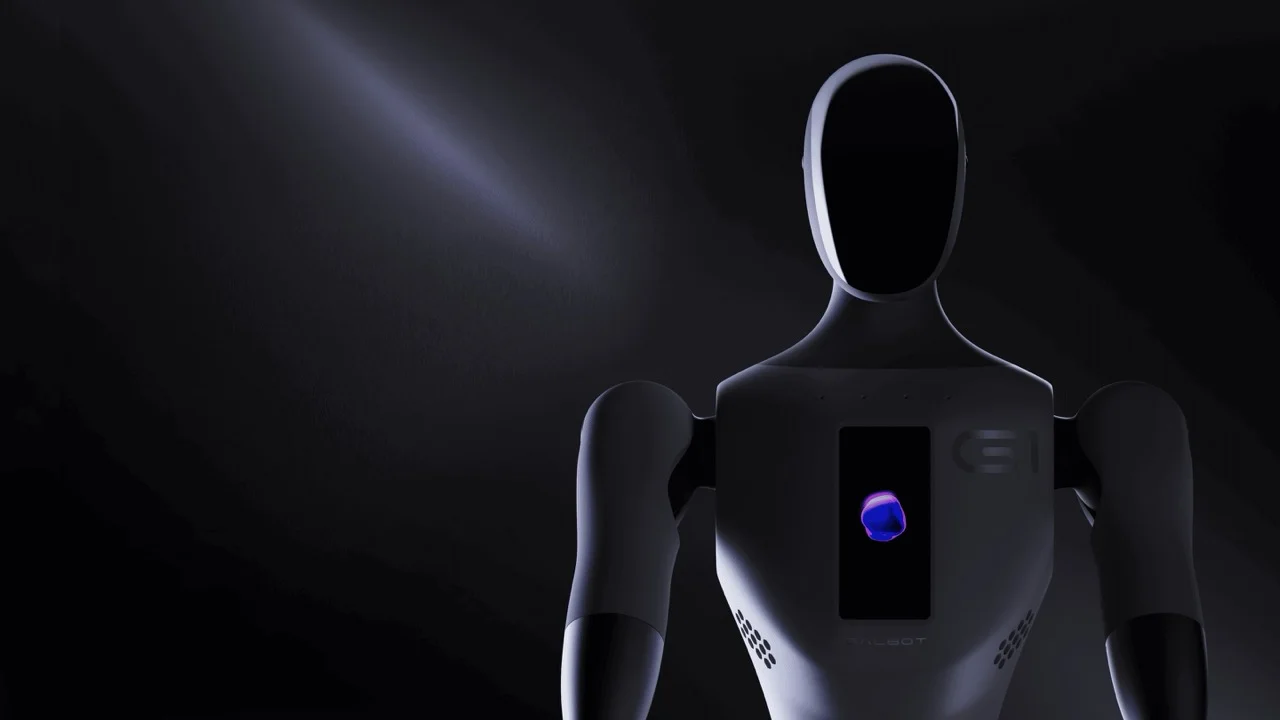 Galbot Reportedly Eyes $4 Billion Hong Kong IPO, Joining China’s Humanoid Rush
The Beijing-based startup, backed by battery giant CATL, is reportedly working with UBS and Citic Securities on a 2026 listing—though the company claims its current restructuring is merely for private financing.
-
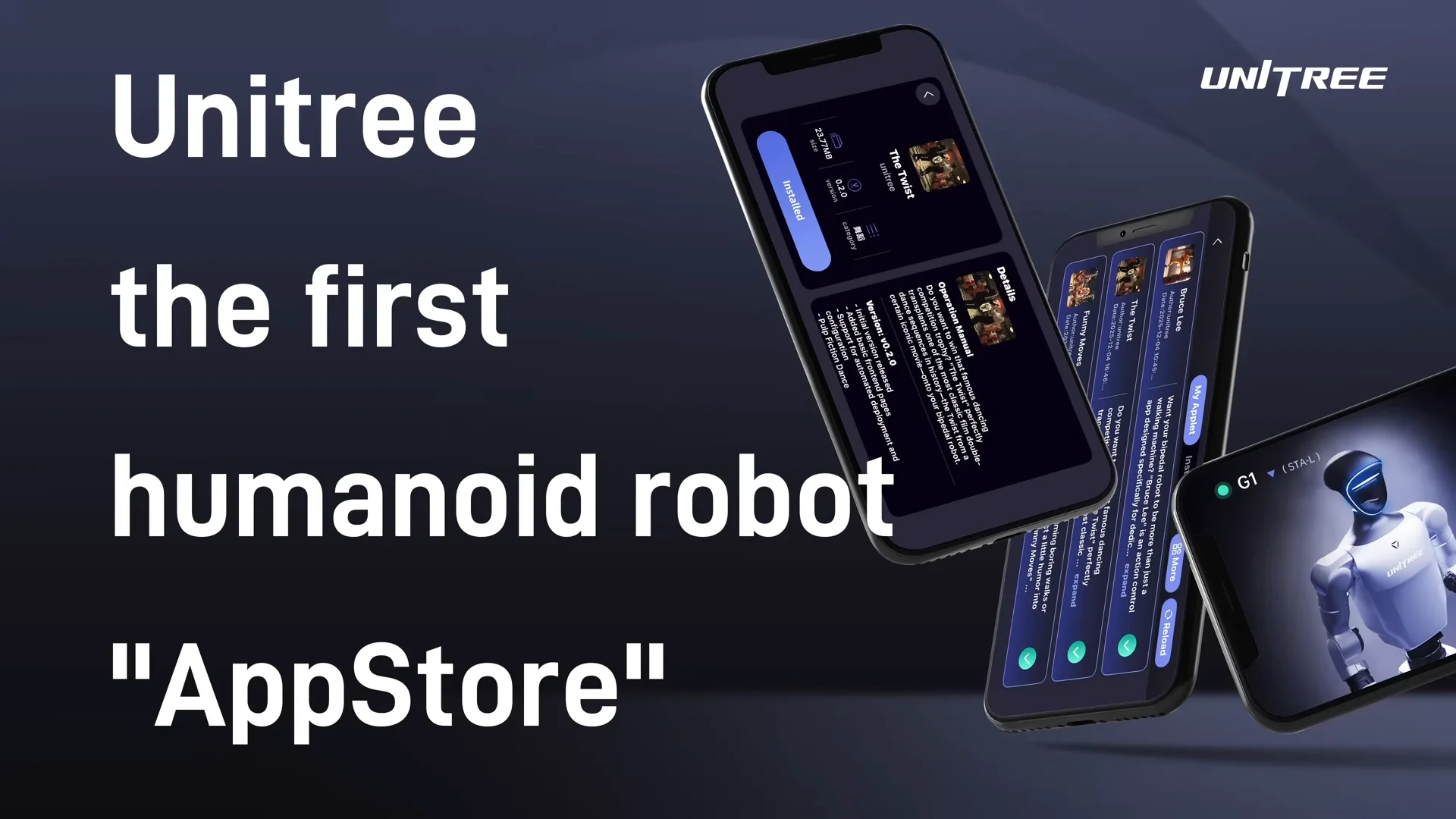 Unitree Teases an "App Store" for Humanoids to Crowdsource Robot Skills
The Chinese robotics giant has unveiled a centralized hub for sharing robot actions and training datasets, attempting to create an iPhone-like ecosystem for its G1 and H1 platforms.
December 12, 2025
-
 Robot Talk Episode 137 – Getting two-legged robots moving, with Oluwami Dosunmu-Ogunbi
Claire chatted to Oluwami Dosunmu-Ogunbi from Ohio Northern University about bipedal robots that can walk and even climb stairs. Oluwami Dosunmu-Ogunbi (Wami) is an Assistant Professor in the Mechanical Engineering Department at Ohio Northern University. Her research focuses on controls with applications in bipedal locomotion and engineering education. She is the first Black woman to […]
-
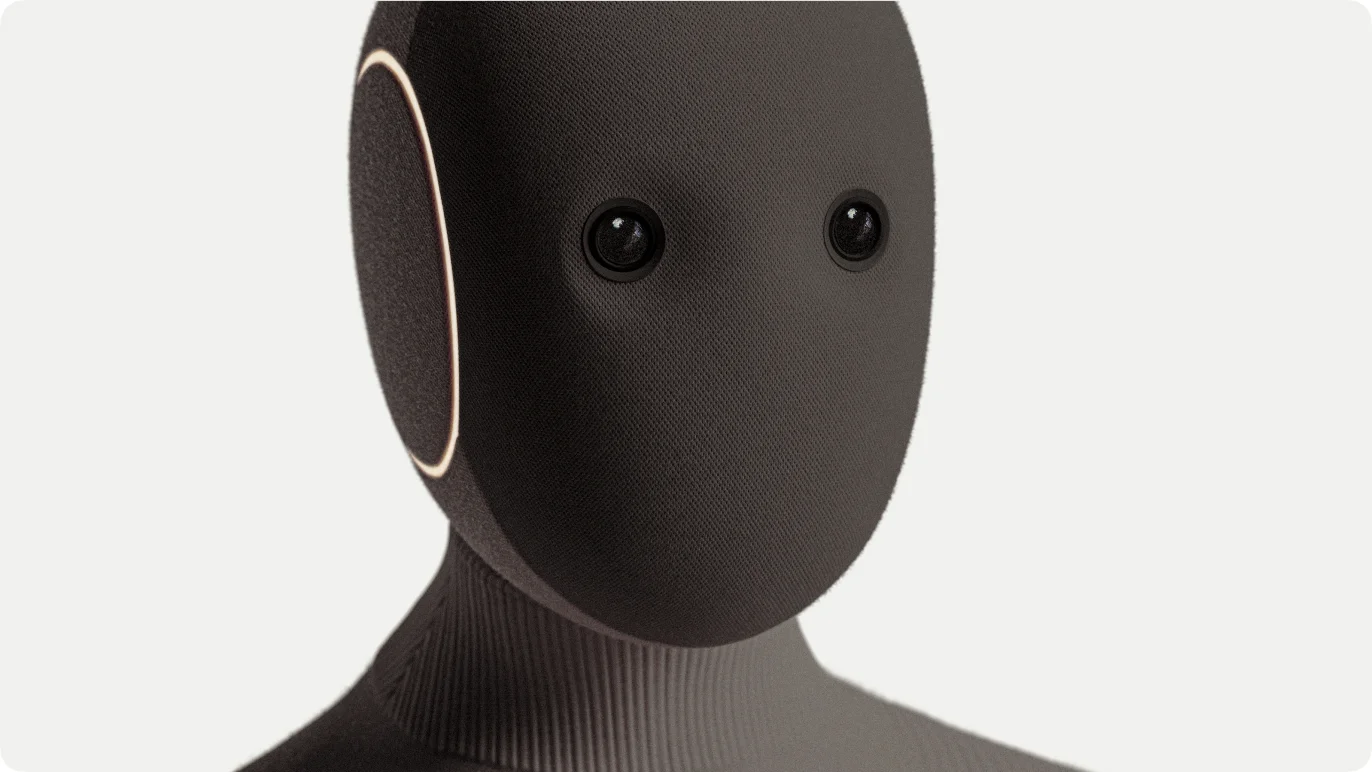 1X Partners with EQT to Deploy Up to 10,000 Humanoid Robots Across Global Industry
The robotics firm has signed a strategic agreement with its investor, EQT, to offer NEO androids to a portfolio of over 300 companies, marking a massive potential expansion into the enterprise sector.
December 11, 2025
-
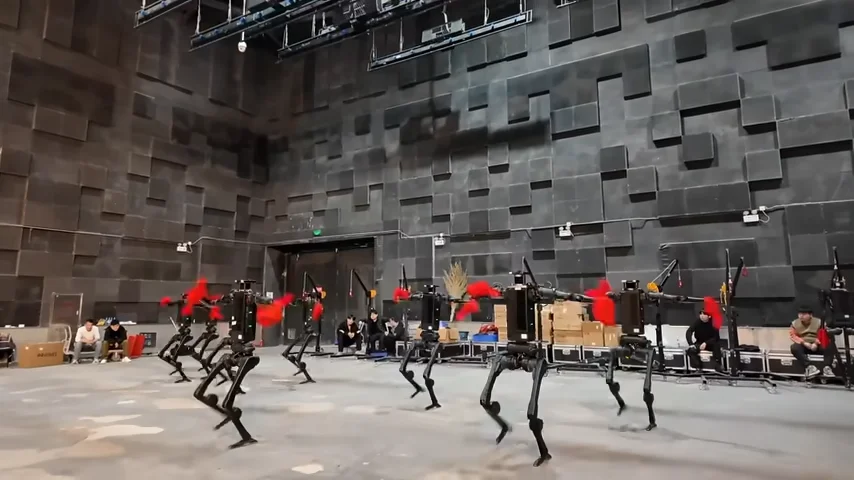 Rumored $13 Million Gala Bid Sparks Fears of a Humanoid Robotics ‘Bubble’ in China
Reports of a bidding war between Unitree and AgiBot for a Spring Festival Gala spot have triggered anxiety over excessive spending, a sentiment backed by Morgan Stanley data revealing a "disconnect" between viral hype and industrial readiness.
-
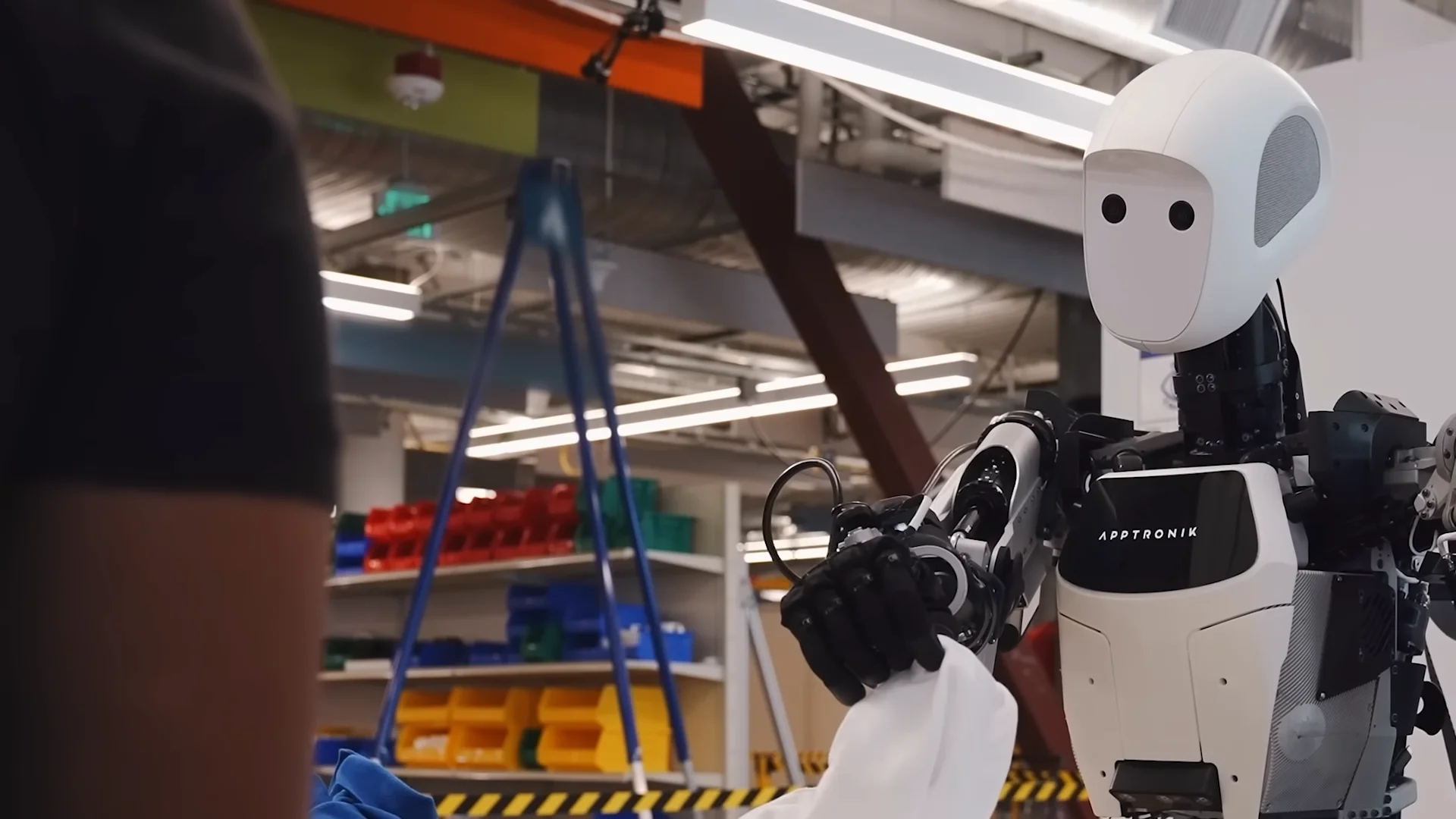 Google DeepMind Robotics Director: We Need "One More Big Breakthrough" to Solve General Purpose Robots
In a new behind-the-scenes look at the DeepMind robotics lab, leadership showcases "thinking" robots and long-horizon planning, but admits that data efficiency remains a critical hurdle before the technology is ready for the real world.
-
 Agility Robotics Partners with Mercado Libre, Eyeing Latin American Expansion
The "Amazon of Latin America" will deploy Digit robots at a Texas facility, marking another commercial win for Agility following its recent safety certifications and GXO milestones.
December 10, 2025
-
 Morgan Stanley’s "Humanoid Tech 25": Betting on the Components, Not the Brands
A new report from the investment bank advises investors to look past the flashy OEMs and focus on the "picks and shovels" supply chain—from AI brains to mechanical bodies—powering a projected $5 trillion industry.
-
 Radboud chemists are working with companies and robots on the transition from oil-based to bio-based materials
Chemical products such as medicines, plastics, soap, and paint are still often based on fossil raw materials. This is not sustainable, so there is an urgent need for ways to make a ‘materials transition’ to products made from bio-based raw materials. To achieve results more quickly and efficiently, researchers at Radboud University in the Big […]
-
 Samsung Backs Norwegian Motor Specialist Alva Industries in Push for Humanoid Hardware
Samsung Electro-Mechanics has invested in Alva Industries to secure "FiberPrinting" motor technology, a critical component for the company''s upcoming humanoid robotic hands.
December 9, 2025
-
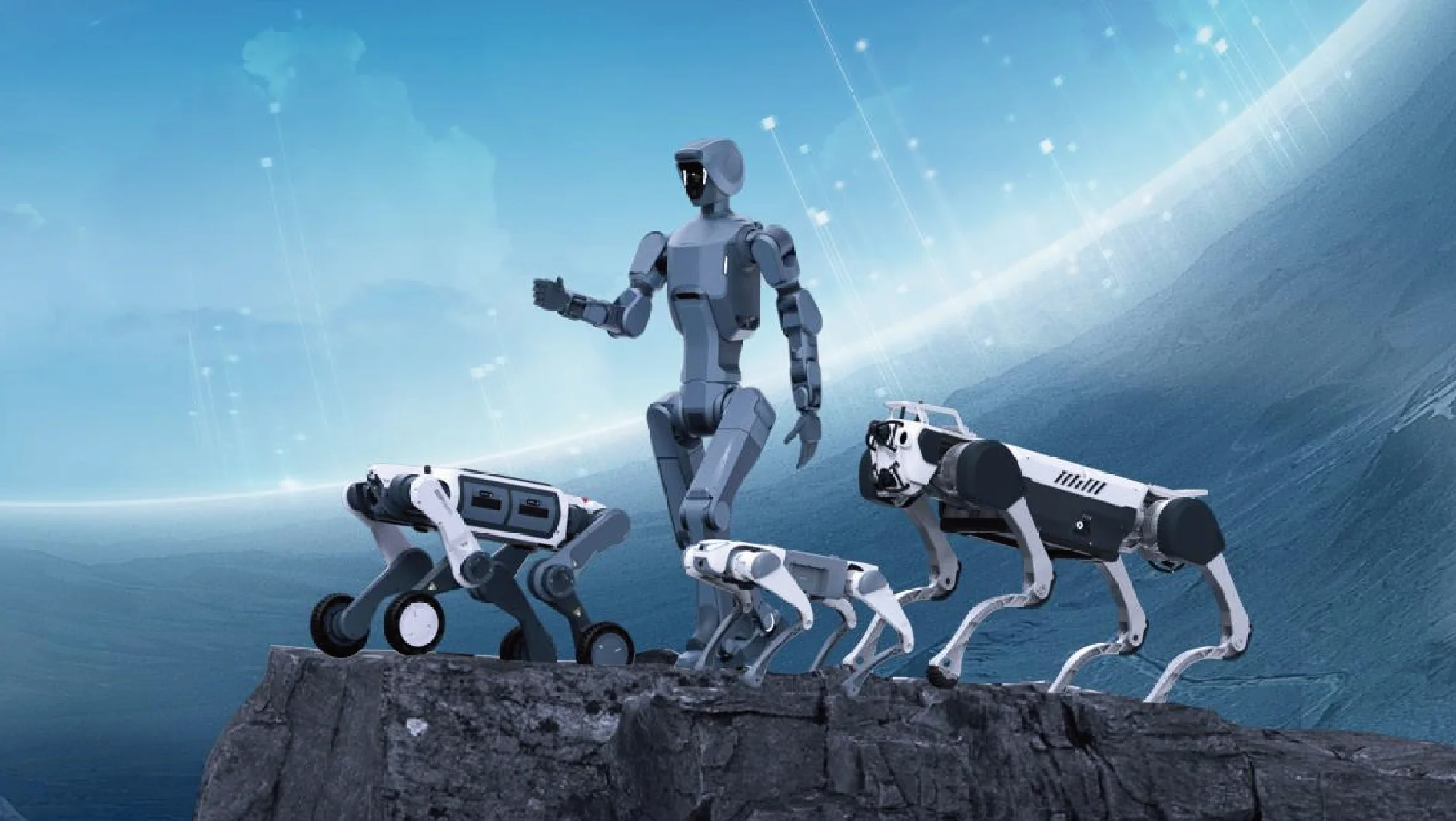 Deep Robotics Secures $68M in Series C to Fuel Humanoid and ‘Embodied AI’ Push
Backed by state-owned giants China Telecom and China Unicom, the Series C round positions Deep Robotics to scale its new wheeled-legged and humanoid platforms ahead of a potential IPO.
-
 Italy Enters the Chat: Generative Bionics Raises €70M to Bring "Physical AI" to Industry
Born from the prestigious Italian Institute of Technology, the new spinoff enters the humanoid race with backing from AMD and Tether, aiming to turn 20 years of research into industrial reality.
December 8, 2025
-
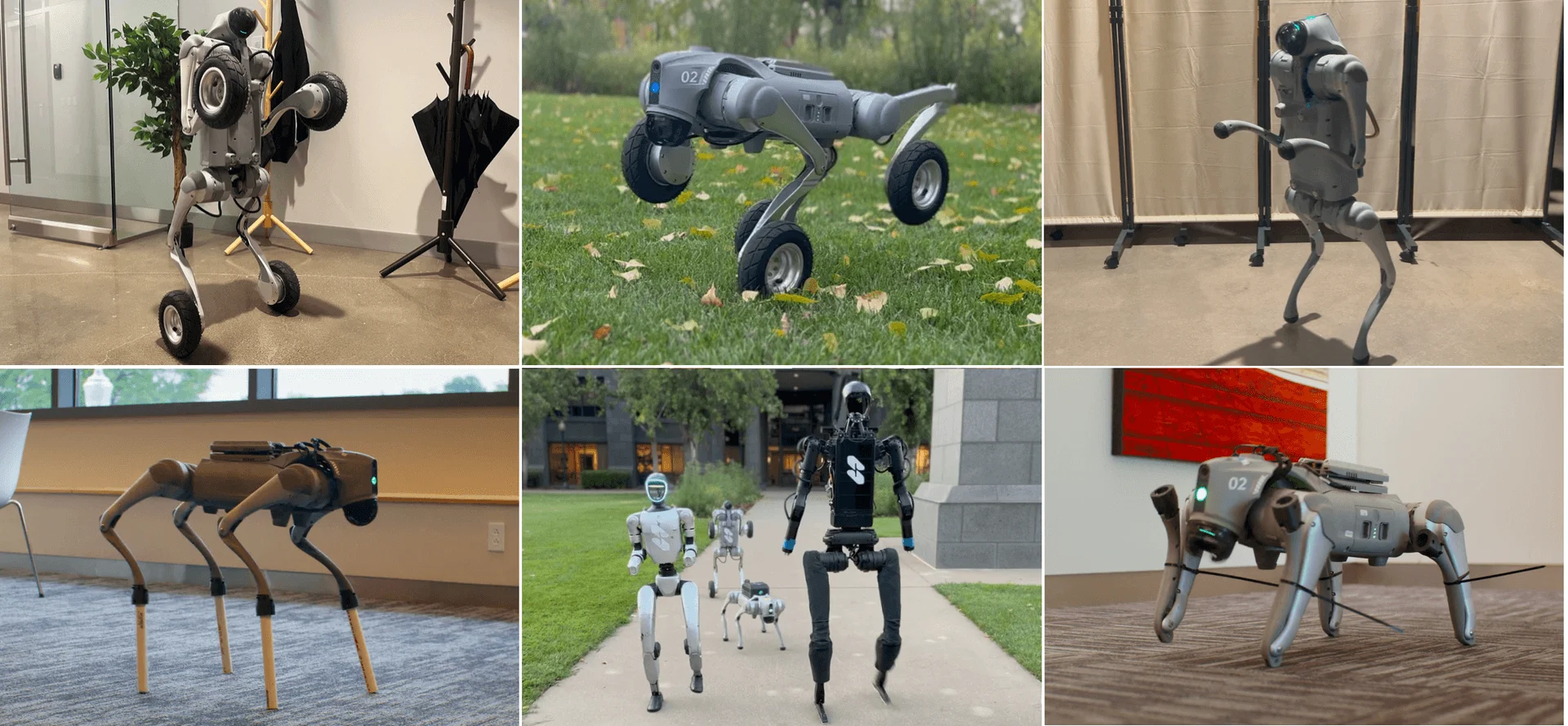 SoftBank and NVIDIA Reportedly Near Deal to Value Skild AI at $14 Billion
In a massive escalation of the robotic software race, SoftBank and NVIDIA are reportedly in talks to invest over $1 billion in Skild AI, tripling the startup''s valuation as it details its "omni-bodied" brain technology.
-
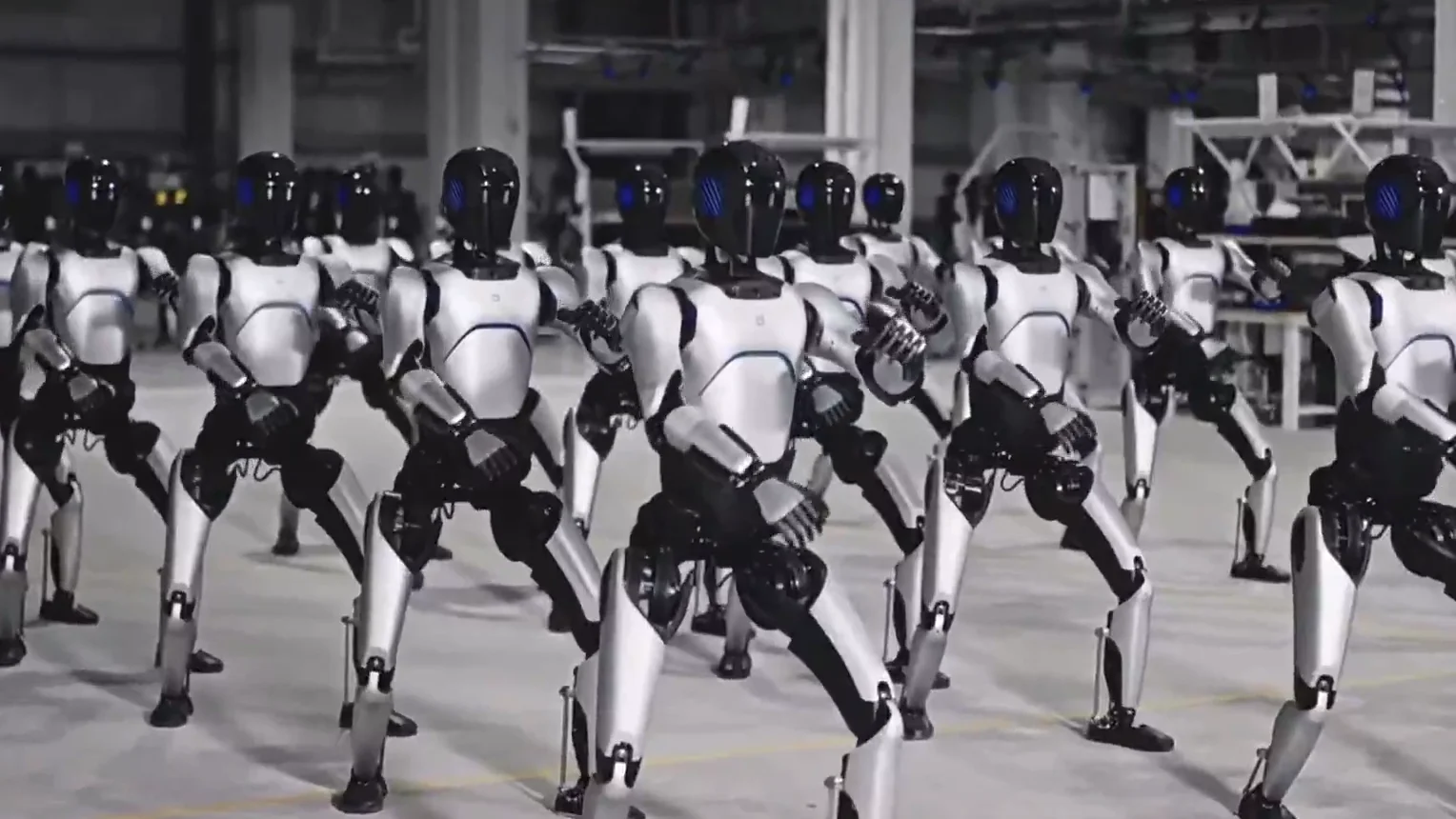 AgiBot Rolls Out 5,000th Robot, Revealing a Mixed-Fleet Strategy
The Shanghai-based startup, founded by "Genius Youth" Peng Zhihui, breaks down its production numbers as it races toward a potential IPO.
-
 Tesla’s Miami Mishap Highlights the Fragile Reality of Teleoperation
A viral video of an Optimus robot collapsing at a Miami event serves as a stark reminder of the risks inherent in teleoperated, rigid humanoids.
-
 Generations in Dialogue: Embodied AI, robotics, perception, and action with Professor Roberto Martín-Martín
Generations in Dialogue: Bridging Perspectives in AI is a podcast from AAAI featuring thought-provoking discussions between AI experts, practitioners, and enthusiasts from different age groups and backgrounds. Each episode delves into how generational experiences shape views on AI, exploring the challenges, opportunities, and ethical considerations that come with the advancement of this transformative technology. Embodied […]
December 7, 2025
-
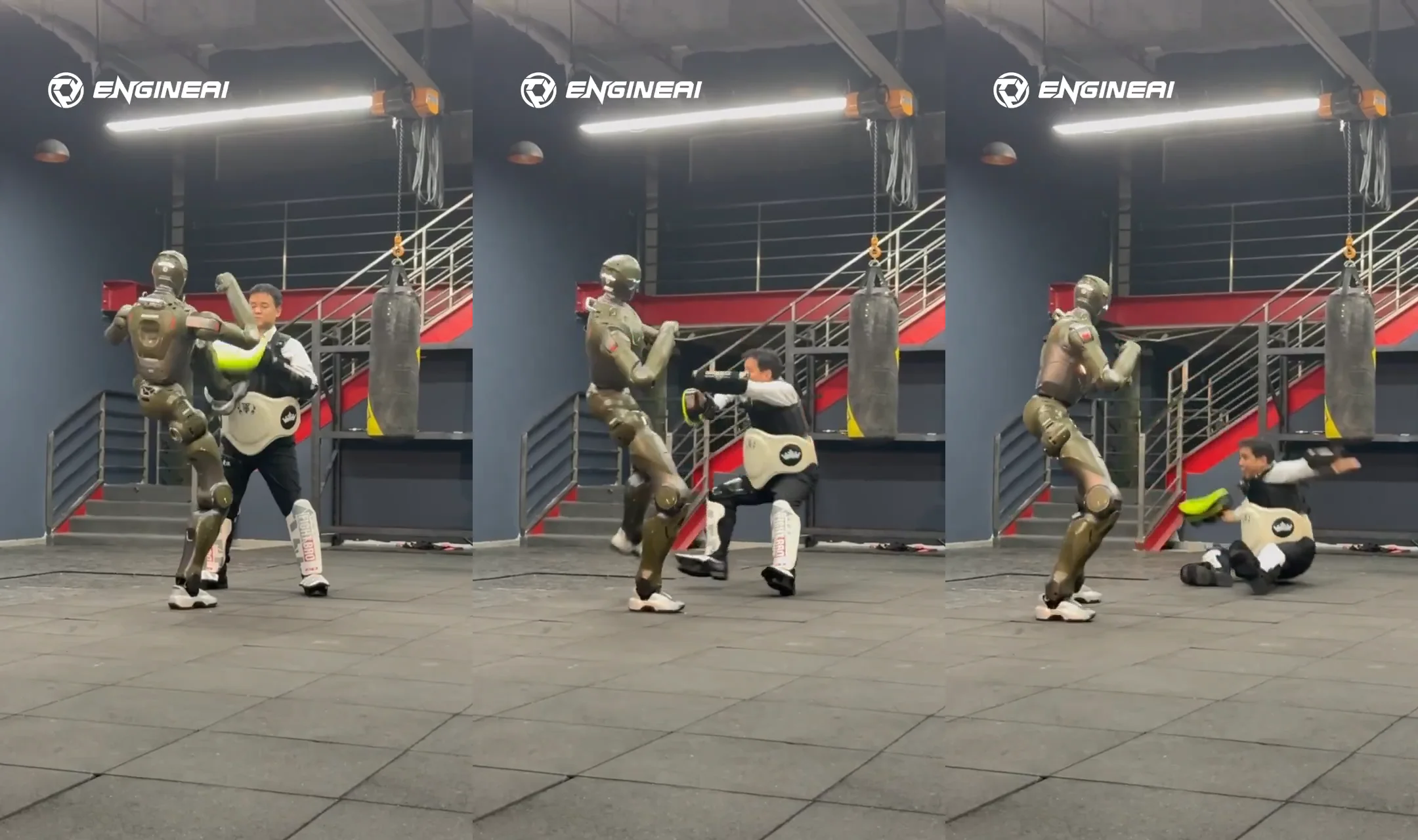 EngineAI CEO Takes a Kick from T800 Robot to Settle CGI Debates
In a visceral "proof of life" demonstration, the CEO of EngineAI dons protective gear to absorb a kick from the T800 humanoid, doubling down on the company''s aggressive marketing strategy.
-
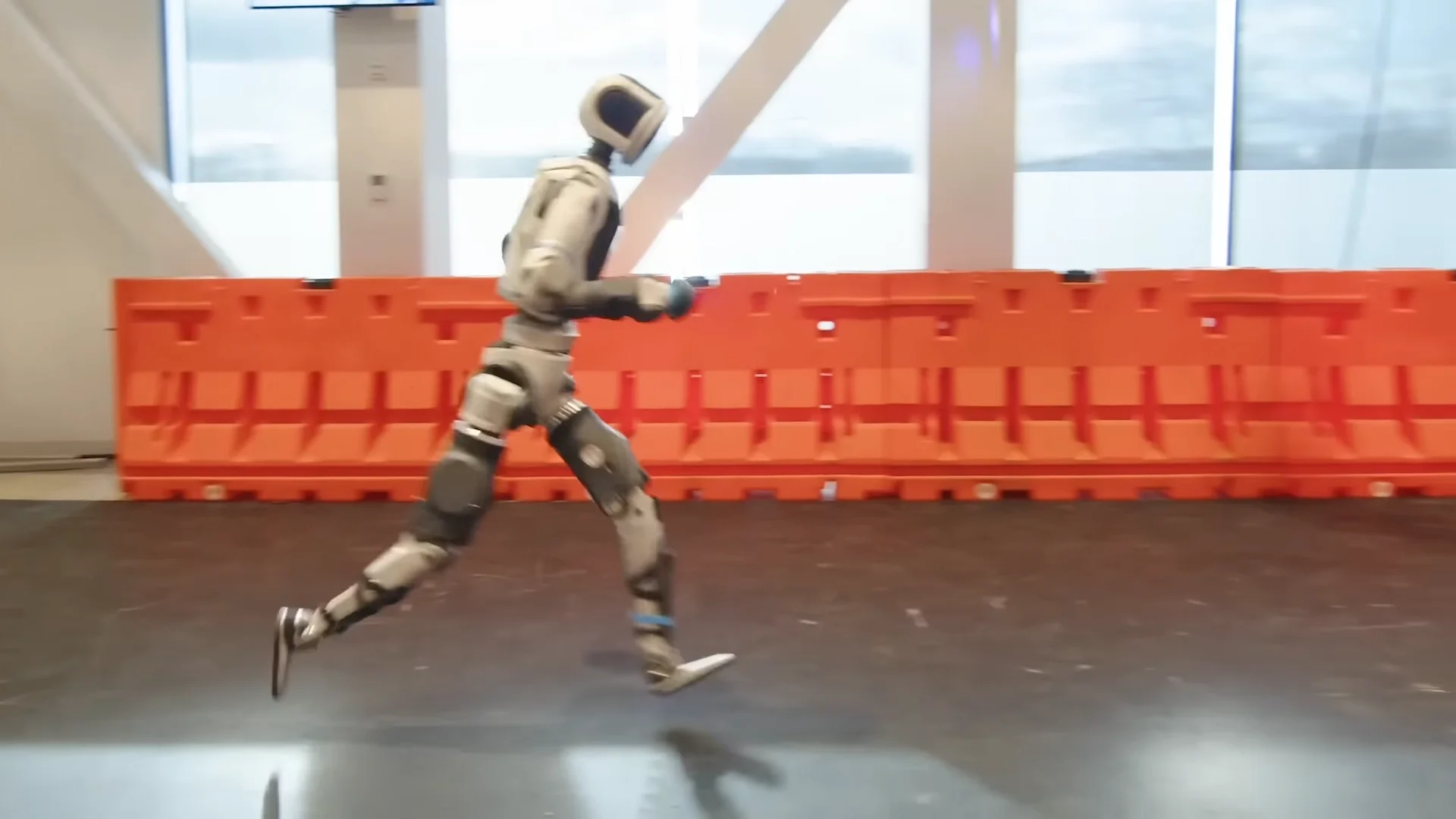 Boston Dynamics Teases "Automotive Volumes" of Atlas in January Update
Amidst a flurry of competitor milestones, Boston Dynamics executives hint at a major shift toward mass production and enterprise deployment for the Atlas humanoid early next year.
-
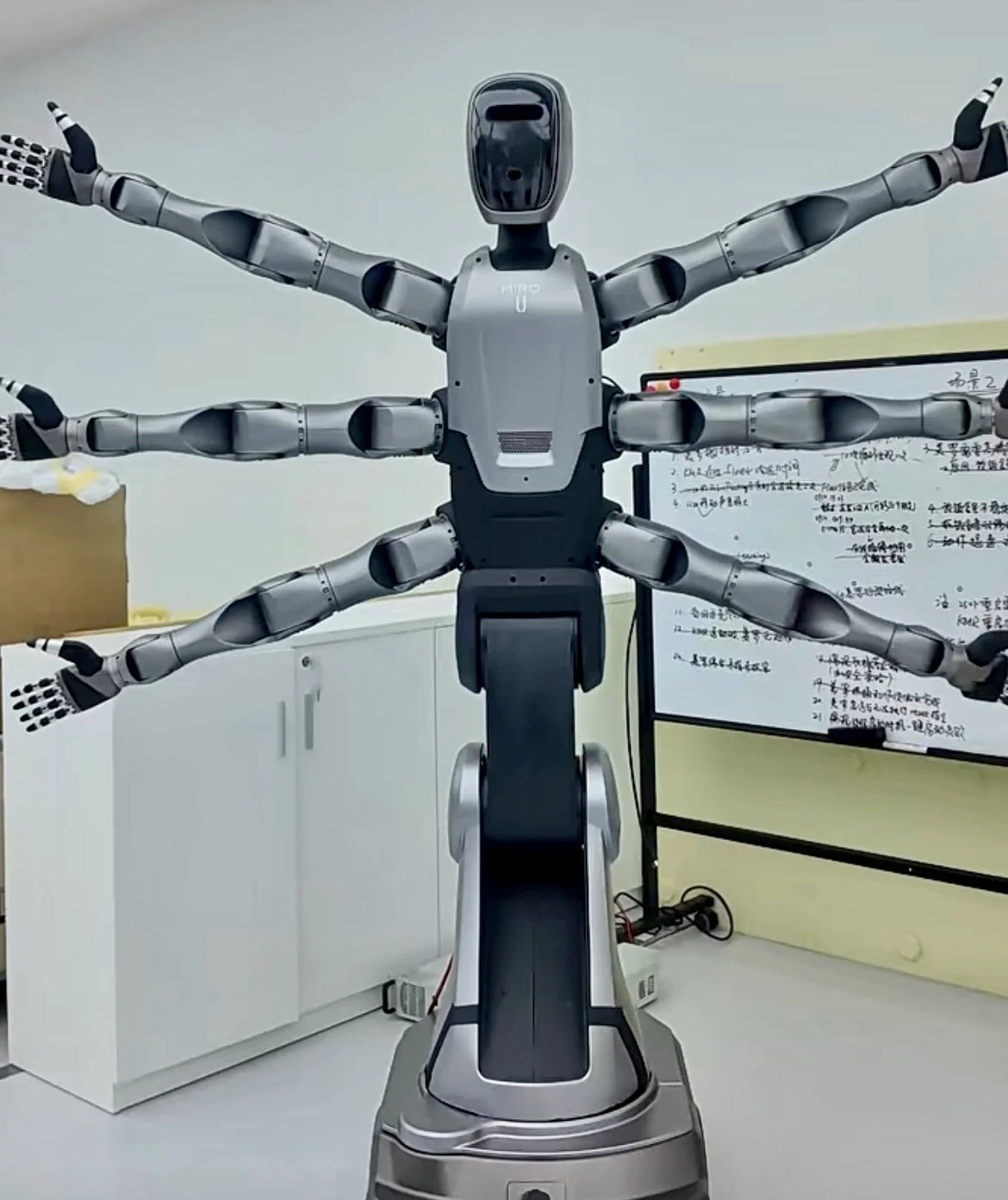 Midea’s ‘Super Humanoid’ MIRO U Has Six Arms and Wheels, Challenges 1:1 Human Mimicry
Midea Group has unveiled the MIRO U, a six-armed, wheeled "super humanoid" designed to break human physiological limits. Set to enter factory lines this month, it prioritizes industrial utility over strict biomimicry.
December 5, 2025
-
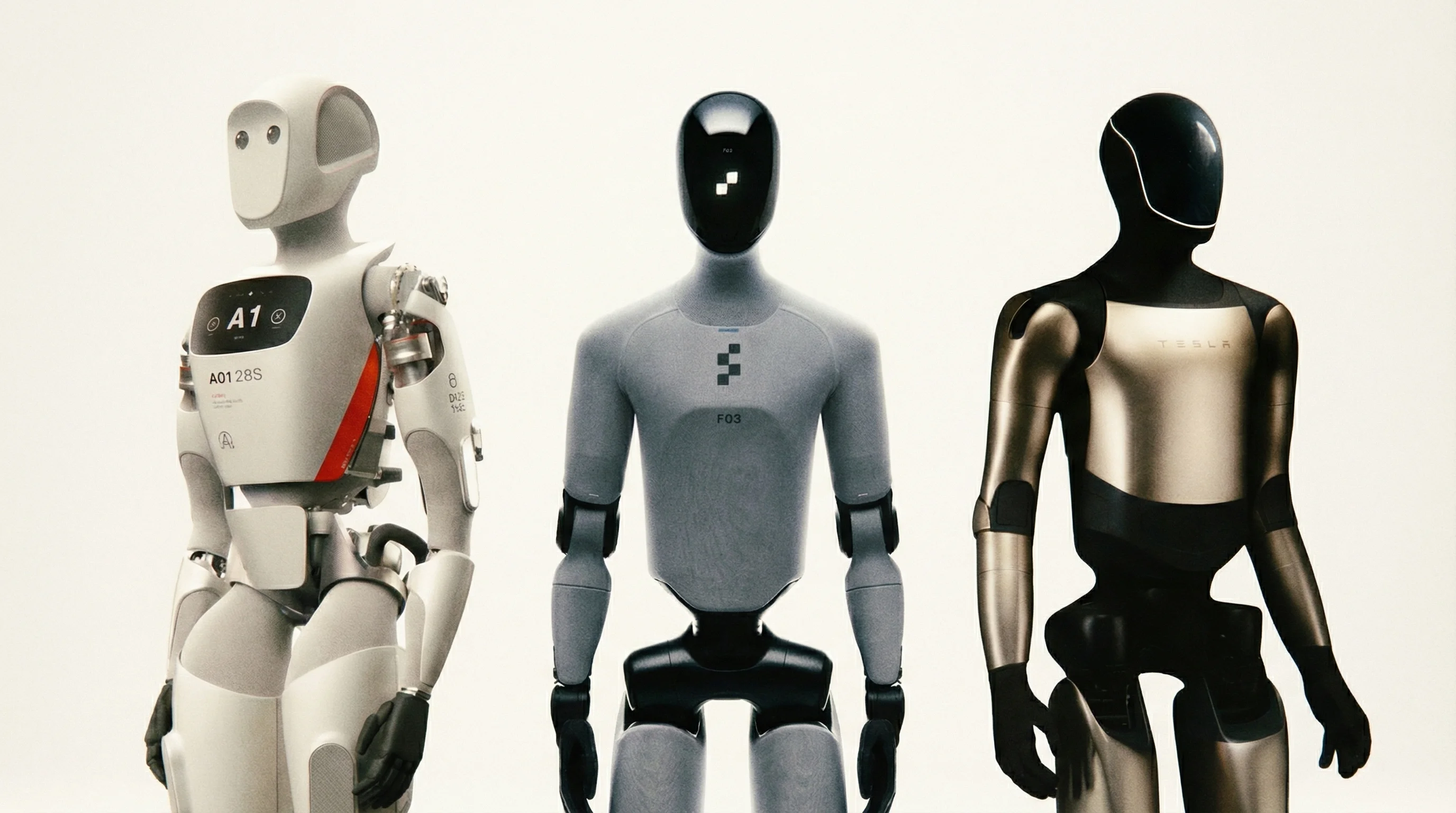 White House Eyes "Robotics Executive Order" as Trump Administration Pivots to Hardware
Following a massive push on software AI, the incoming administration is reportedly drafting a national robotics strategy to compete with China, with Commerce Secretary Howard Lutnick leading talks with Apptronik, Tesla, and Boston Dynamics.
-
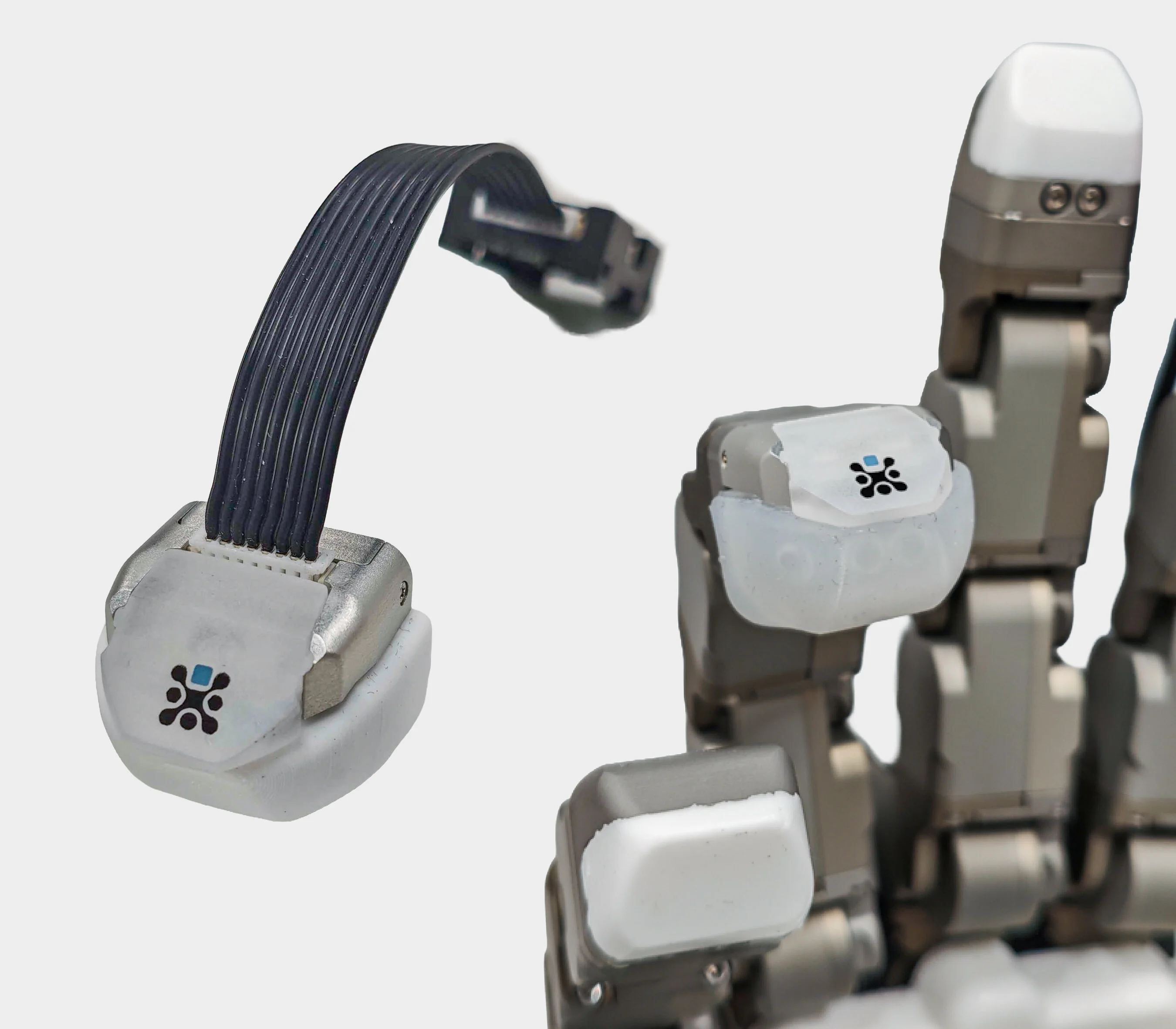 Giving the Robot Fingerprints: XELA Robotics Shrinks Sensors for Tesollo Hand Integration
The Waseda University spin-out reveals a roadmap for higher-density tactile sensors and a new integration with the Tesollo DG-5F hand.
-
 Robot Talk Episode 136 – Making driverless vehicles smarter, with Shimon Whiteson
Claire chatted to Shimon Whiteson from Waymo about machine learning for autonomous vehicles. Shimon Whiteson is a Professor of Computer Science at the University of Oxford and a Senior Staff Research Scientist at Waymo UK. His research focuses on deep reinforcement learning and imitation learning, with applications in robotics and video games. He completed his […]
-
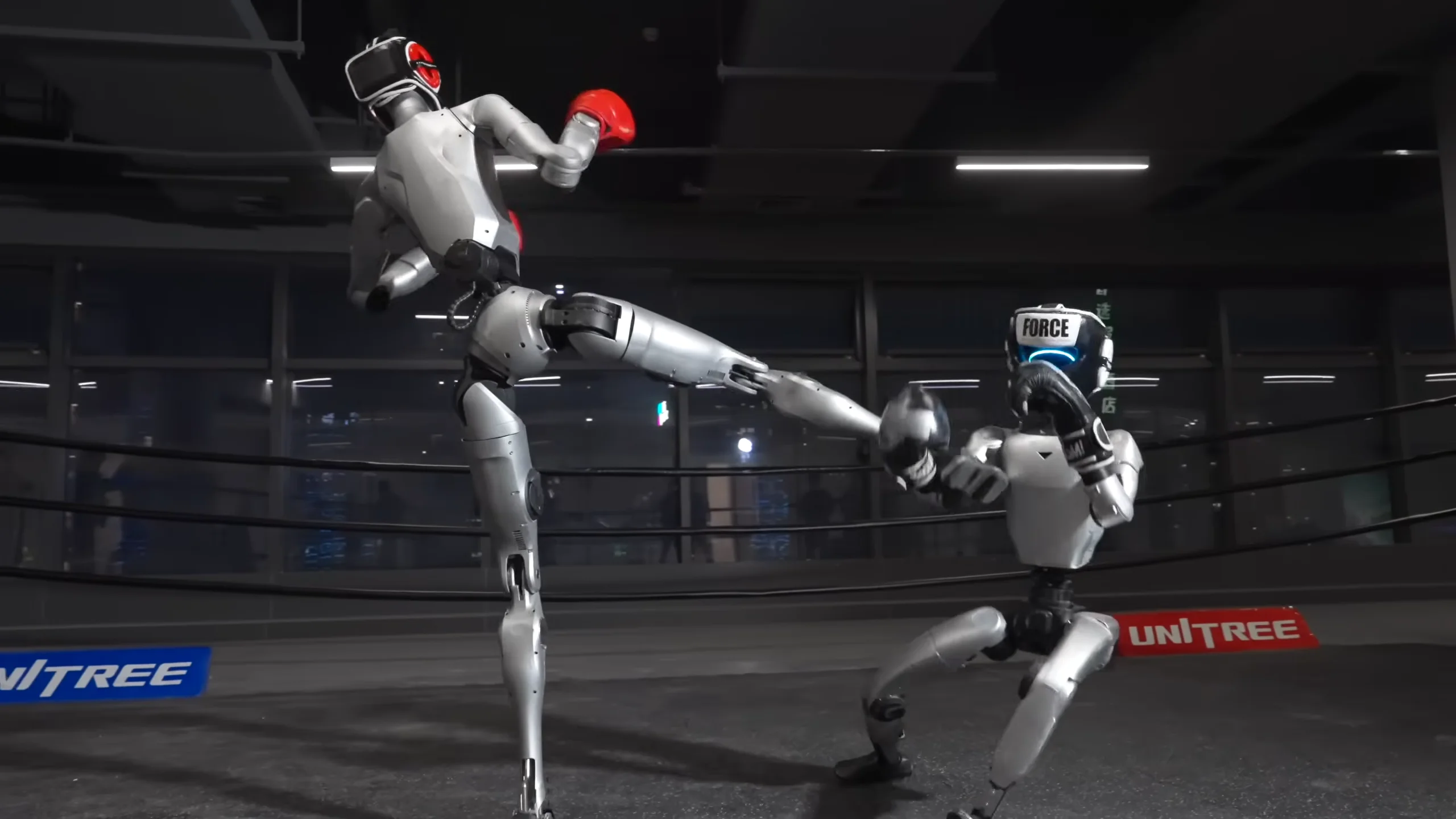 Morgan Stanley Survey: Chinese Companies Want Humanoids, But the Products Aren't Ready
A new survey reveals 62% of Chinese executives plan to adopt humanoid robots within three years, yet only 23% are satisfied with current technology.
December 4, 2025
-
 Design Around the Data: Sunday Robotics Reveals Why They Built 100 Gloves Before One Robot
In an exclusive interview with Scott Walter, Sunday Robotics leadership reveals the "data-first" engineering philosophy that led to Memo, confirming the robot was designed around the training pipeline rather than the other way around.
-
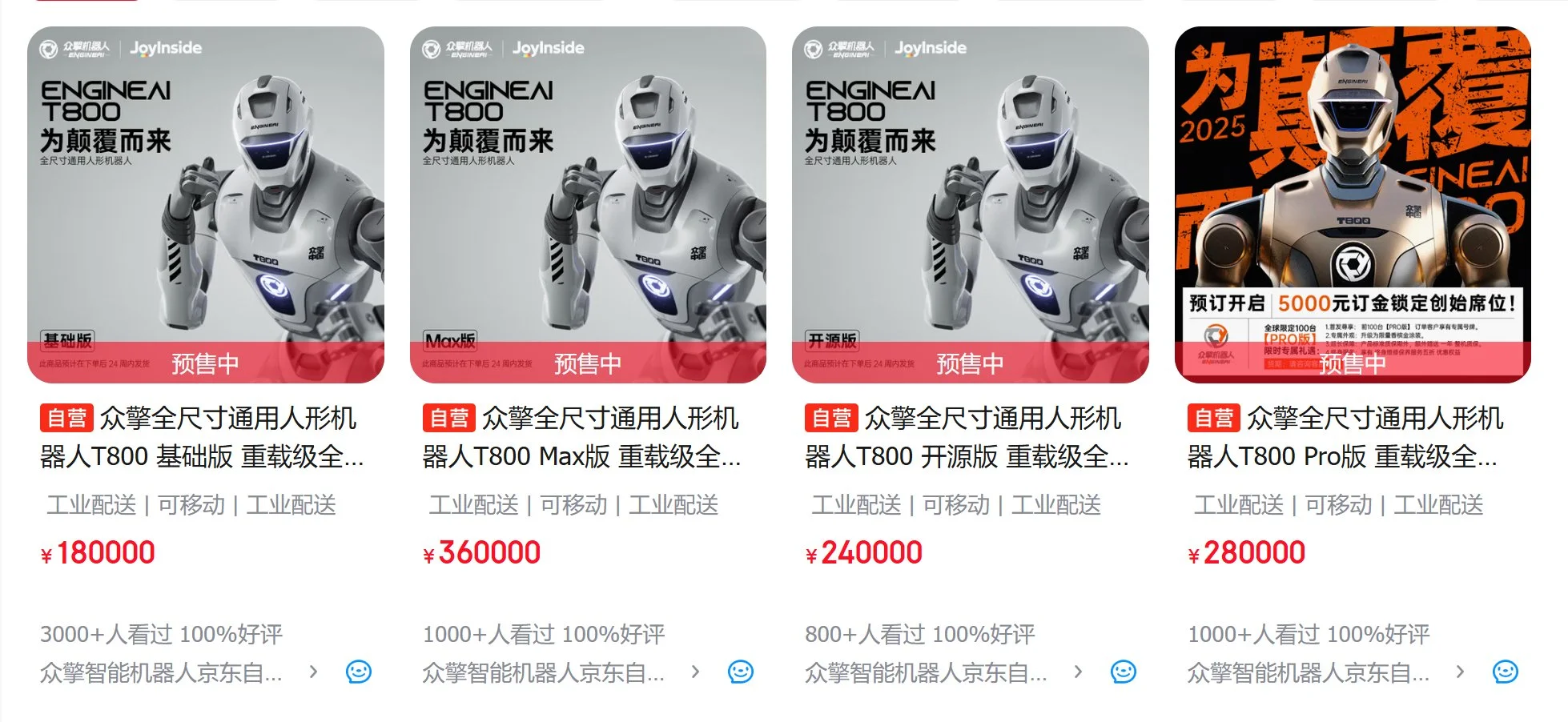 EngineAI T800 Pre-Orders Go Live at $25,000, Undercutting Competitors in a Heating Price War
The Shenzhen-based robotics firm has officially listed its full-size humanoid on JD.com, revealing a four-tier pricing strategy that aggressively targets Unitree’s market share.
-
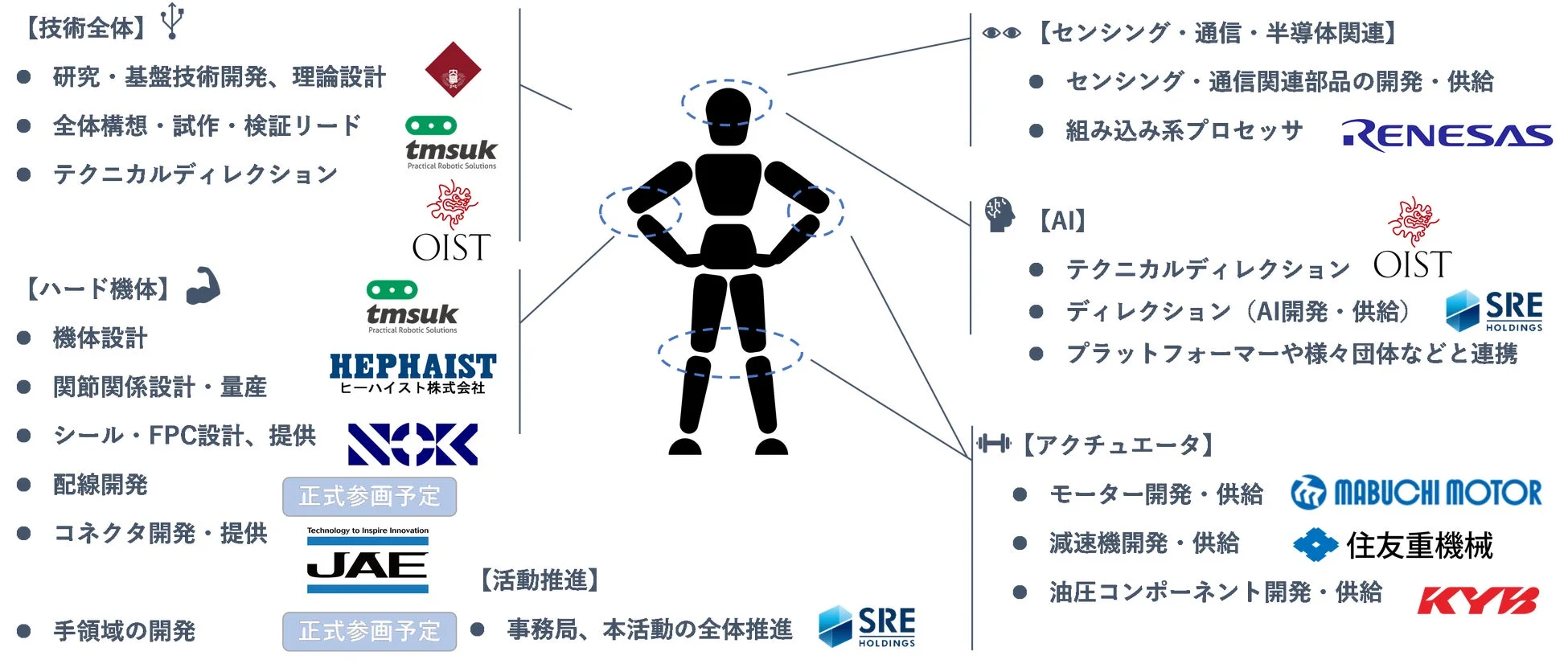 Japan Enters the Alliance War: ''KyoHA'' Taps Industrial Giants to Reclaim Humanoid Glory
A new Kyoto-based coalition brings together Sumitomo Heavy Industries, Renesas, and JAE to build an "All-Japan" supply chain for humanoid hardware, mirroring similar national strategies in Korea and China.
-
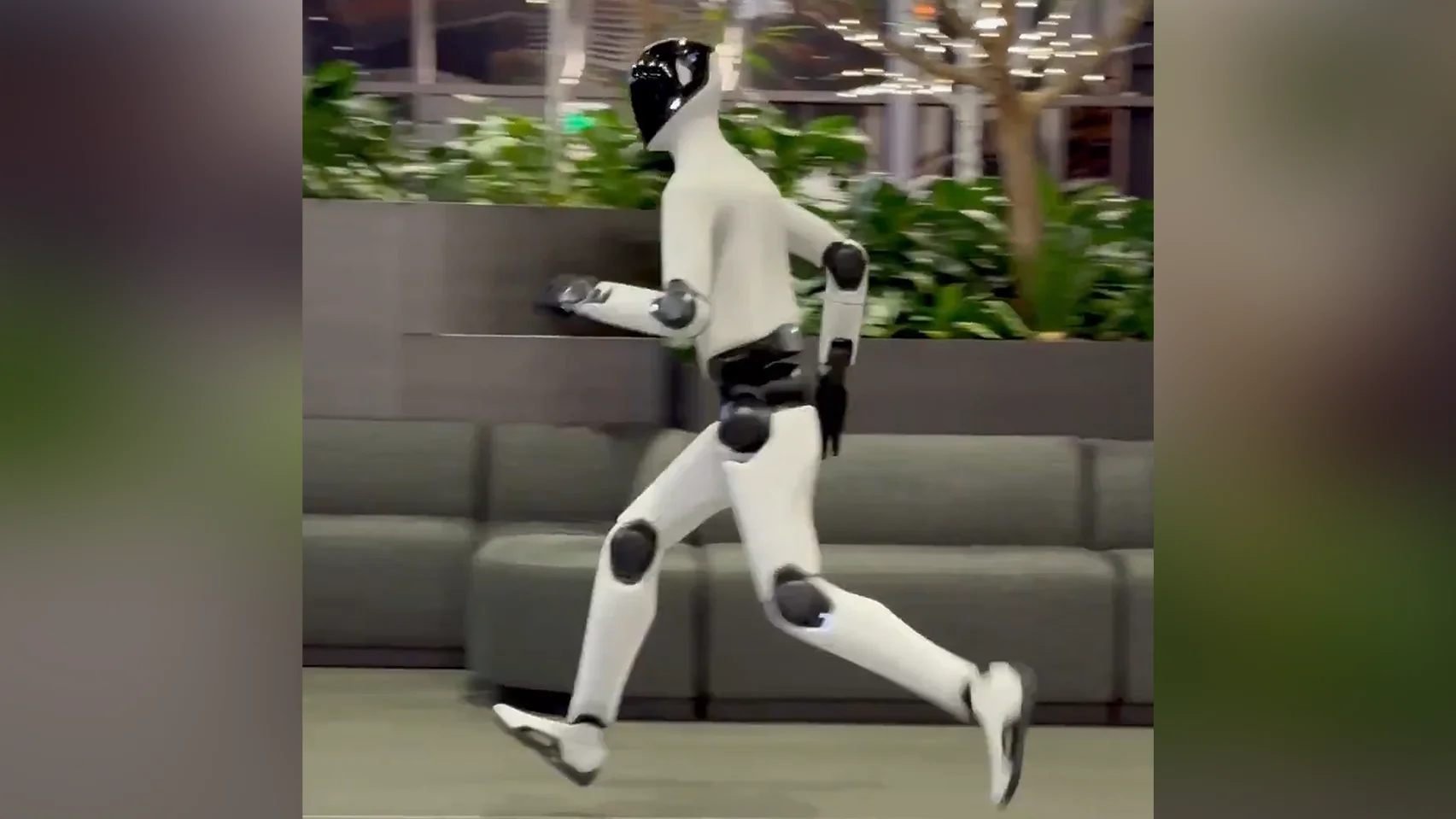 Figure 03 Sprints in New Video, Answering Tesla's Challenge
Responding directly to Tesla's latest update, Brett Adcock shares footage of the Figure 03 running, fueling a debate on the closing gap between robotic and human motion.
-
 Teaching robot policies without new demonstrations: interview with Jiahui Zhang and Jesse Zhang
The ReWiND method, which consists of three phases: learning a reward function, pre-training, and using the reward function and pre-trained policy to learn a new language-specified task online. In their paper ReWiND: Language-Guided Rewards Teach Robot Policies without New Demonstrations, which was presented at CoRL 2025, Jiahui Zhang, Yusen Luo, Abrar Anwar, Sumedh A. Sontakke, […]
December 3, 2025
-
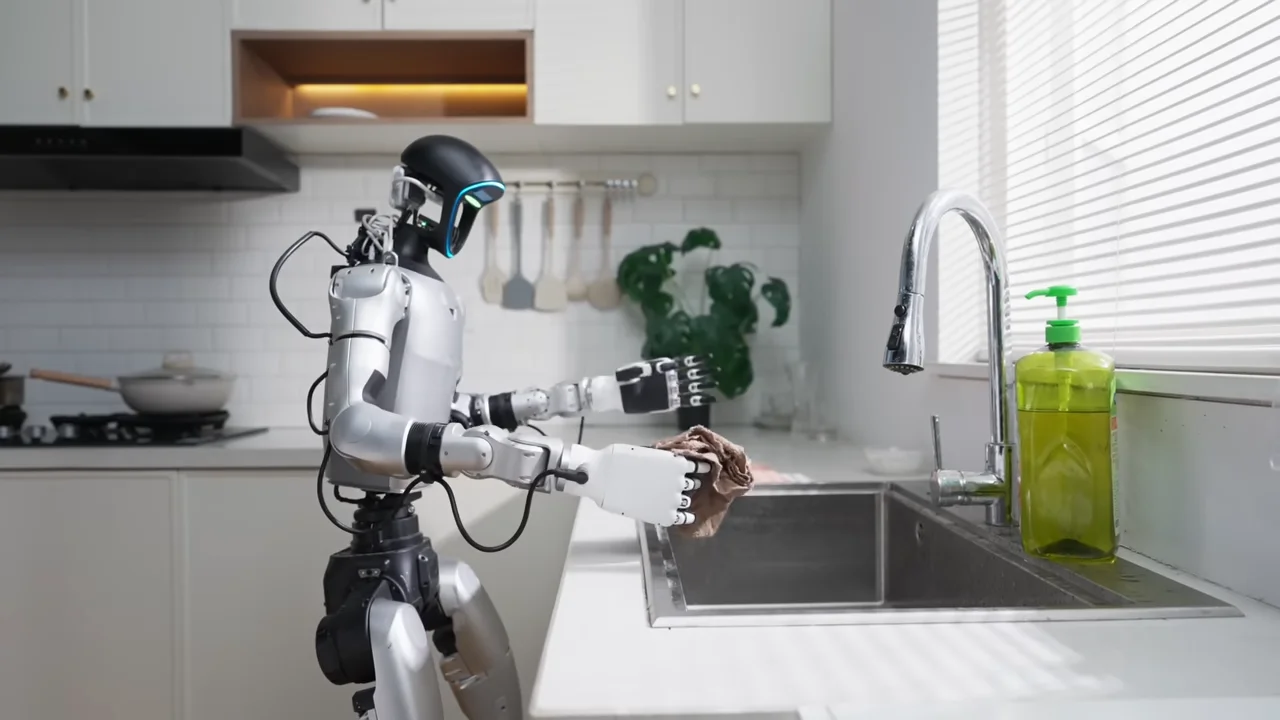 China’s Universities Launch "Embodied Intelligence" Majors to Feed a Hungry Robot Workforce
Facing a talent shortage estimated at one million workers, top Chinese universities are breaking down academic silos to create dedicated degree programs for humanoid robotics.
-
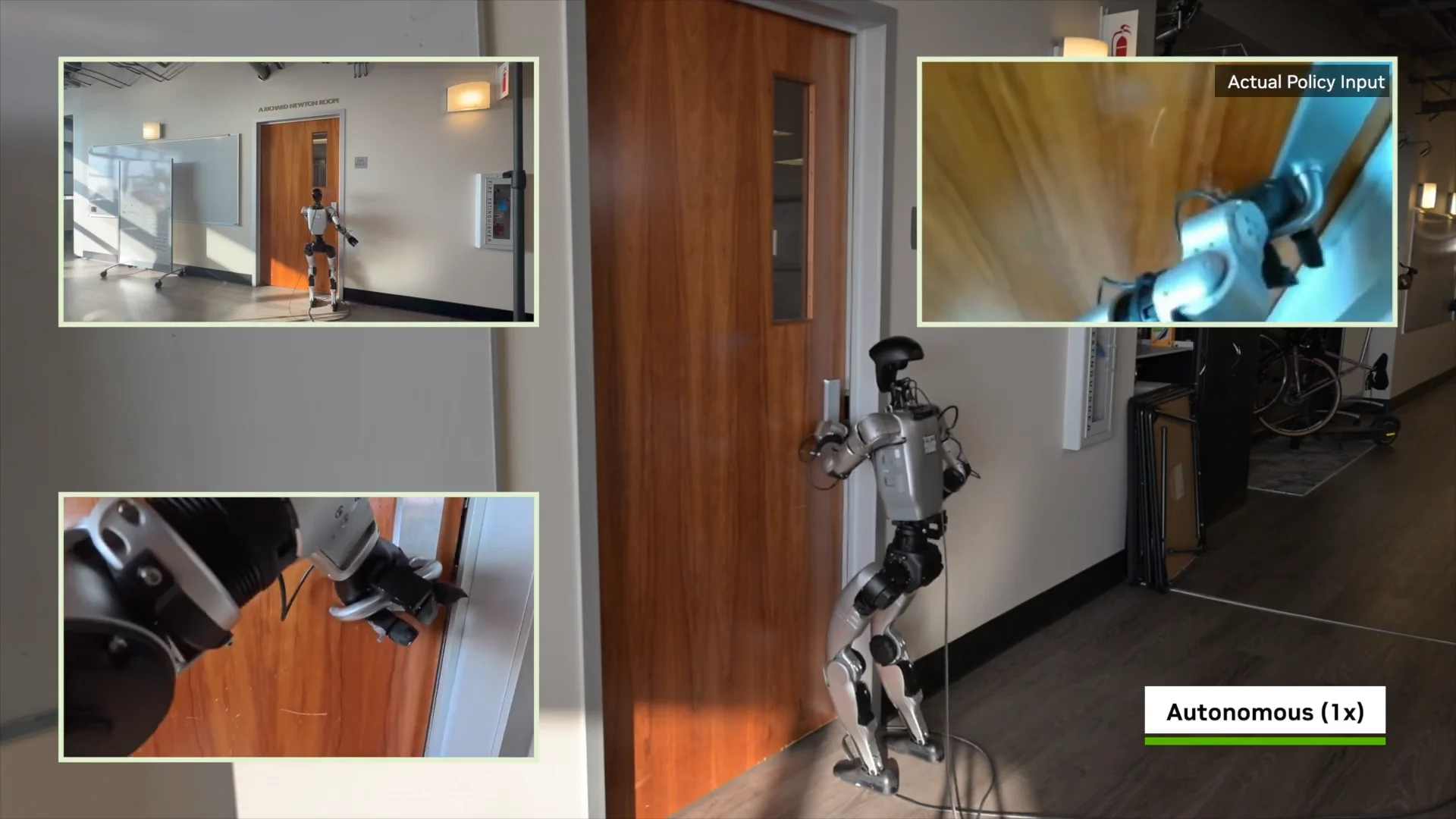 NVIDIA’s "DoorMan" Teaches Humanoids to Open Doors Faster Than Humans Can
New research from NVIDIA and UC Berkeley demonstrates a vision-only policy that outperforms human teleoperation, cementing the Unitree G1 as the standard for sim-to-real research.
-
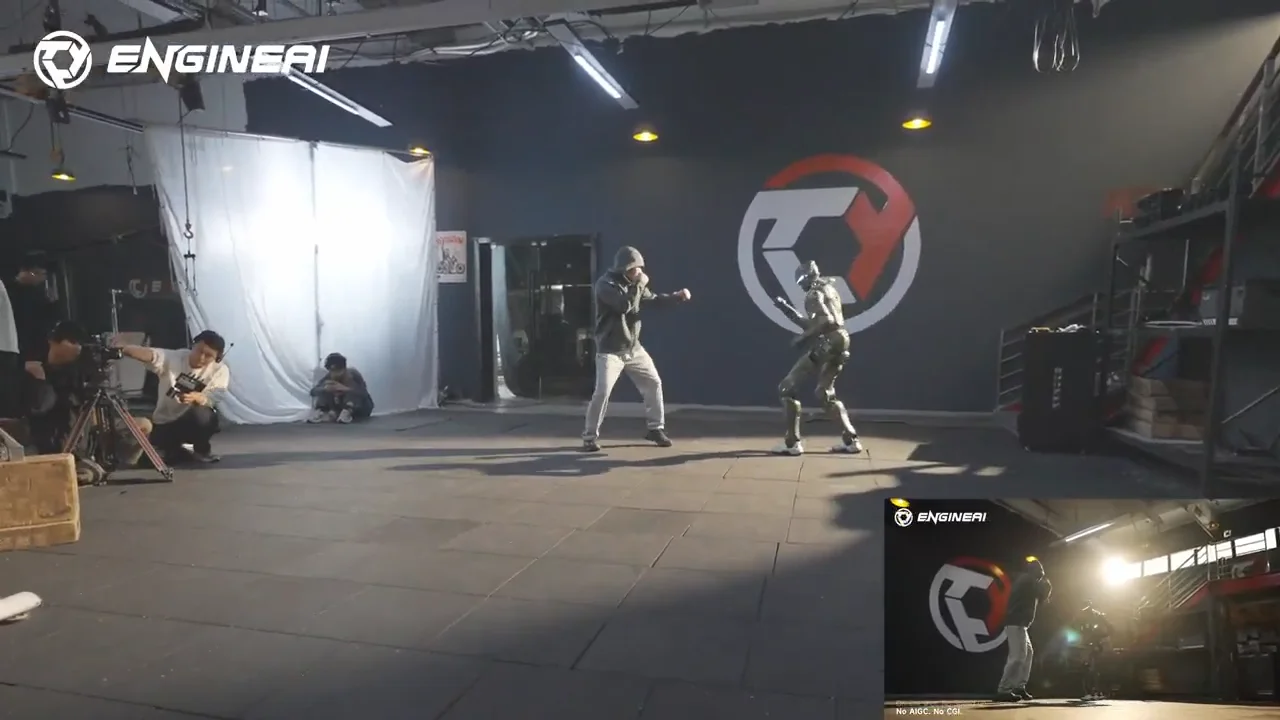 EngineAI Releases Behind-the-Scenes Footage to Quell CGI Rumors
Following skepticism over its cinematic T800 reveal, the Shenzhen robotics firm releases raw footage to prove its "action hero" robot is hardware, not Hollywood effects.
-
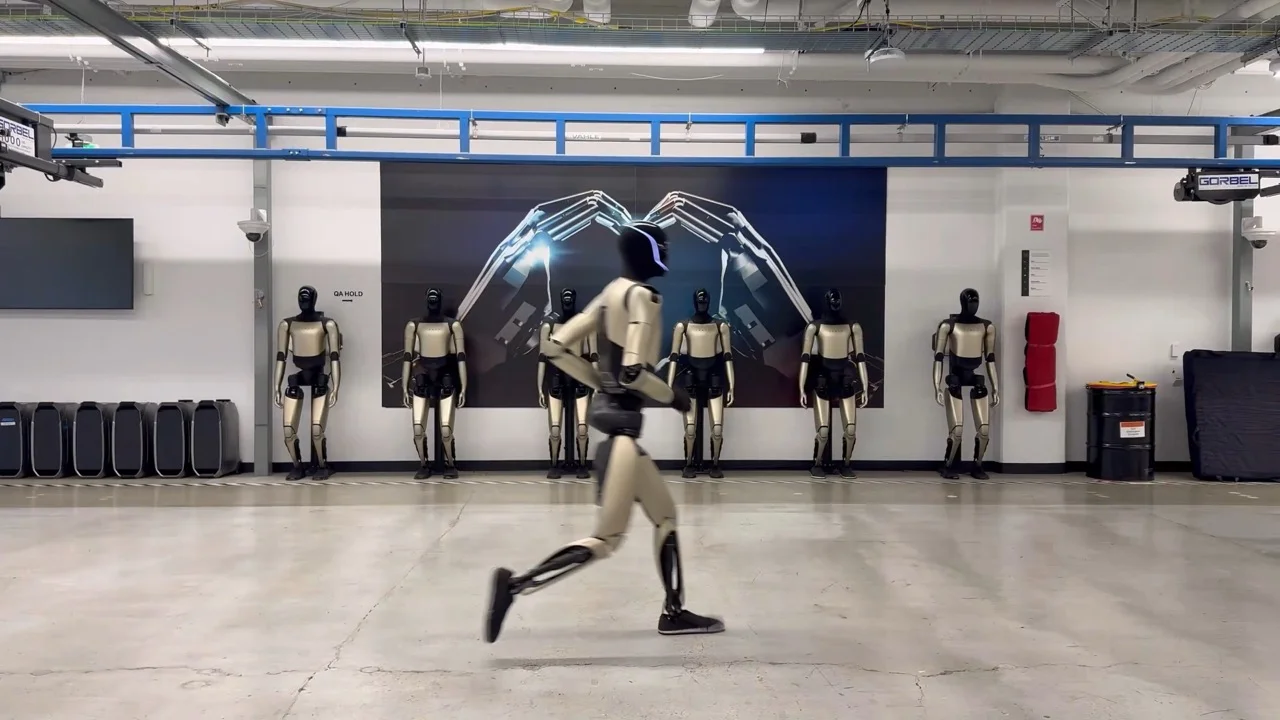 Analysis: Tesla Optimus ''PR'' Video Suggests Robot Has Reached Competitive Running Speeds
A new video from Tesla shows Optimus sprinting in the lab. While official specs remain unreleased, community analysis suggests the robot may have reached speeds of 8.5 mph, placing it among the fastest humanoids in development.
December 2, 2025
-
 New Survey Reveals What Americans Actually Want From Home Robots (And What They Fear)
A new report from Altman Solon surveys over 1,000 U.S. consumers, revealing a desire for help with cleaning and security, a preference for "soft" designs, and a massive gap between expected utility and current pricing.
-
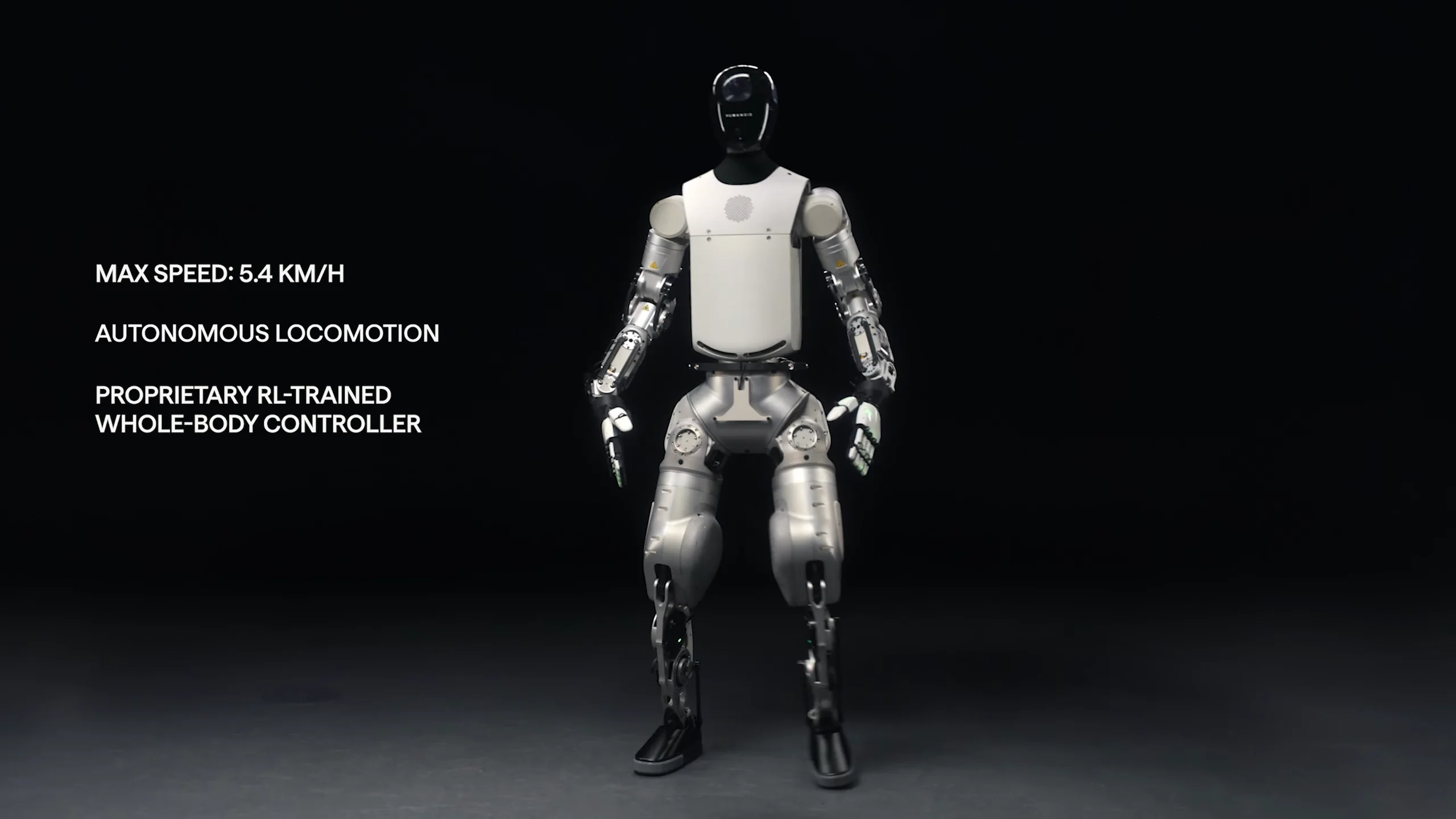 Humanoid Unveils Bipedal HMND 01 Alpha, Claims "Walking Within 48 Hours" of Assembly
The UK startup expands its lineup with a bipedal robot developed in five months, showcasing push recovery, modular hands, and a continued focus on rapid iteration.
-
 Amazon FAR Open Sources Holosoma to Unify Humanoid Simulation and Training
The Frontier AI & Robotics team releases a "full-stack" framework designed to bridge the gap between different simulators and real-world deployment.
-
 EngineAI Officially Unveils the T800: An Action Movie Star with Industrial Ambitions
Shenzhen’s EngineAI has fully revealed its flagship T800 humanoid with a high-octane video demonstration and official specifications, confirming a 1.73m frame, Nvidia Thor compute, and a strategy that blurs the line between robotic combat and warehouse labor.
December 1, 2025
-
 Apple Robotics Researcher Joins Tesla Optimus, Citing ‘Scale and Sophistication’
Yilun Chen, a former researcher at Apple and Uber ATG, has joined the Tesla Optimus team as a Staff Robotics Engineer. His viral announcement offers a counter-narrative to recent reports of talent migration away from the EV giant.
-
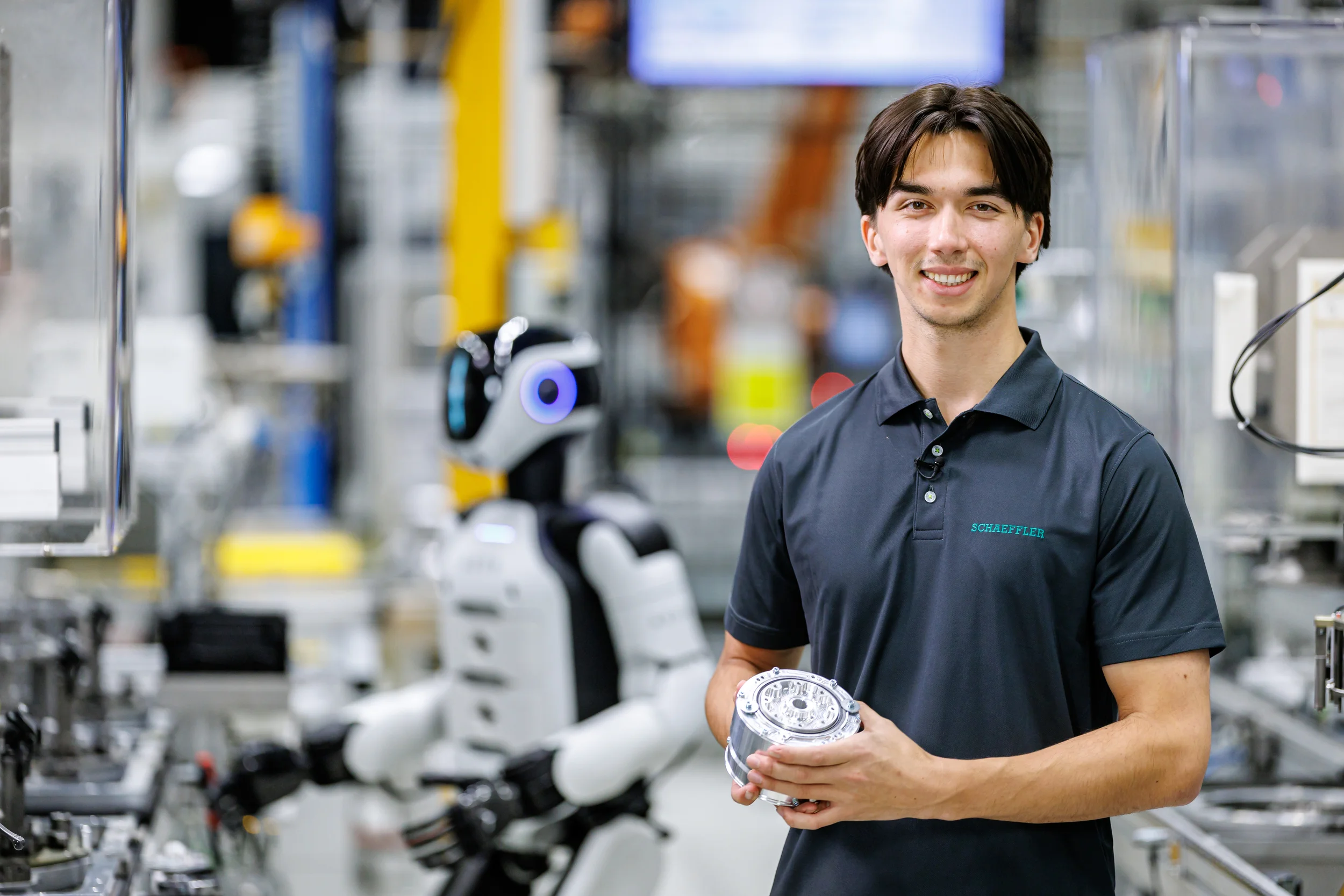 Schaeffler Deepens R&D Ties in Singapore with New Robotics and AI Lab
The German motion technology giant opens a 900 sqm facility at Nanyang Technological University, doubling down on its strategy to become both a primary user and key component supplier in the humanoid robotics space.
-
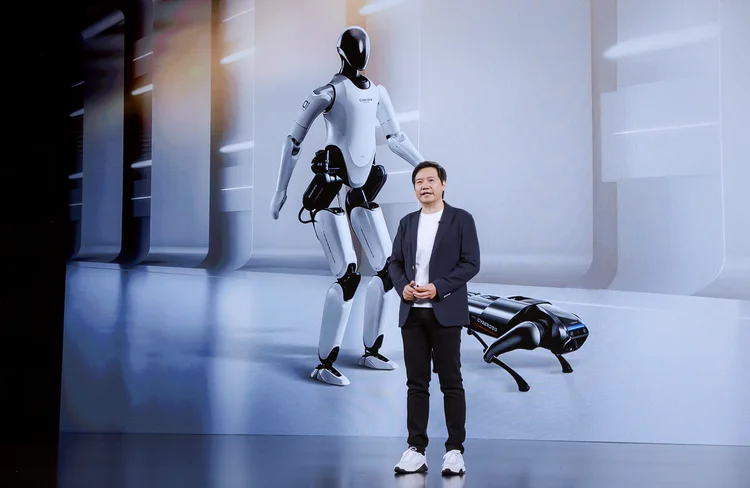 Xiaomi CEO: Humanoids Will Working at "Large Scale" in Our Factories Within 5 Years
Lei Jun outlines a roadmap for deploying humanoid robots in manufacturing as a stepping stone to the home market, backed by new open-source AI models.
-
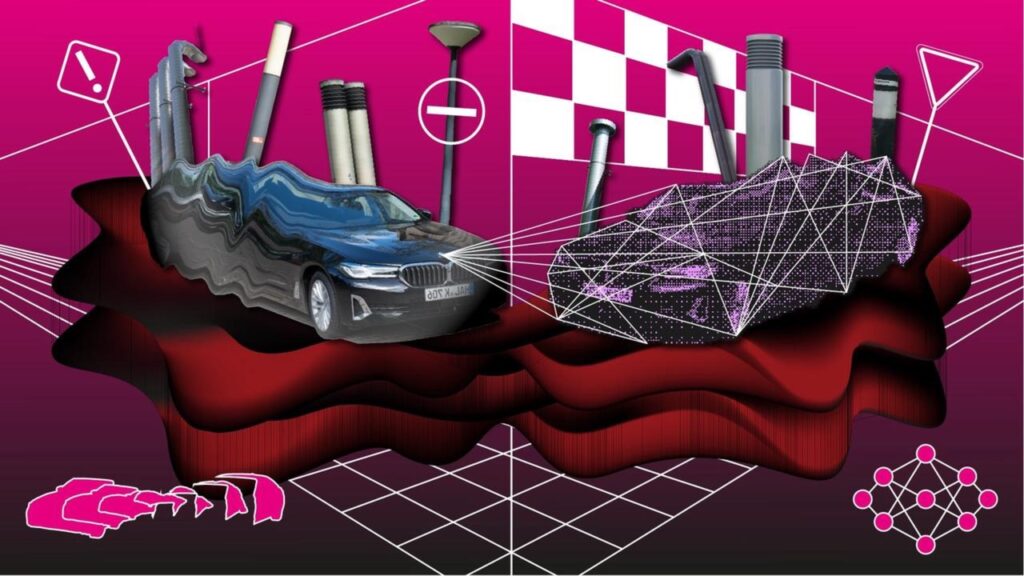 Why companies don’t share AV crash data – and how they could
Anton Grabolle / Autonomous Driving / Licenced by CC-BY 4.0 By Susan Kelley Autonomous vehicles (AVs) have been tested as taxis for decades in San Francisco, Pittsburgh and around the world, and trucking companies have enormous incentives to adopt them. But AV companies rarely share the crash- and safety-related data that is crucial to improving […]
-
 UMA Exits Stealth: The European Robotics ''Supergroup'' Arrives in Paris
Led by former Tesla and Hugging Face researcher Rémi Cadene, UMA reveals a heavyweight founding team and ambitious plans for general-purpose robots by 2026.
November 30, 2025
-
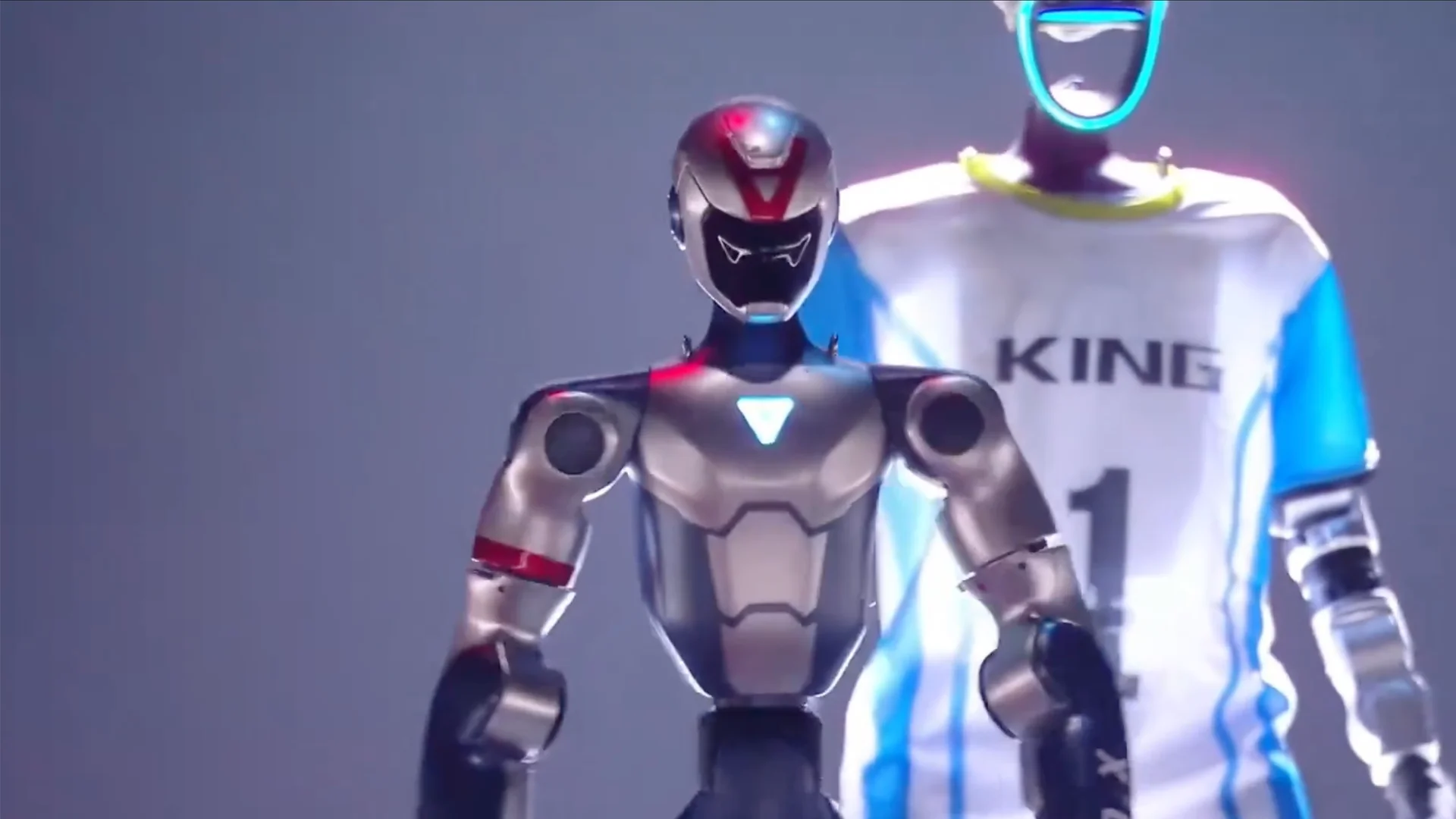 Unitree Completes IPO Tutoring, Clearing Key Hurdle for A-Share Listing
Unitree Robotics has finished its mandatory IPO guidance process with CITIC Securities, moving it one step closer to potentially becoming China’s first publicly traded humanoid robotics company.
-
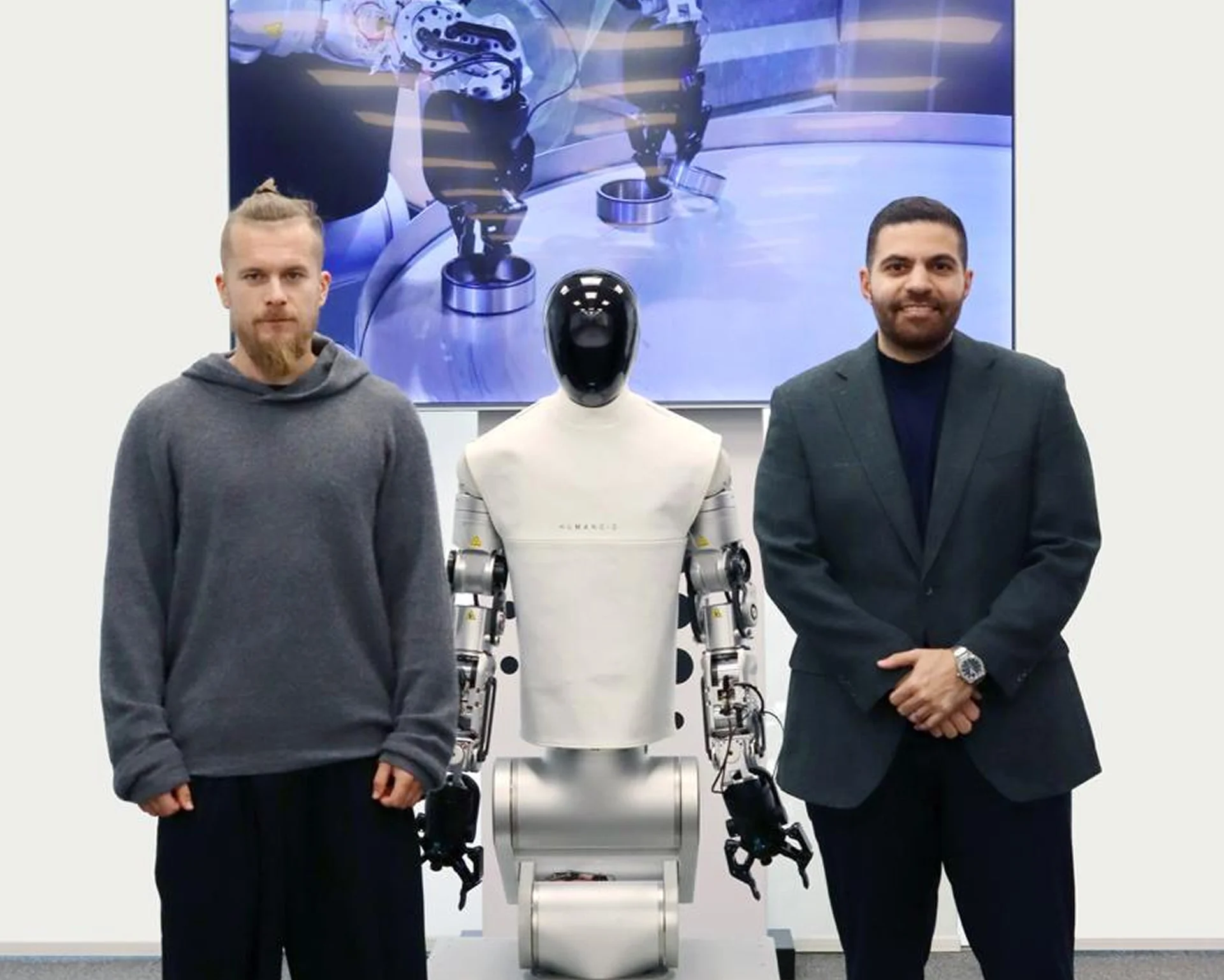 Humanoid Opens Riyadh Showroom, Targets 10,000 Unit Rollout in Major Saudi Push
The UK startup partners with QSS AI & Robotics to launch the MENA region’s first humanoid showroom, backed by a massive—albeit non-binding—framework for up to 10,000 robots.
November 29, 2025
-
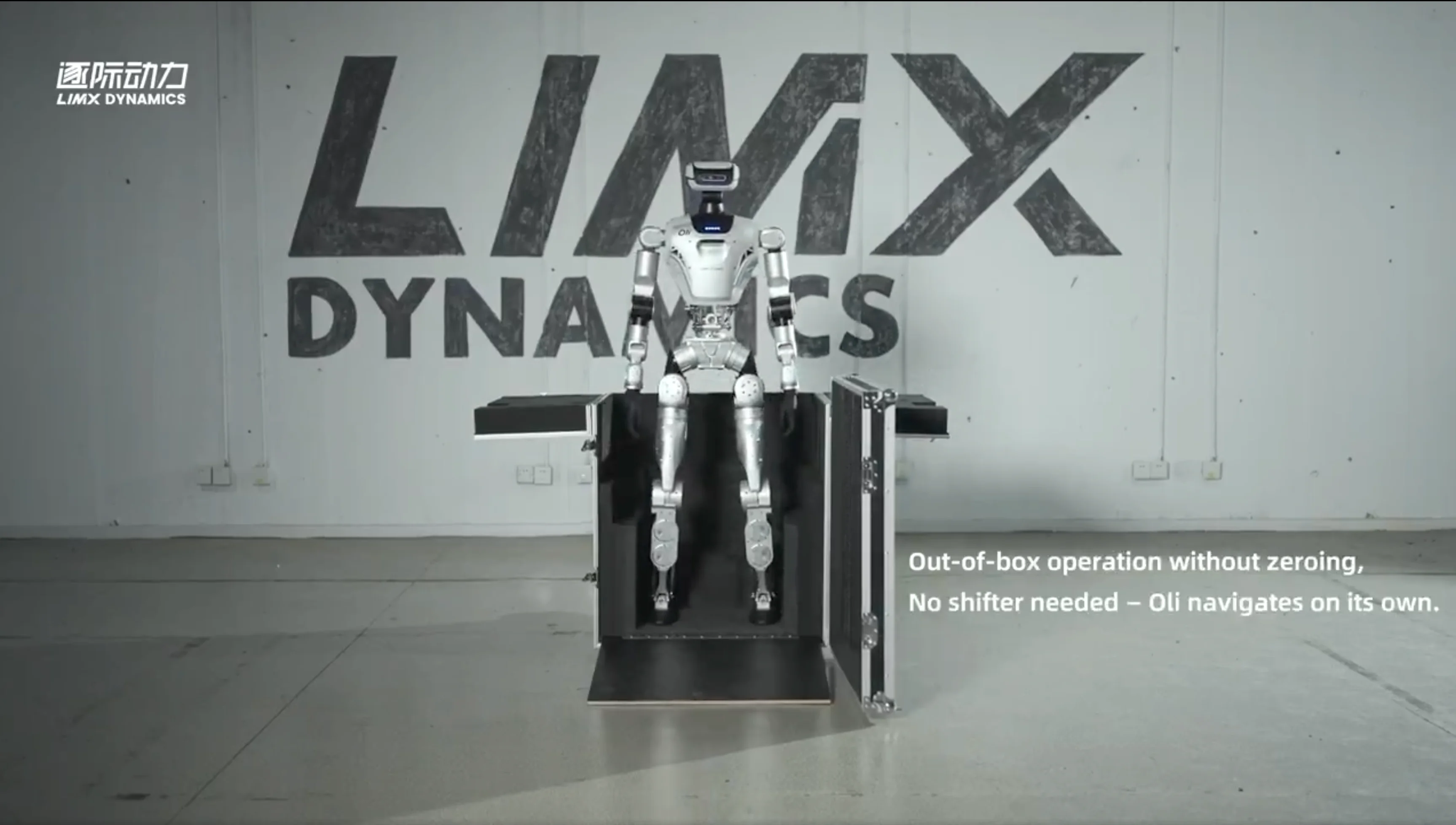 LimX Dynamics Updates Oli with Voice Control, Robust Recovery, and Simplified Unboxing
New demonstrations highlight the humanoid robot’s integration of large language models, its ability to recover from stumbles on construction debris, and a streamlined "out-of-box" experience for developers.
-
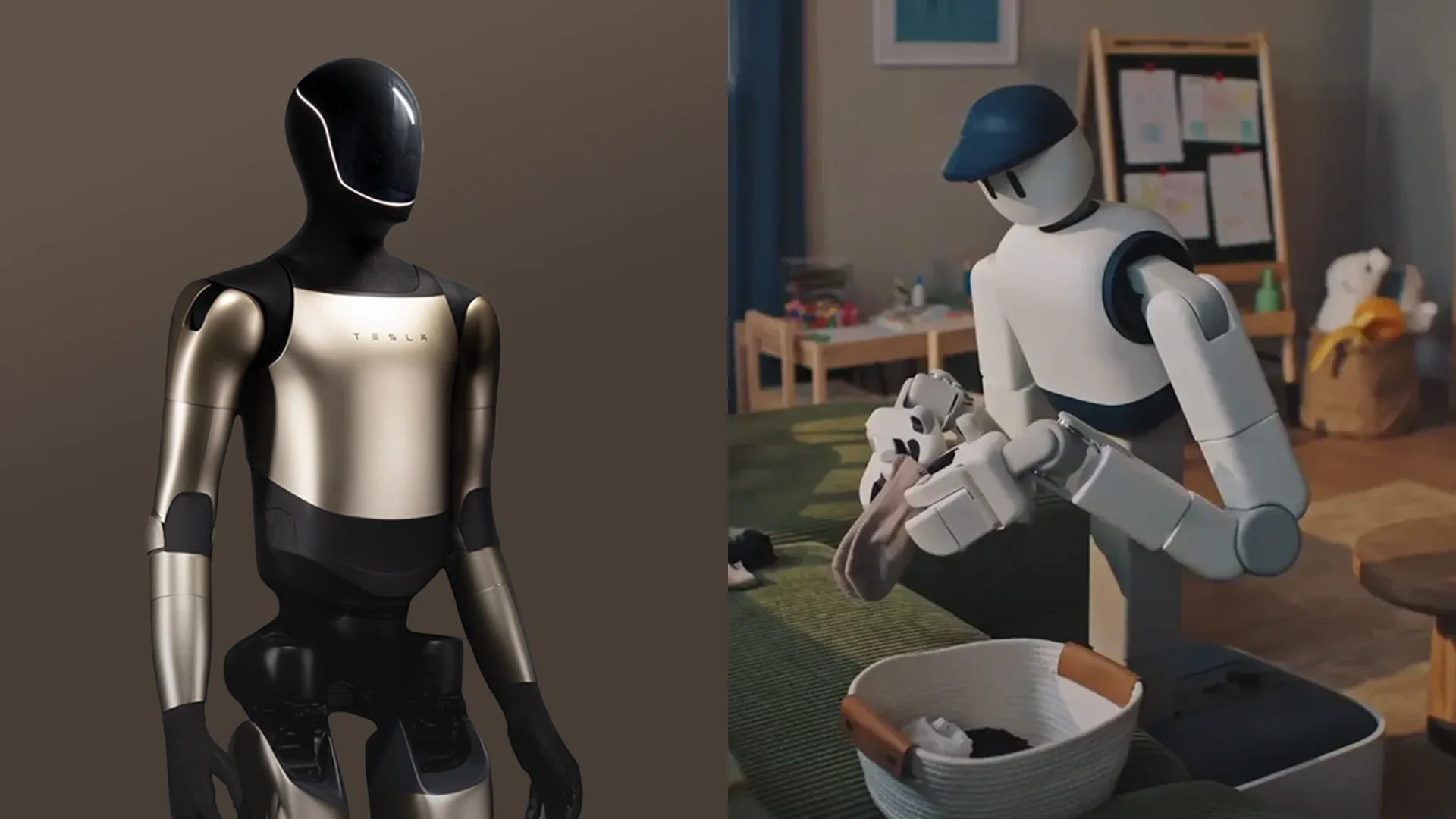 'Early FSD Energy': Why Top Tesla Talent Is Migrating to Sunday Robotics
As Sunday Robotics emerges from stealth, a wave of senior engineers from Tesla's Autopilot and Optimus teams have confirmed their defection, citing a desire to return to the rapid innovation culture of early autonomy.
November 28, 2025
-
 Goldman Sachs: China's Humanoid Strategy Pivots to "Dedicated" Service Robots and Entertainment
Goldman Sachs analyst Jacqueline Du predicts a transition period of "dedicated purpose" robots like tour guides and entertainers before general-purpose autonomy arrives, noting that Chinese suppliers are aggressively building capacity despite a reliance on U.S. silicon.
-
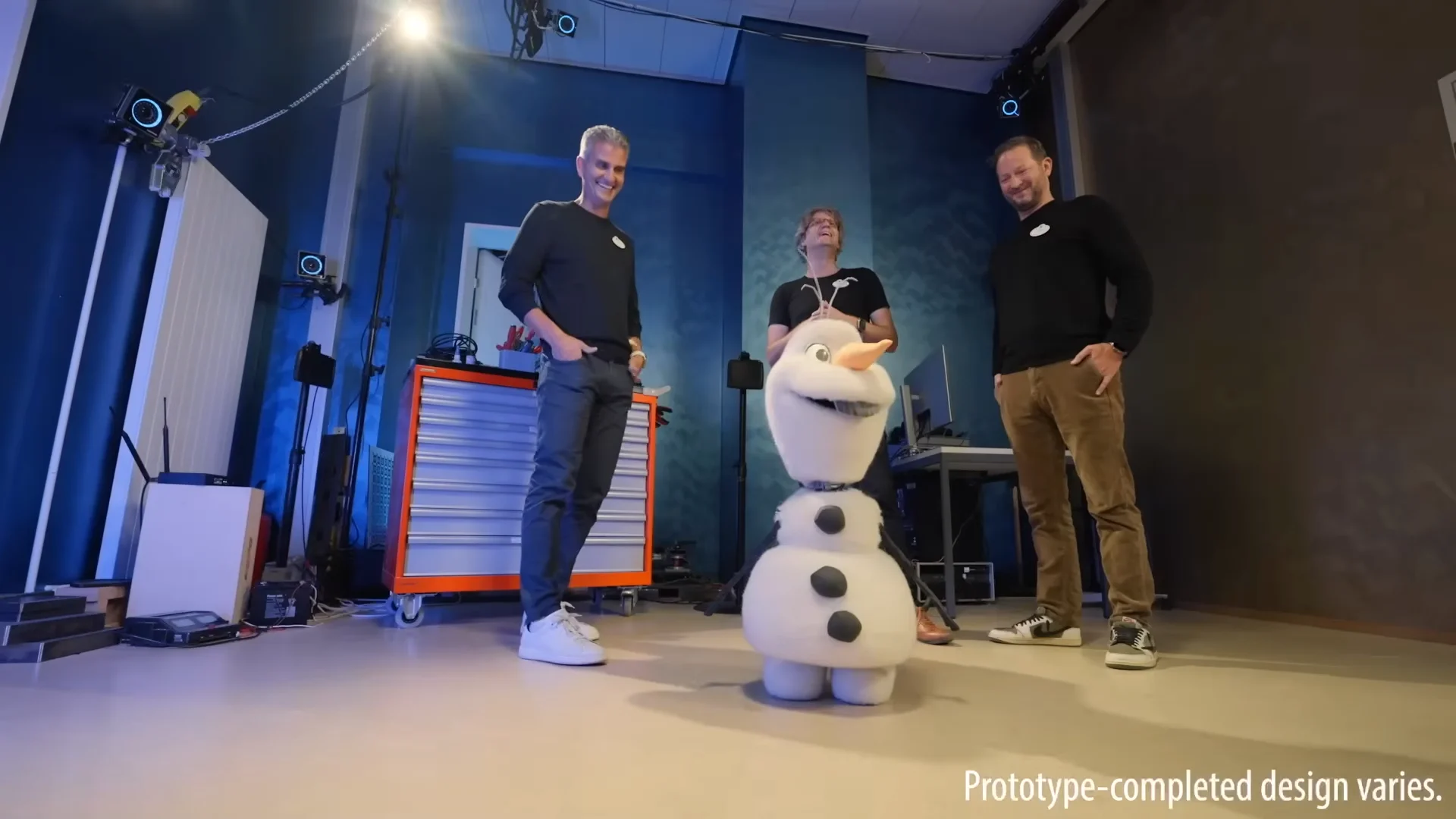 Disney Unveils “Olaf” Robot, Pushing the Boundaries of Emotive Robotics
Walt Disney Imagineering reveals a free-roaming, physics-based robotic snowman scheduled for 2026. The project highlights the sophisticated engineering behind "lovable" machines, demonstrating how specialized AI is enabling robots to prioritize personality and expression.
-
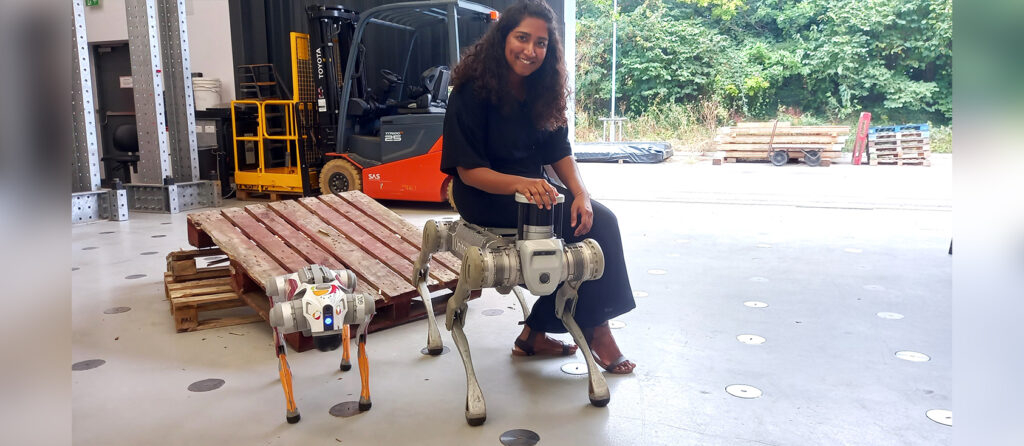 Robot Talk Episode 135 – Robot anatomy and design, with Chapa Sirithunge
Claire chatted to Chapa Sirithunge from University of Cambridge about what robots can teach us about human anatomy, and vice versa. Chapa Sirithunge is a Marie Sklodowska-Curie fellow in robotics at the University of Cambridge. She has an undergraduate degree and PhD in Electrical Engineering from the University of Moratuwa. Before joining the University of […]
November 27, 2025
-
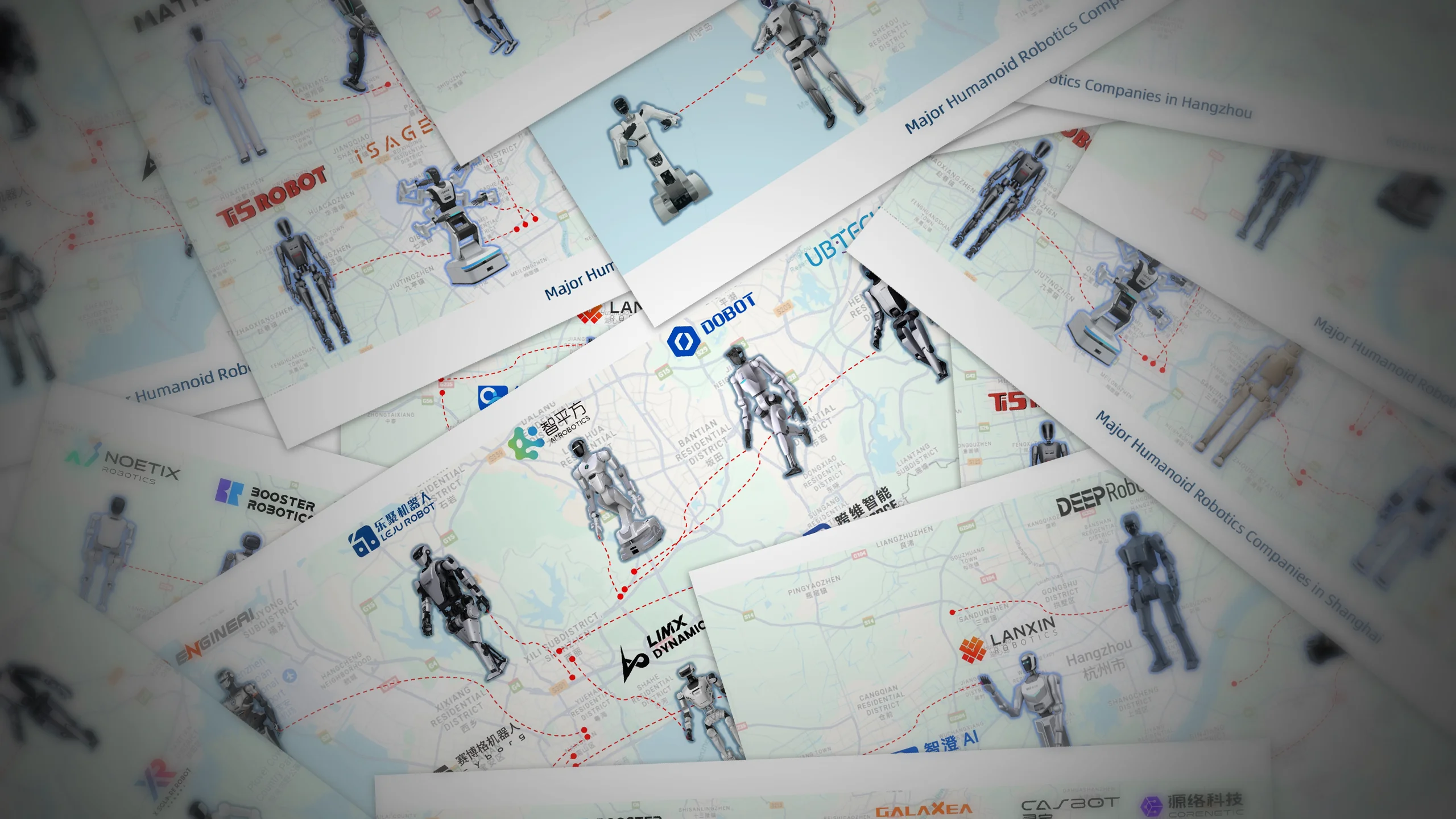 China’s Robot Fever Meets Reality: Beijing Warns of ‘Bubbles’ and ‘Repetitive’ Clones
With over 150 humanoid companies crowding the market, China’s state planner has issued a stark warning against low-quality redundancy. New maps from Robotuo visualize the scale of the boom, highlighting why Beijing is moving to enforce consolidation.
-
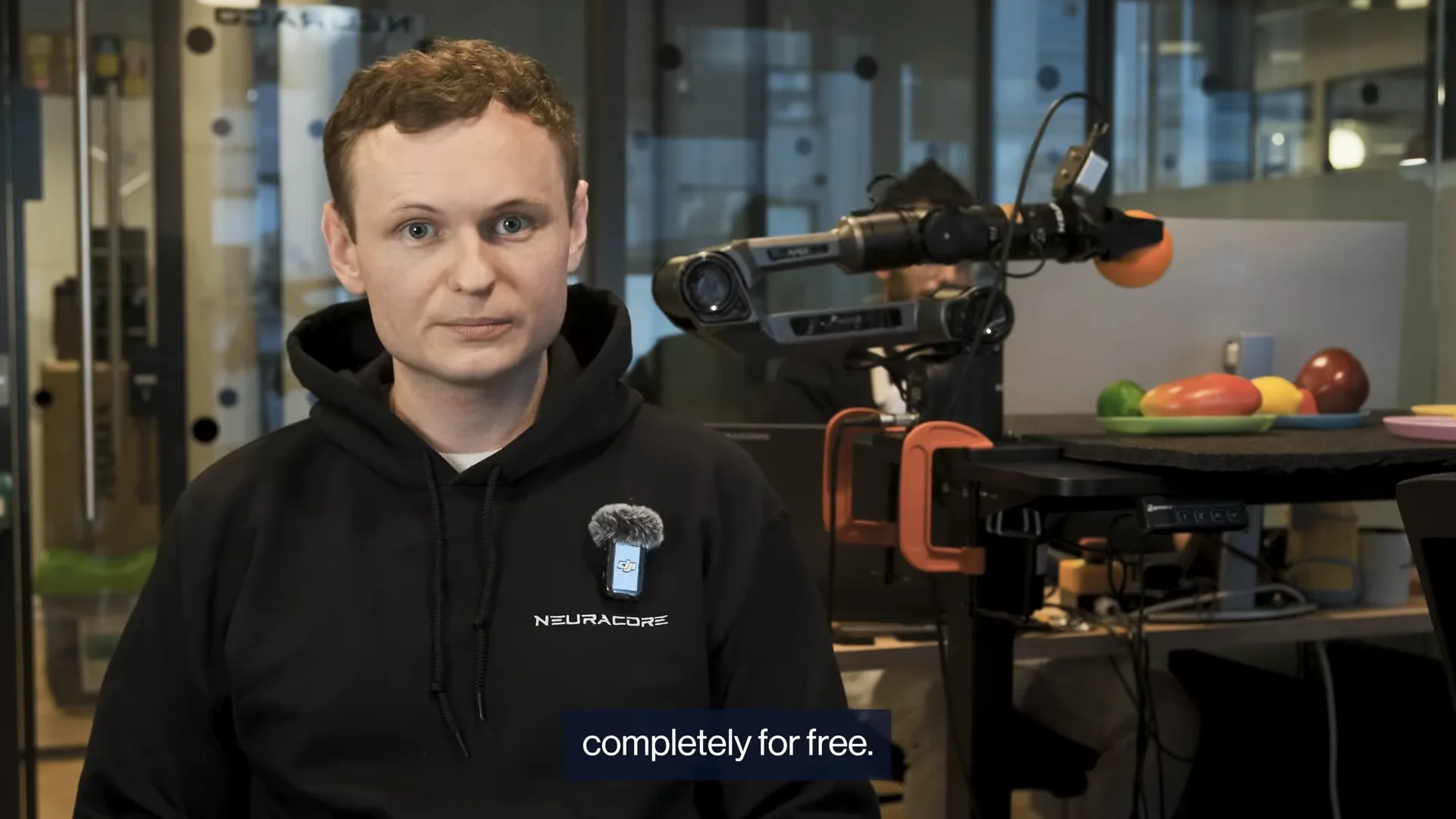 Neuracore Opens Its "Data Foundation" to Academics for Free, Backed by $3M Pre-Seed
The London-based startup wants to be the infrastructure layer for robot learning, offering free cloud-native data tools to researchers to solve the "plumbing" problem.
-
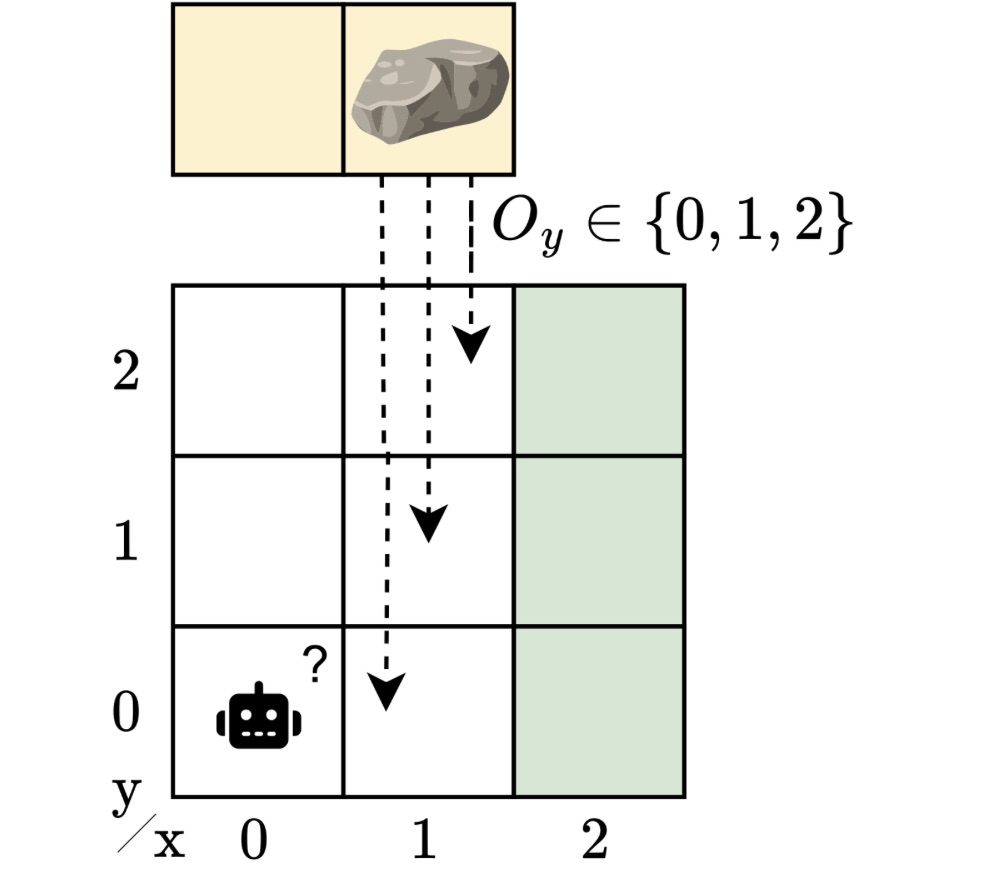 Learning robust controllers that work across many partially observable environments
In intelligent systems, applications range from autonomous robotics to predictive maintenance problems. To control these systems, the essential aspects are captured with a model. When we design controllers for these models, we almost always face the same challenge: uncertainty. We’re rarely able to see the whole picture. Sensors are noisy, models of the system are […]
-
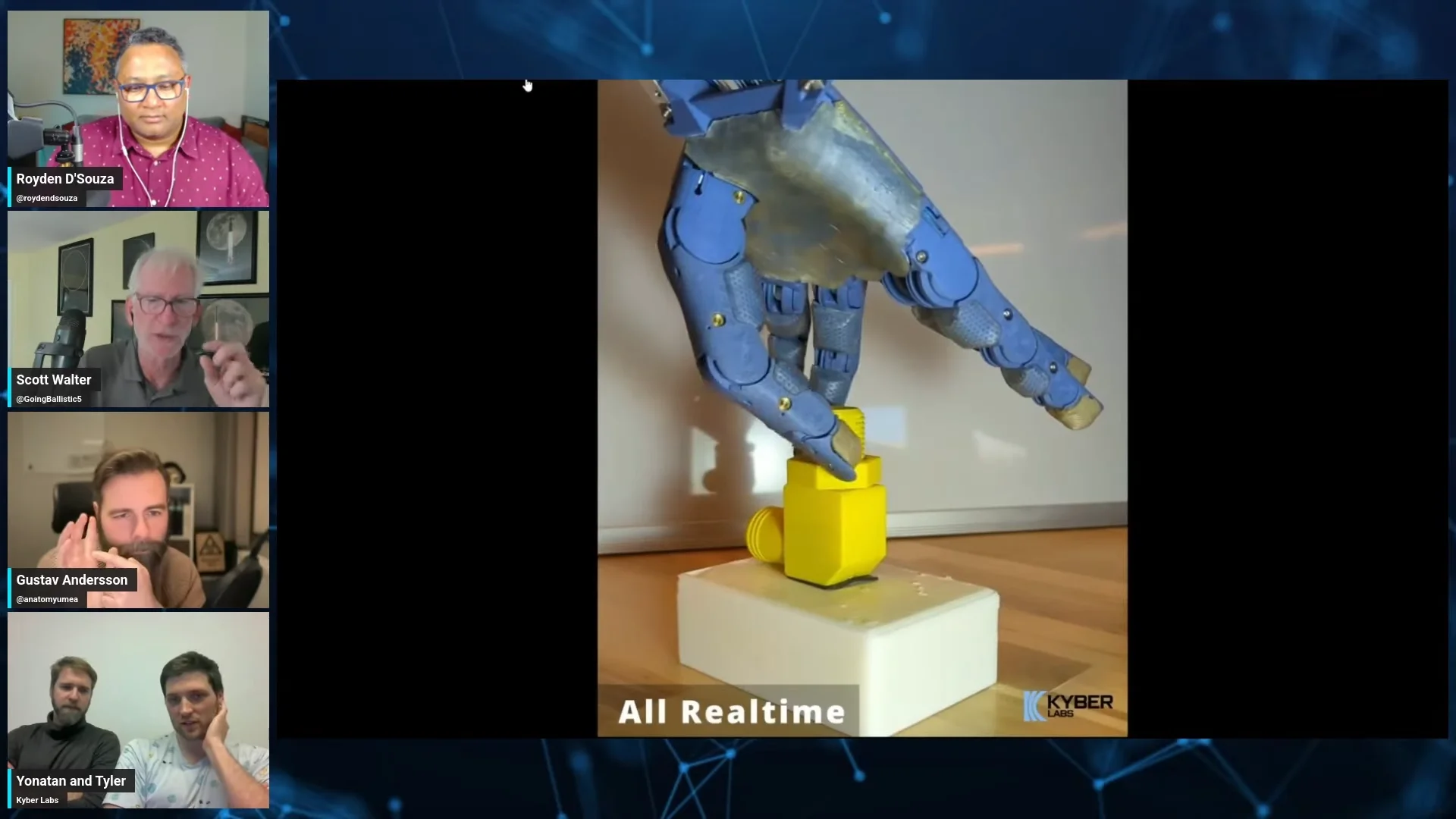 Kyber Labs Founders Crash the "Over the Horizon" Podcast for a Technical Deep Dive
Following their viral reveal, the founders of Kyber Labs made a surprise appearance on Royden D’Souza’s podcast to discuss tendon actuation, heat management, and their "anti-humanoid" strategy with Scott Walter and Gustav Andersson.
November 26, 2025
-
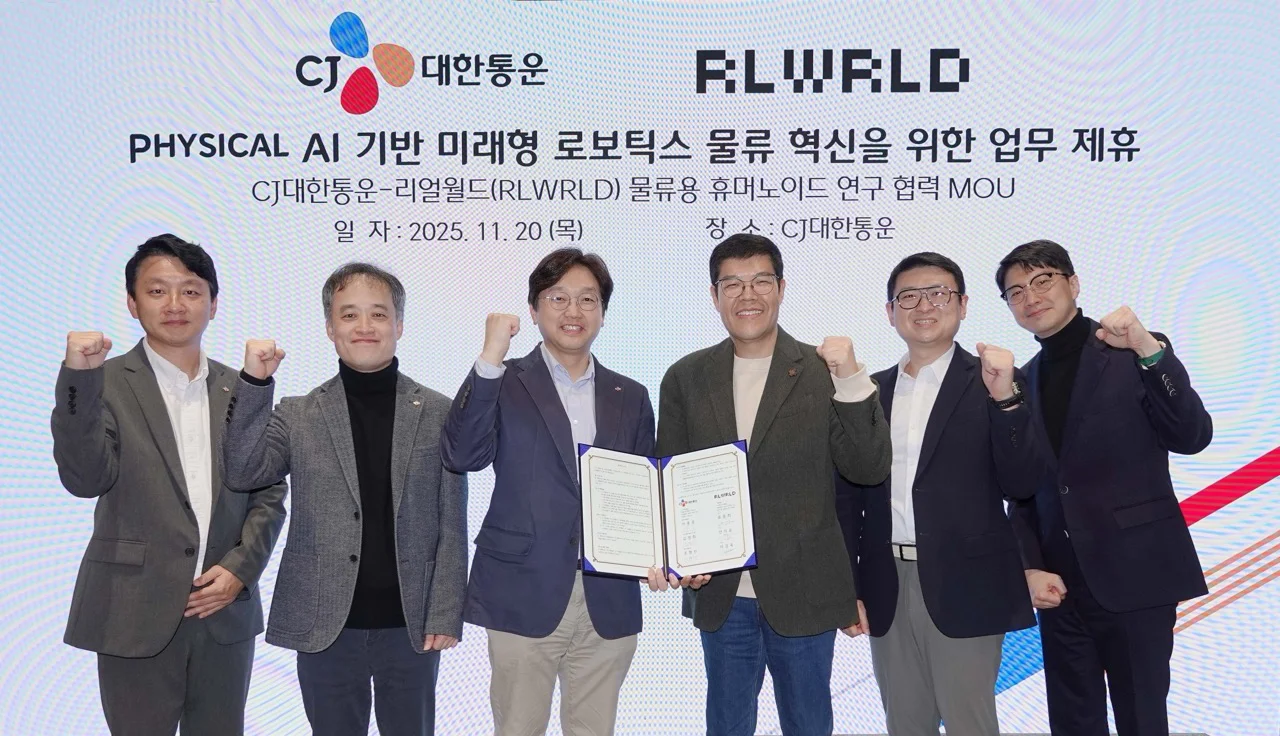 CJ Logistics Doubles Down on “Physical AI,” Backs Startup RLWRLD to Build Robot Brains
Following a hardware blitz with Rainbow Robotics and Robotis, the South Korean logistics giant unveiled its "Logistics AX" strategy at a national seminar, investing in startup RLWRLD to develop foundational AI models for autonomous manipulation.
November 25, 2025
-
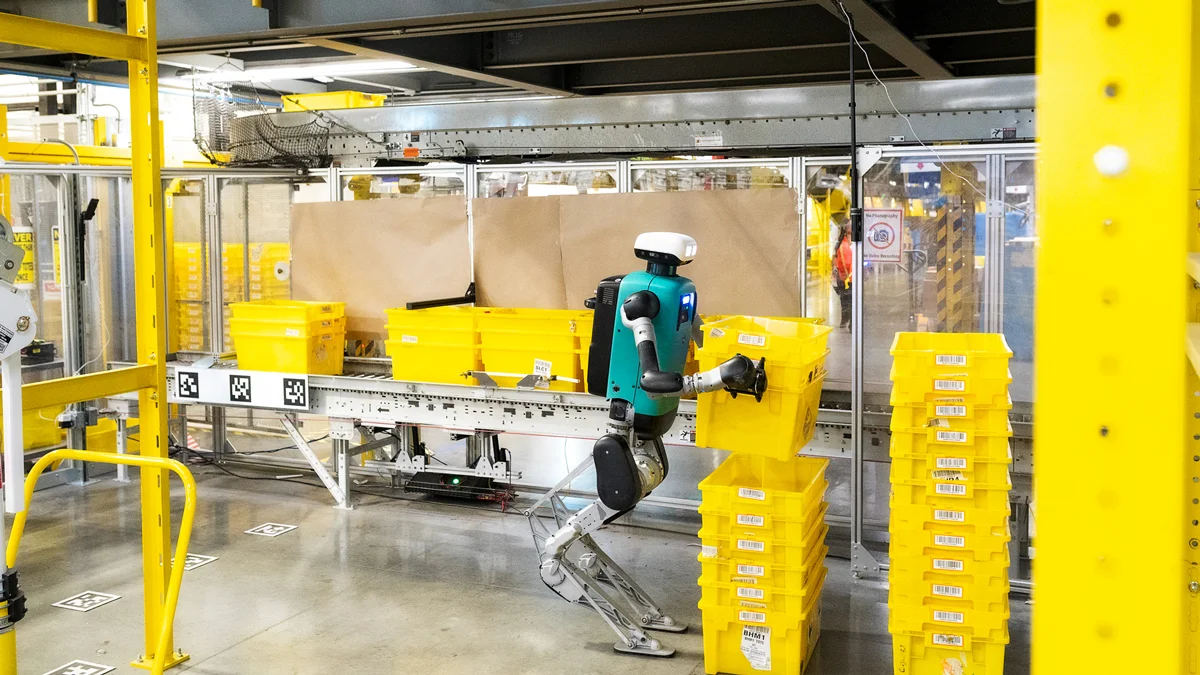 Agility Robotics Secures OSHA-Recognized Safety Approval, Widening the Gap Between ''Demo'' and ''Deployment''
While competitors face scrutiny over safety culture, Agility Robotics announces its Digit robot has passed a critical Nationally Recognized Test Lab (NRTL) field inspection—a boring, necessary step for commercial scale.
-
 Kinisi Robotics Deploys Wheeled Humanoid for Glass Sorting
The NYC and Bristol-based startup takes its first step out of the lab, tasking its wheeled KR1 robot with sorting glass bottles in a UK facility.
-
 In Paris, a New Stealth Startup Named UMA Enters the Humanoid Race
Job listings reveal a new French venture building "intelligent humanoid robots" with a focus on stylized movement and learning-based control, adding to the heating European robotics landscape.
-
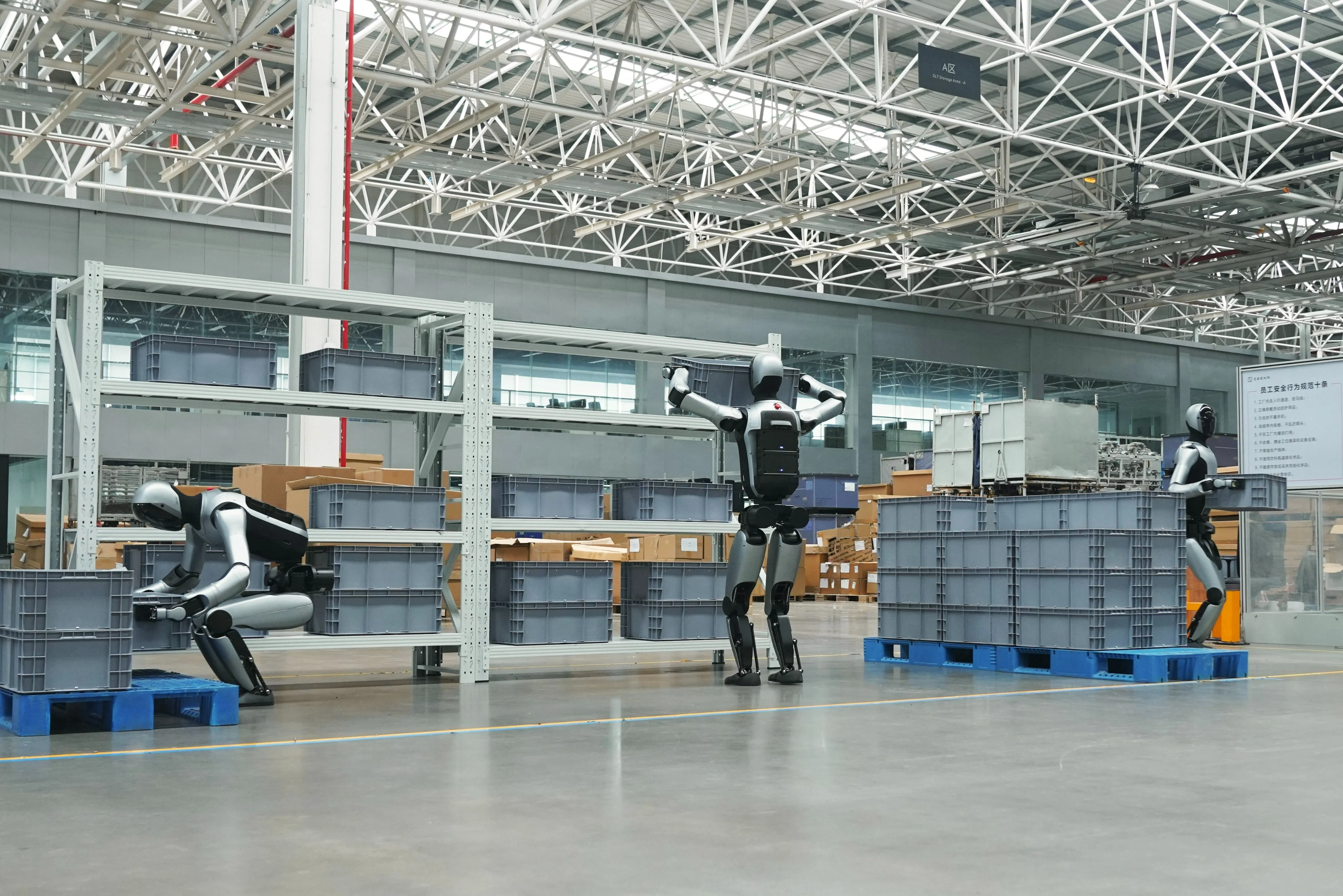 UBTECH Targets 10-Fold Output Jump to 5,000 Humanoids in 2026
Chief Branding Officer Michael Tam outlines an aggressive roadmap to cut unit costs below \$20,000 by 2030, driven by a 90% localized supply chain and surging demand from new government contracts.
-
 Human-robot interaction design retreat
Rick Payne and team / Ai is… Banner / Licenced by CC-BY 4.0. Earlier this year, the HRI Design Retreat brought together experts from academia and industry in the field of design for human-robot interaction (HRI). During the two-day event, which featured hands-on interactive activities, participants explored the future of design for HRI, how this […]
-
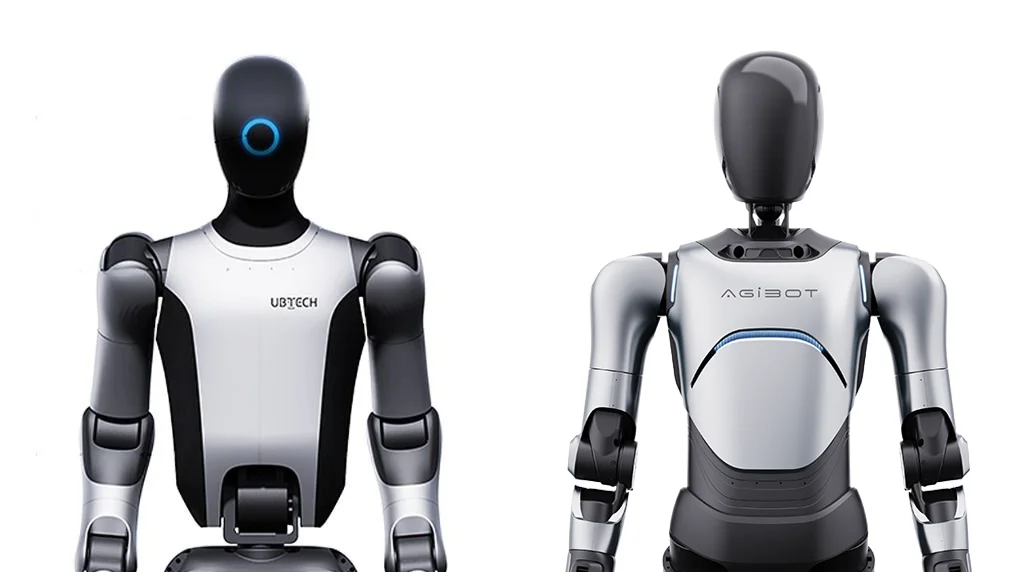 China Drafts ''Dream Team'' for Humanoid Robot Standards, Taps Founders of Unitree and AgiBot to Lead
The Ministry of Industry and Information Technology has released a proposed roster for a new national standards committee, appointing star entrepreneurs alongside tech giants like Huawei and XPeng to define the future of the sector.
-
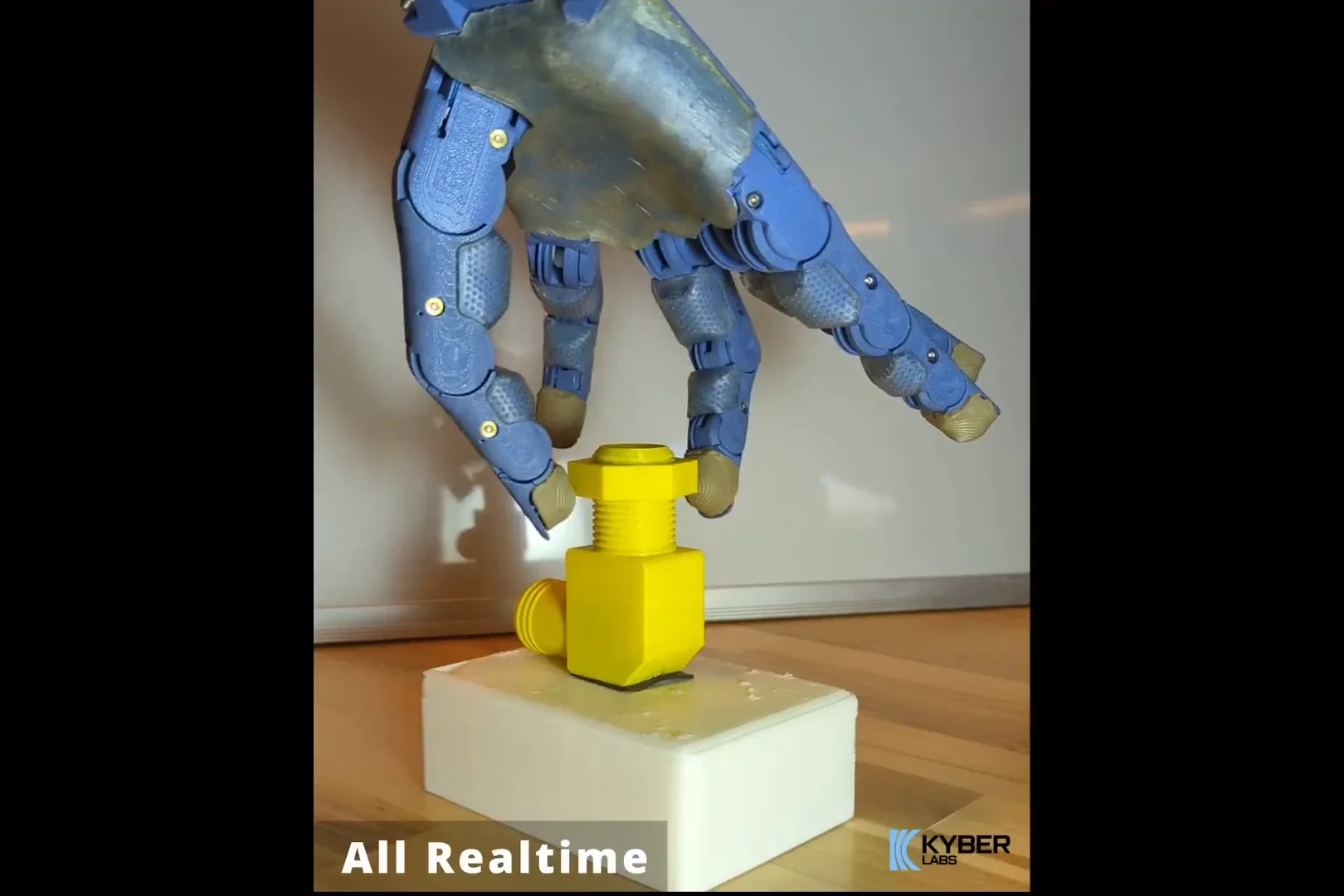 Kyber Labs Emerges with a High-Speed, "Backdrivable" Robotic Hand
A new Brooklyn-based startup, founded by SpaceX and Tarform alumni, is showcasing a robotic hand capable of rapid nut-turning and delicate touch without expensive sensors.
November 24, 2025
-
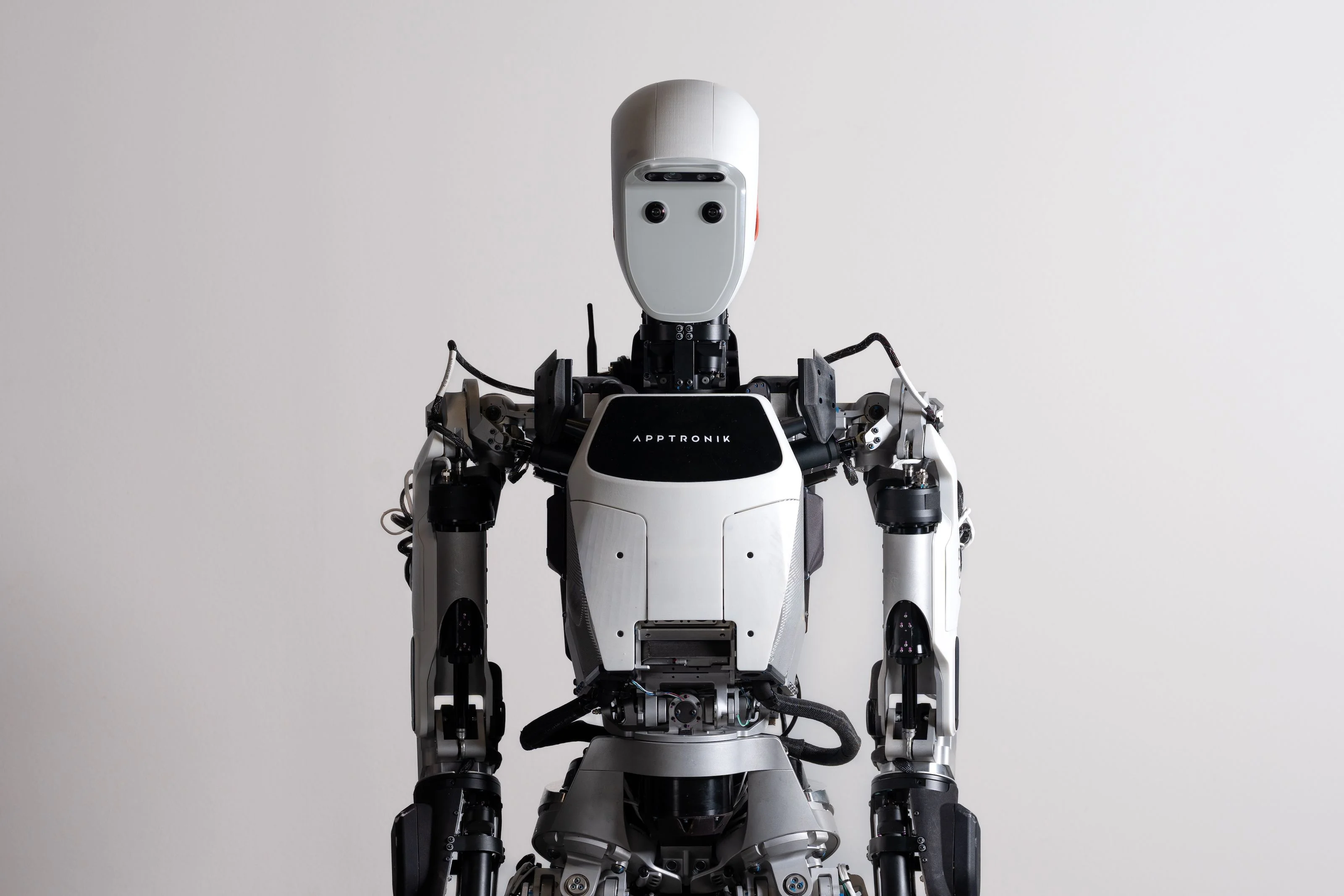 Apptronik CEO Calls Humanoid Robotics the "Space Race of Our Time," Says Fewer Than 5 U.S. Players Are Credible
In a candid interview, Jeff Cardenas outlines the "mainframe to PC" shift in robotics, the geopolitical stakes between the U.S. and China, and why Apptronik’s nearly decade-long head start makes it hard for new entrants to catch up.
-
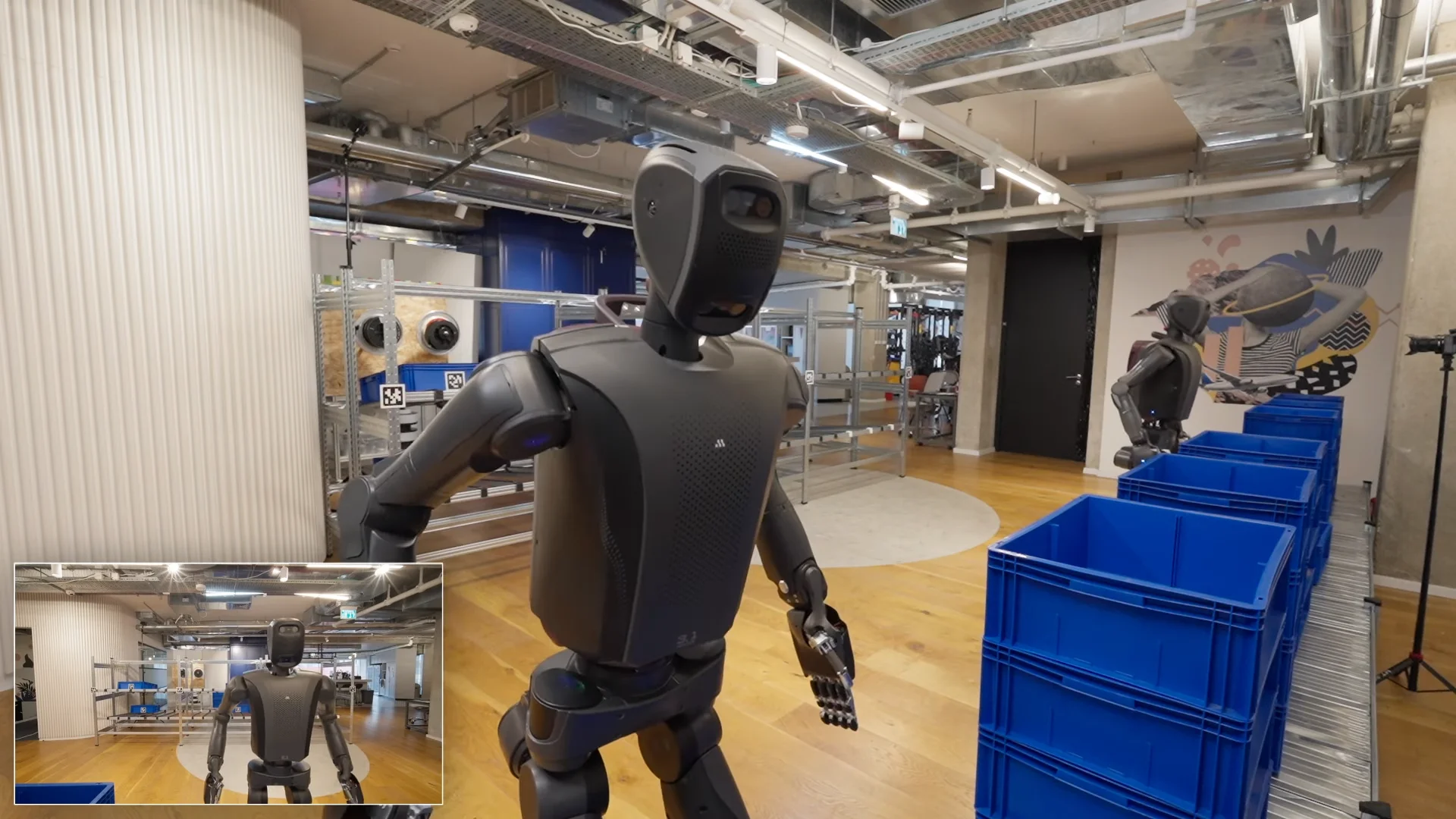 Mentee Robotics Demonstrates Warehouse Autonomy with Dual-Robot ''Uncut'' Demo
The Israeli robotics firm releases unedited footage of two V3 MenteeBots performing continuous logistics tasks, signaling a push toward reliable industrial automation.
-
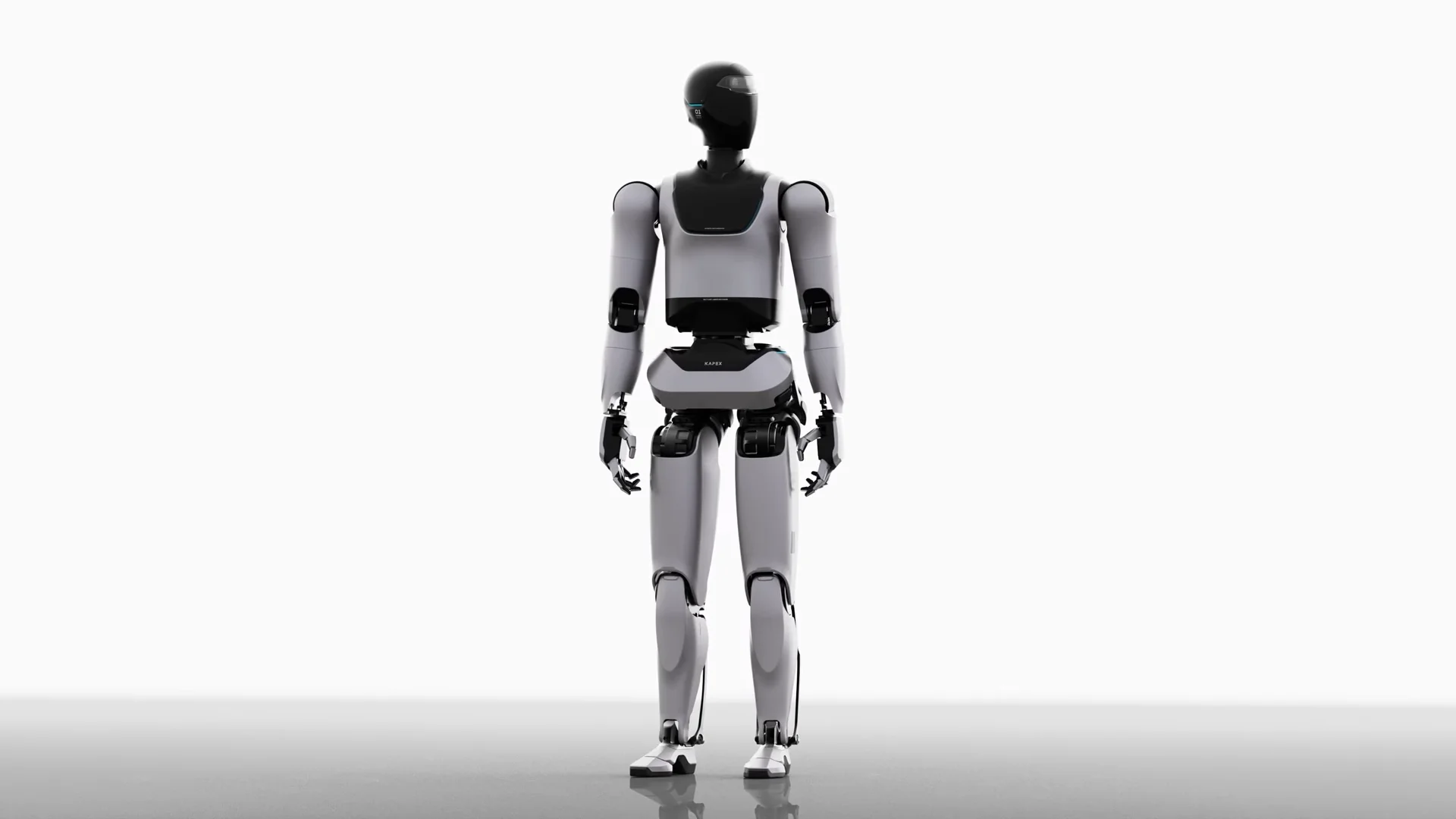 South Korea’s M.AX Alliance Taps Seoul National University to Build AI Models for Humanoids
The government-led manufacturing alliance, comprising Samsung, Hyundai, and LG, aims for humanoid mass production by 2029 through a new R&D partnership with the country’s top university.
-
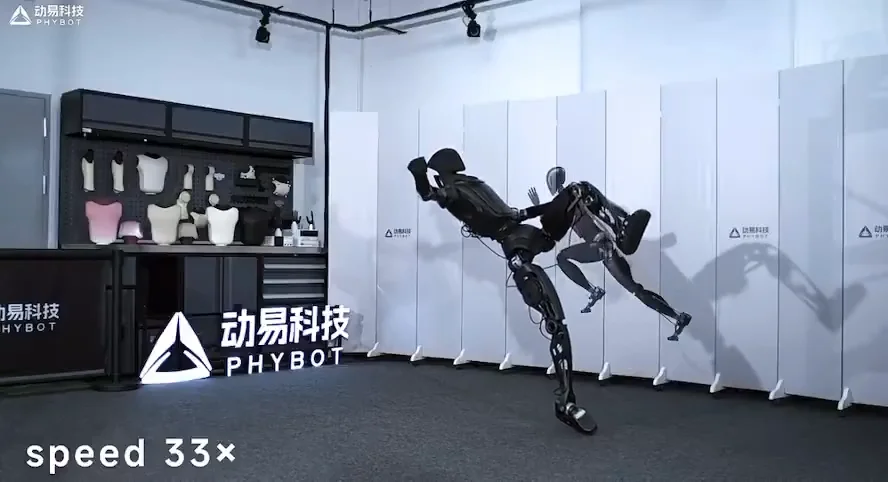 Phybot M1 Debuts with a Backflip and a ‘Most Powerful’ Claim
A new contender from Beijing claims its electric humanoid generates 530 N·m of torque, aiming to undercut competitors with a $42,000 price tag and proprietary "muscle."
-
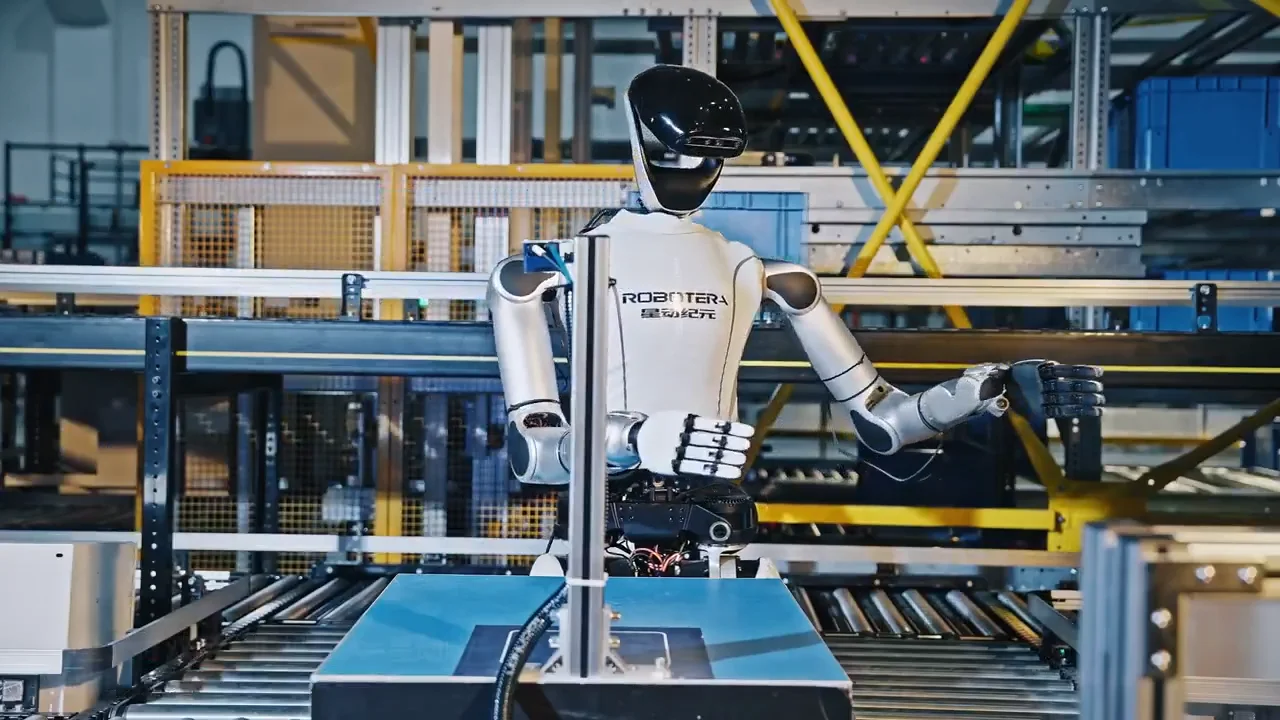 Robotera Secures $140M Series A+ Backed by Automakers Geely and BAIC, Claims $70M in Orders
The Chinese humanoid startup, also known as Star Action Era, has closed a massive Series A+ round led by Geely Capital, signaling strong industrial demand with a reported $70 million order book for 2025.
November 23, 2025
-
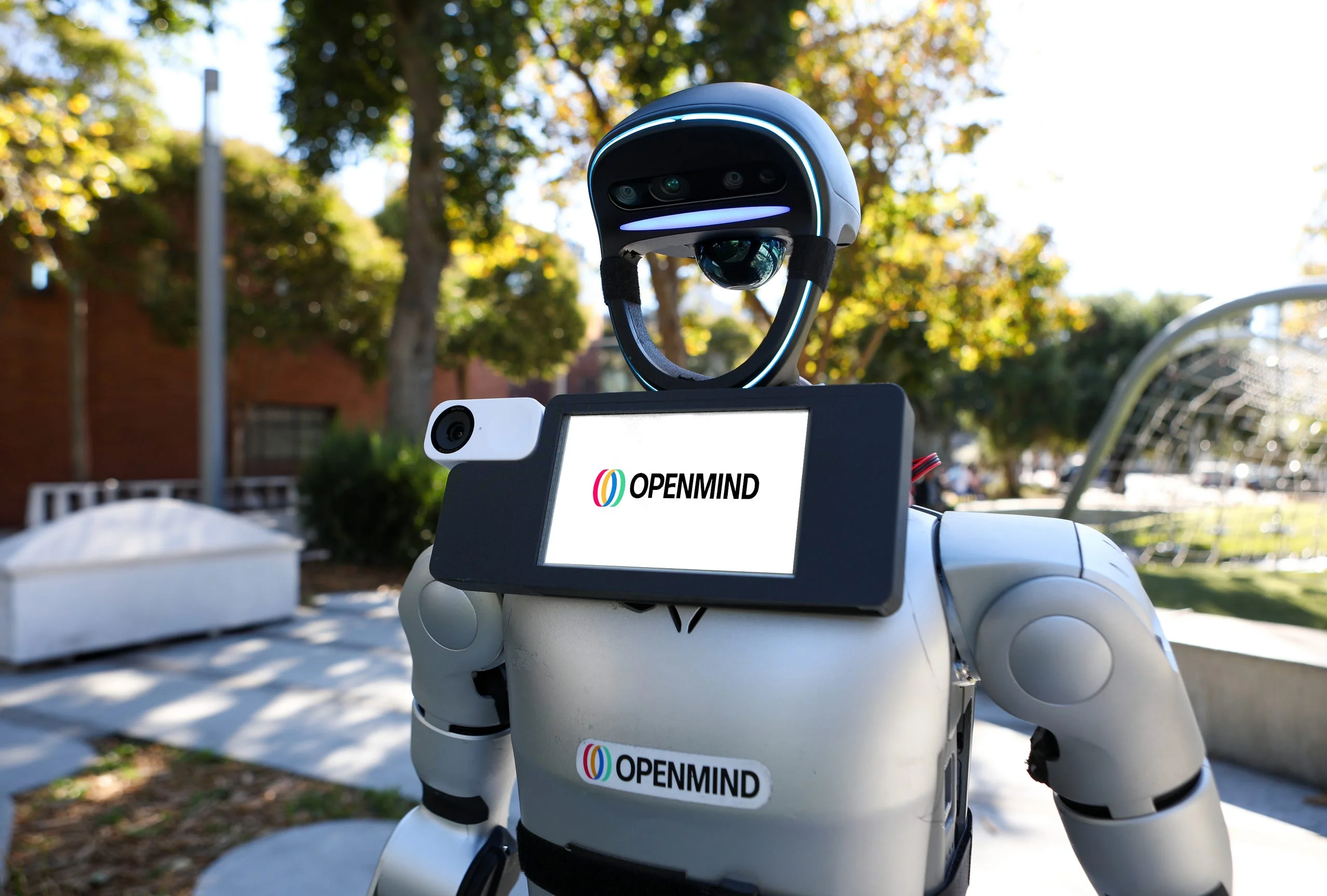 OpenMind Opens Pre-Orders for "BrainPack," Betting on a Universal Nervous System for Robots
Three months after its Series A raise, OpenMind unveils its flagship hardware: a backpack equipped with NVIDIA’s Jetson Thor designed to make third-party robots autonomous.
-
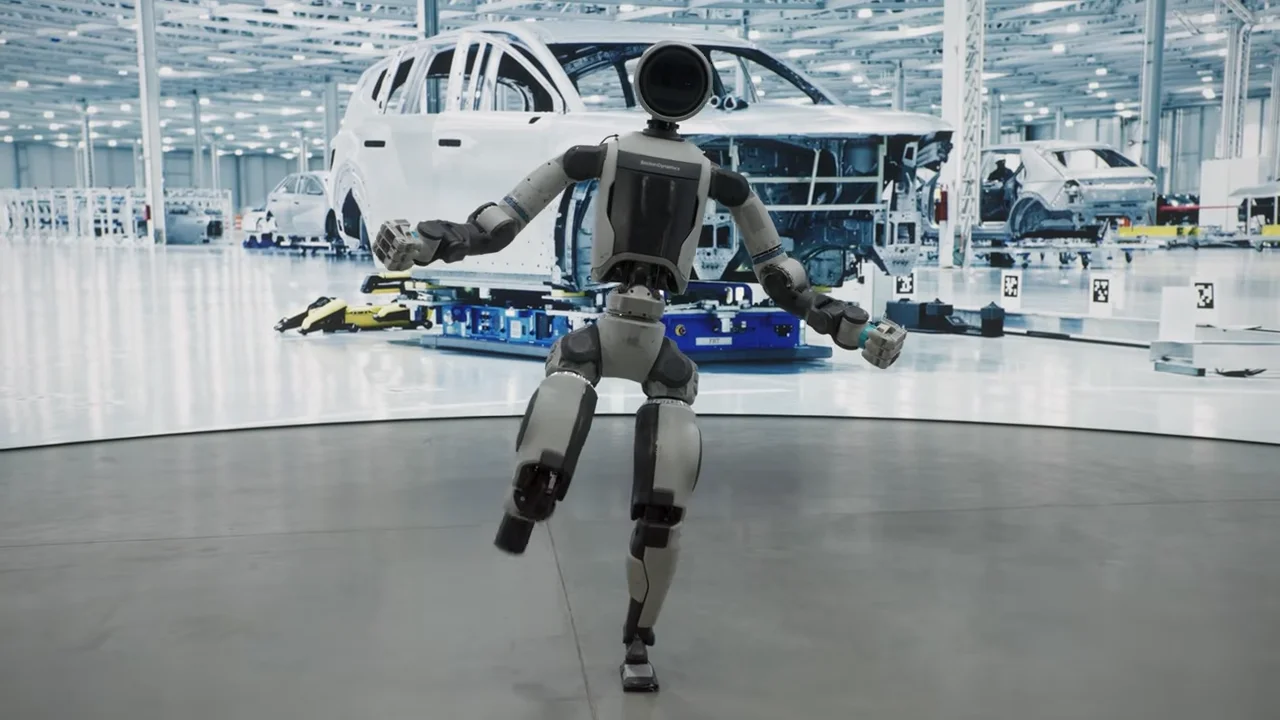 DeepMind Hires Former Boston Dynamics CTO to Build the ‘Android of Robotics’
Google DeepMind has appointed Aaron Saunders, a 23-year veteran of Boston Dynamics, as VP of Hardware Engineering. The move signals a major push to turn Gemini into a universal operating system for physical AI.
-
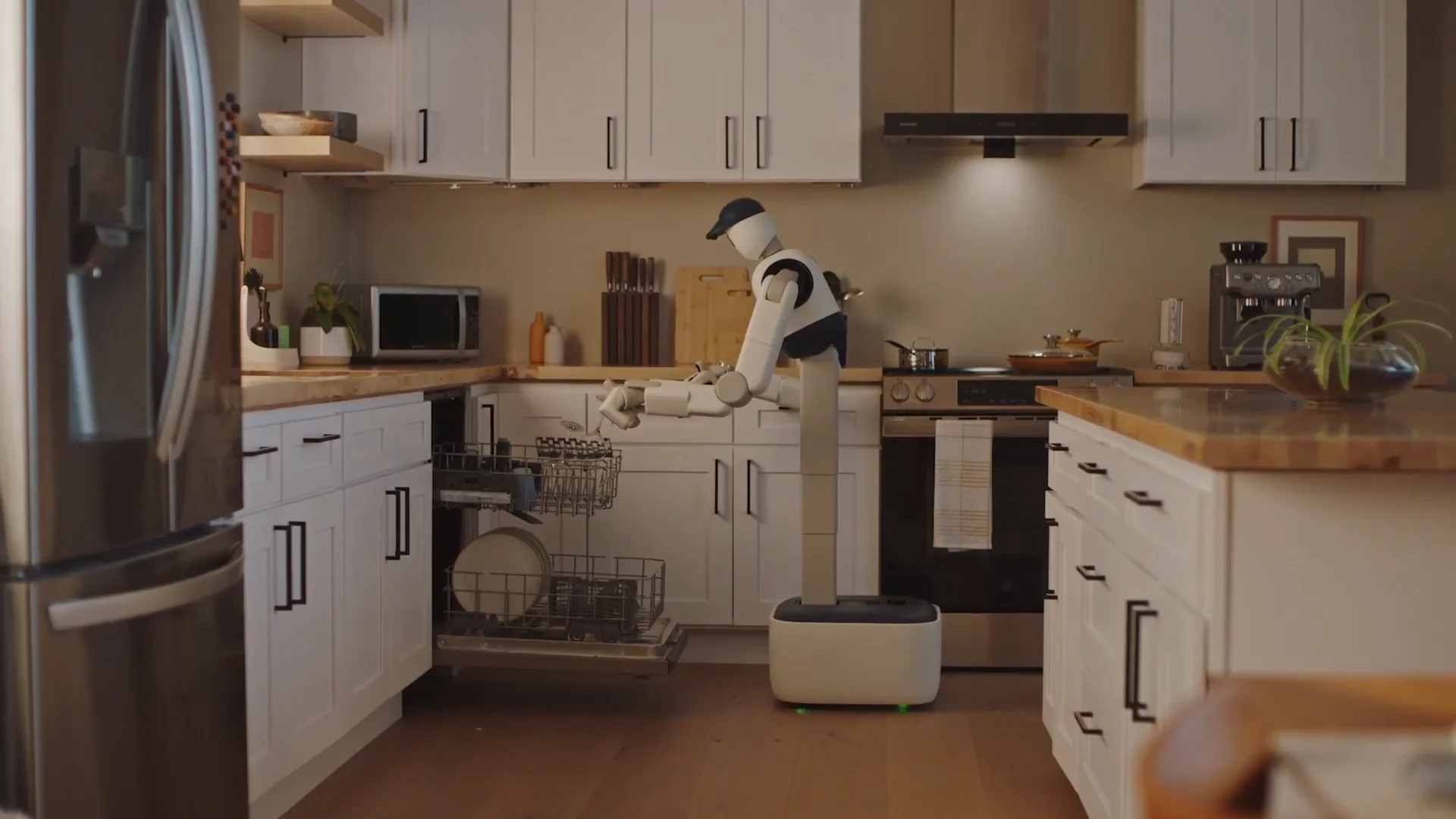 Sunday Robotics Founders on the "GPT Moment" for Physical AI and Breaking the Data Bottleneck
In a new interview, Tony Zhao and Cheng Chi detail their "data-first" philosophy, the end of teleoperation, and why they believe the industry is stuck between "GPT" and "ChatGPT."
November 22, 2025
-
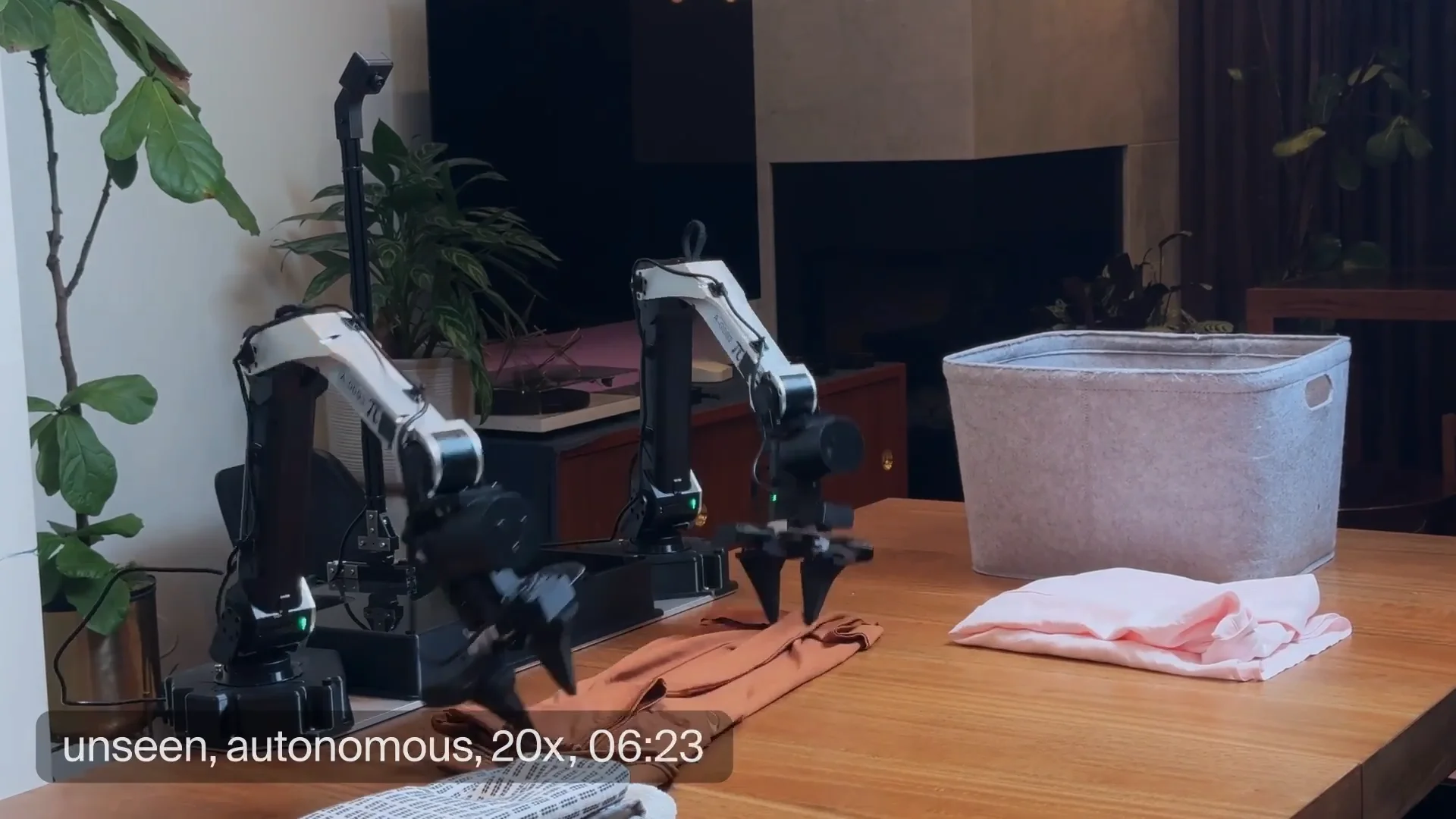 Physical Intelligence Secures $600 Million to Build a Universal Robot Brain, Hitting $5.6 Billion Valuation
The San Francisco startup, backed by CapitalG and Jeff Bezos, is betting on reinforcement learning to solve general-purpose robotics—standing in contrast to hardware-first competitors.
-
 Ex-Safety Head Sues Figure AI, Alleging Retaliation Over "Skull-Fracturing" Robot Risks
A lawsuit filed by Figure’s former safety lead Rob Gruendel alleges he was fired for warning that the company’s robots were powerful enough to kill—a claim that complicates the startup’s aggressive push into the home.
November 21, 2025
- Robotera Unveils "End-to-End" Humanoid Solution to Close Logistics’ Final Automation Gap
Robotera claims a global first with its VLA-powered L7 humanoid, designed to automate the complex "picking" phase in warehouses that AGVs can''t handle.
-
 Robot Talk Episode 134 – Robotics as a hobby, with Kevin McAleer
Claire chatted to Kevin McAleer from kevsrobots about how to get started building robots at home. Kevin McAleer is a hobbyist robotics fanatic who likes to build robots, share videos about them on YouTube and teach people how to do the same. Kev has been building robots since 2019, when he got his first 3d […]
-
 AgiBot’s Expedition A2 Completes 106km Trek, Setting New Bar for Humanoid Endurance
Shanghai-based AgiBot has successfully completed a continuous, 106-kilometer walk from Suzhou to Shanghai with its Expedition A2 humanoid. The feat, verified by Guinness World Records, highlights the company’s "hot-swap" battery technology and aggressive push toward commercial viability.
-
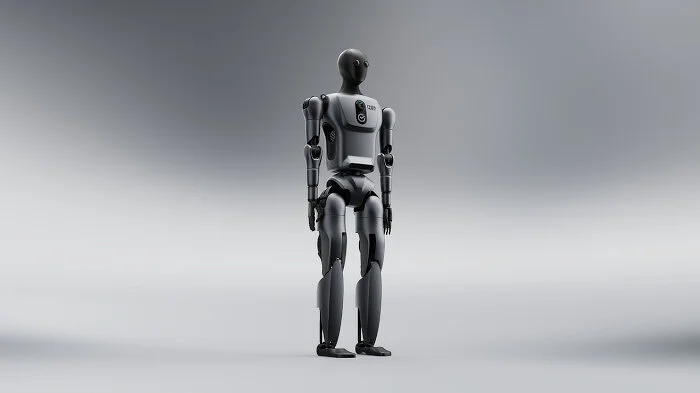 Sber Debuts “Green,” a GigaChat-Powered Humanoid, at Moscow AI Conference
The Russian banking and tech giant unveiled its first anthropomorphic robot, positioning it as a "Physical AI" agent capable of warehouse logistics and social interaction.
November 20, 2025
-
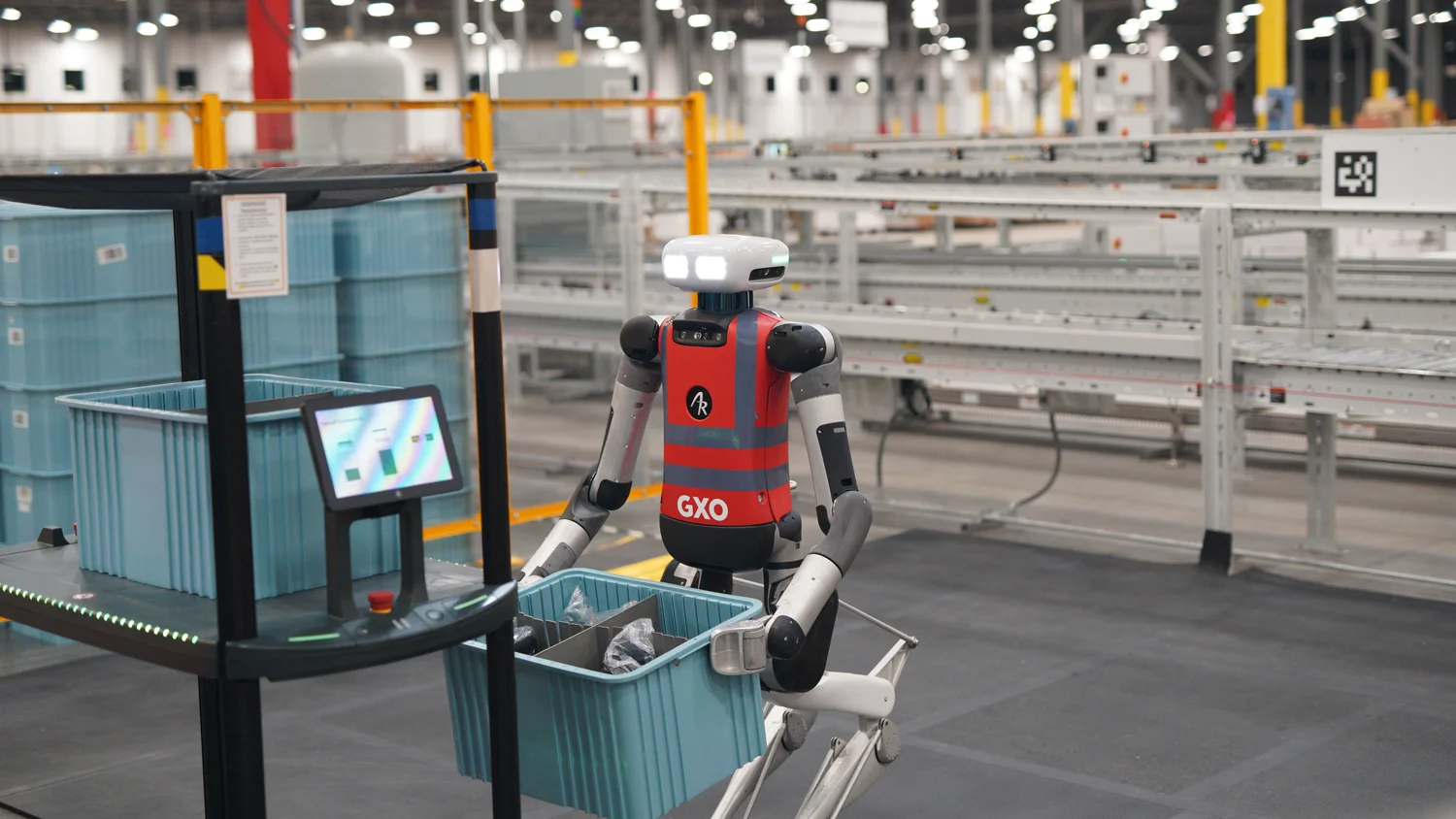 Agility Robotics Hits 100,000 Totes Milestone, Firing a Data-Driven Shot in the Humanoid Wars
Agility Robotics announces its Digit robot has moved over 100,000 totes at GXO Logistics, countering competitor hype with hard operational data.
-
 A Brain in the Alps: Flexion Raises $50M to Build the ''Android'' of Humanoids
Swiss startup Flexion Robotics emerges from stealth with \$50 million in Series A funding, a star-studded team from ETH Zurich and NVIDIA, and a serene video of a Unitree G1 cleaning up the Swiss Alps.
-
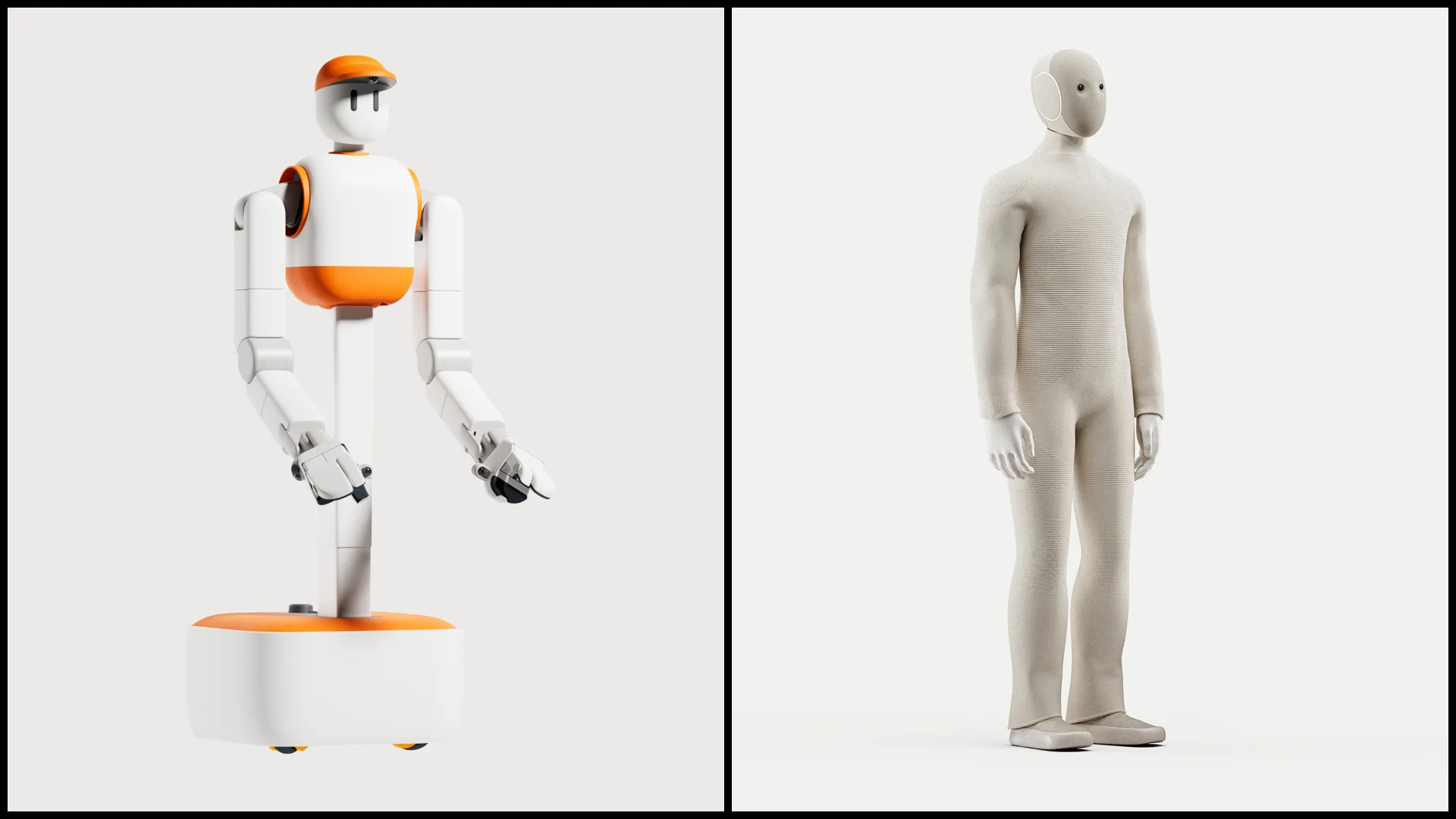 The Appliance vs. The Android: Sunday and 1X Bet on Opposing Futures
Two California startups are racing to solve the household robot, but their approaches couldn''t be more different. We break down the great bifurcation between Sunday Robotics'' utilitarian "Memo" and 1X Technologies'' humanoid "Neo."
-
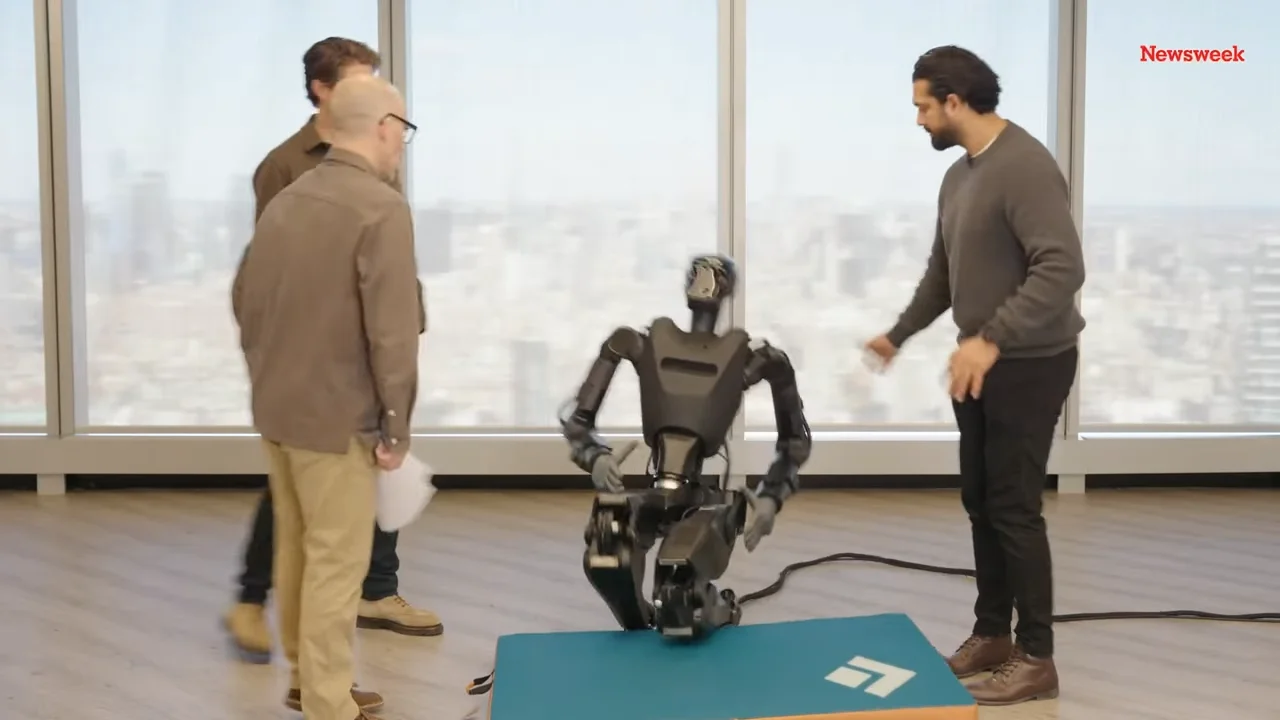 Foundation Robotics Leans Into the "Killer App" — Literally
In a candid new profile, Foundation CEO Sankaet Pathak explicitly embraces the weaponization of humanoid robots, even as a failed demo highlights the gap between battlefield ambitions and engineering reality.
November 19, 2025
-
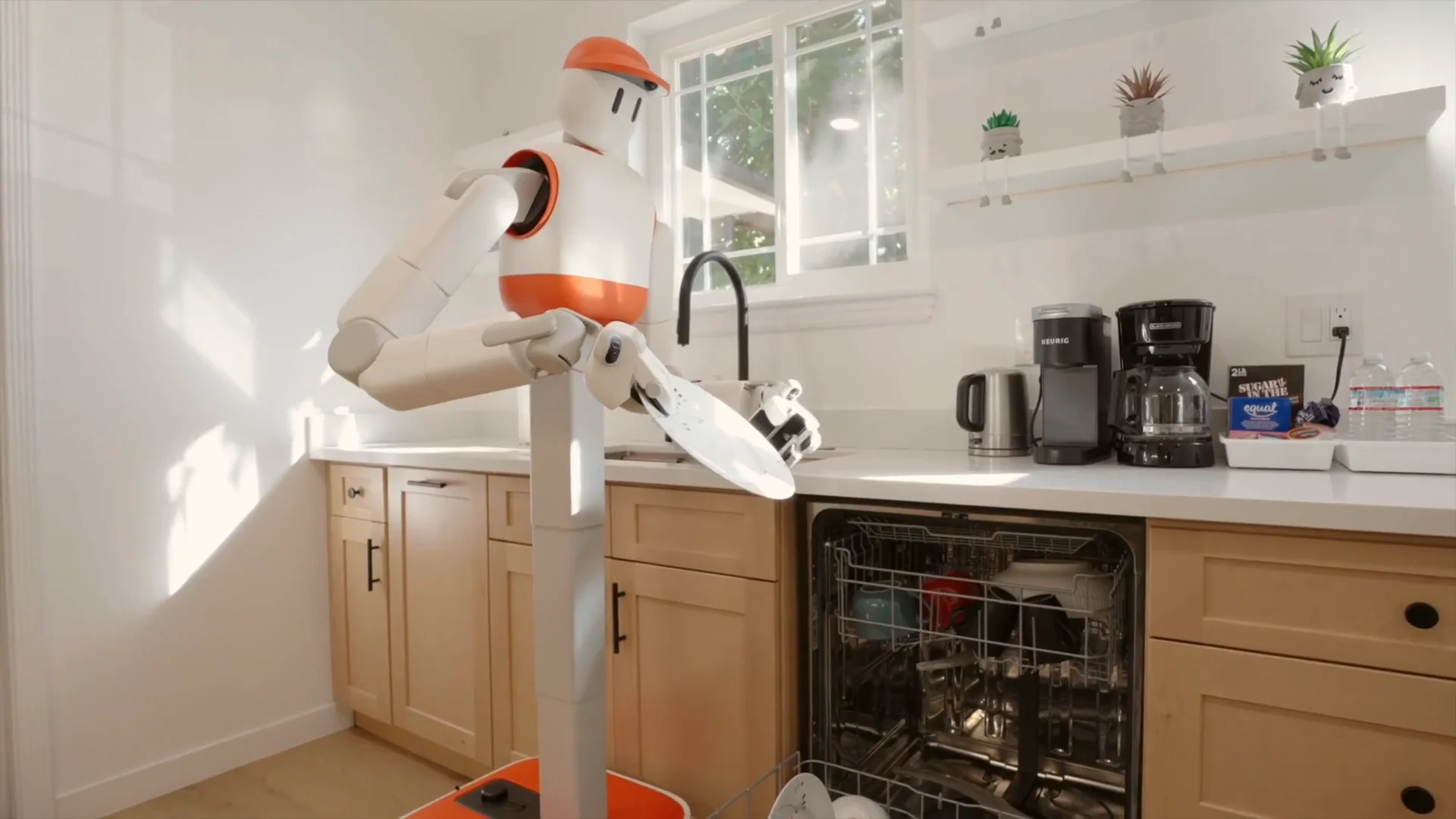 Sunday Unveils "Memo": A Wheeled, Domestic Robot That Learns From $200 Gloves
Sunday Robotics has revealed "Memo," a wheeled home robot powered by the "ACT-1" foundation model. Bypassing traditional teleoperation, the company is training its AI using human data captured via low-cost gloves, targeting a 2026 beta release.
-
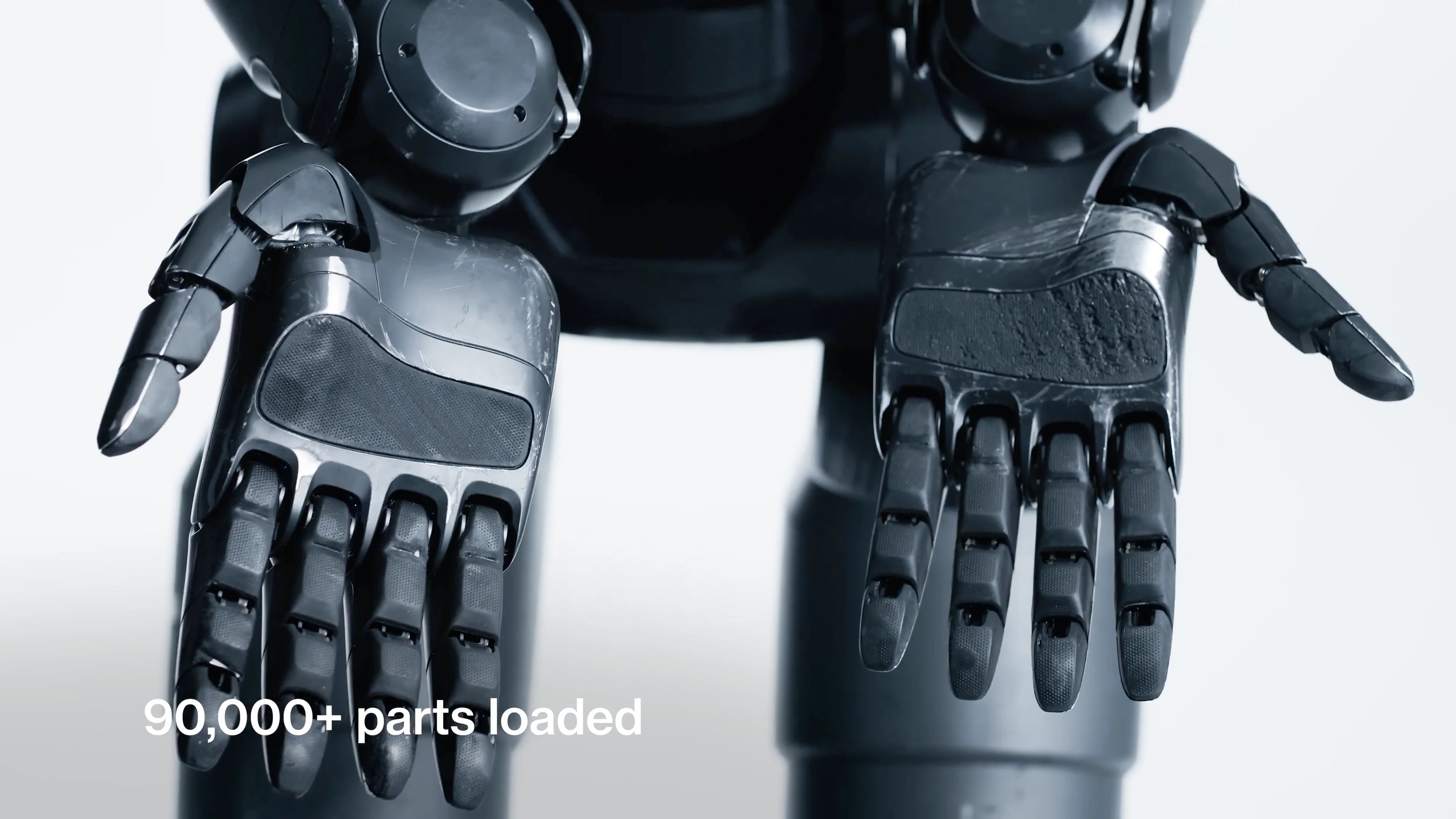 Figure Retires the F.02: ''Battle-Scarred'' Robots, 30,000 BMWs, and Hard Lessons Learned
After an 11-month deployment at BMW''s Spartanburg plant, Figure is retiring its F.02 fleet. The company released detailed performance data and footage of the worn, grimy hardware that contributed to the production of 30,000 vehicles.
-
 Scott Walter: Why Humanoid Robots Just Need to Be "Good Enough"
From pioneering 3D robot simulation to analyzing Tesla’s Optimus today, Dr. Scott Walter has spent four decades mapping the intersection of virtual design and physical reality. We sat down with the "Humanoid Botangelist" to discuss the "Fermi paradox" of robotic hands, the safety myths of home robots, and why the industry is finally ready to solve problems posed in 1985.
-
 ACM SIGAI Autonomous Agents Award 2026 open for nominations
Nominations are solicited for the 2026 ACM SIGAI Autonomous Agents Research Award. This award is made for excellence in research in the area of autonomous agents. It is intended to recognize researchers in autonomous agents whose current work is an important influence on the field. The award is an official ACM award, funded by an […]
-
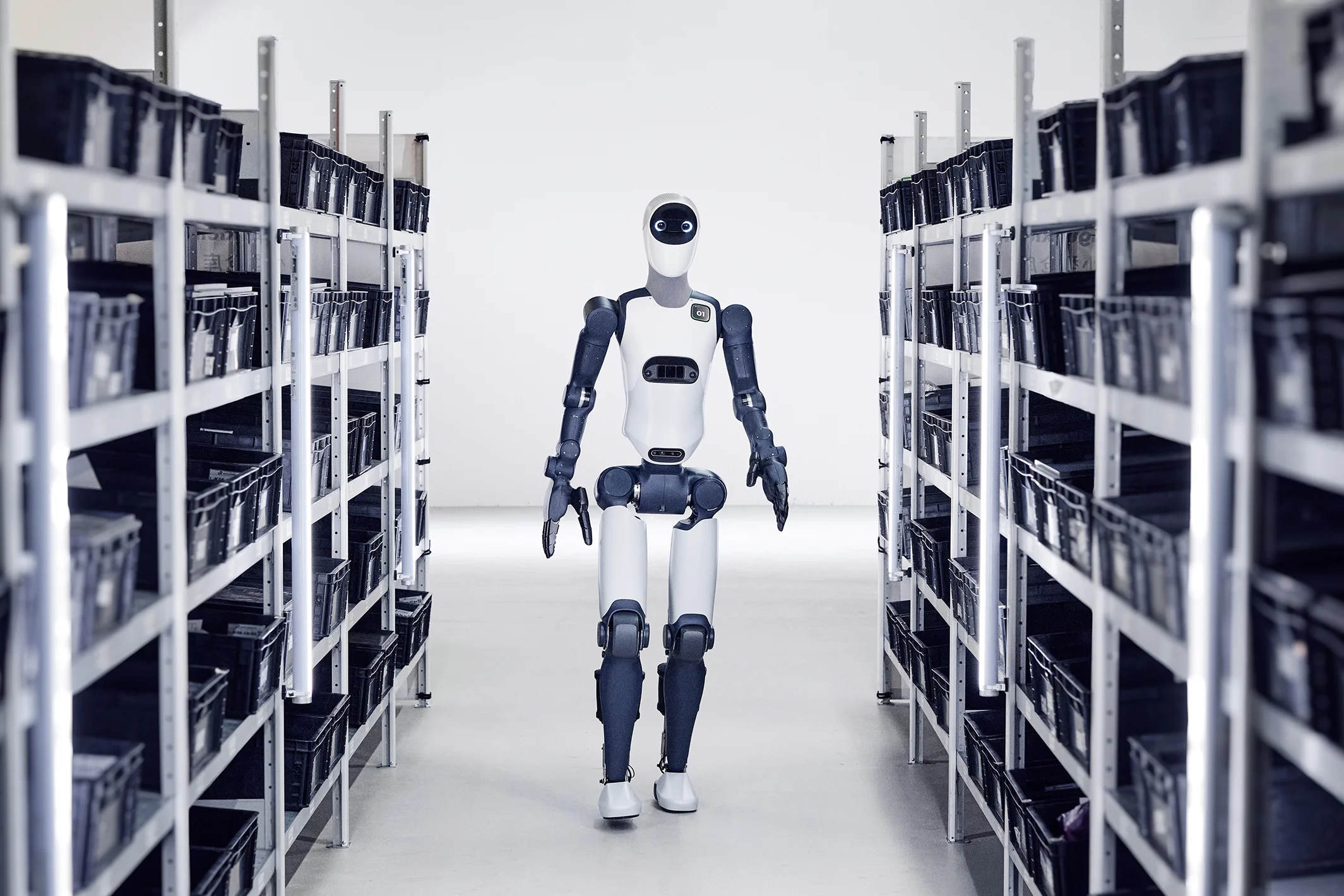 Agile Robots Unveils ‘Agile ONE,’ Entering the High-Stakes Battle for Humanoid Dexterity
The Munich-based unicorn joins the industrial humanoid race with a focus on tactile precision, landing squarely in the middle of a global engineering debate over how to build the perfect robotic hand.
November 18, 2025
-
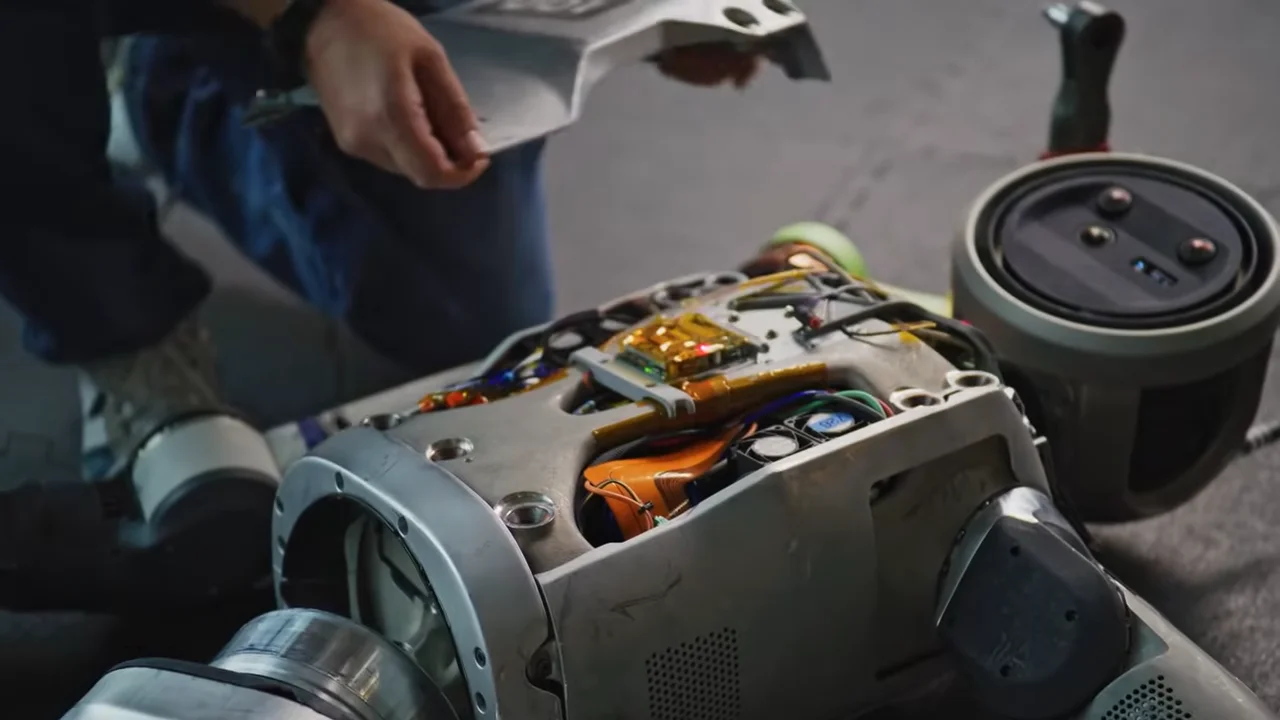 Boston Dynamics Executives Offer a Reality Check: The Humanoid Industry Is Still in ‘Phase One’
In a candid new discussion, leaders from the Atlas team detail the "bitter lessons" of hardware reliability, the internal debate over legs versus wheels, and why automotive manufacturing is the ultimate "manipulation complete" test for AI.
-
 1HMX Enters the Humanoid Data Race with a High-Fidelity Teleoperation Rig
The new Nexus NX1 bundles HaptX gloves and Virtuix treadmills into a "turnkey" system, betting that realistic haptic feedback is the missing link for training robotic dexterity.
-
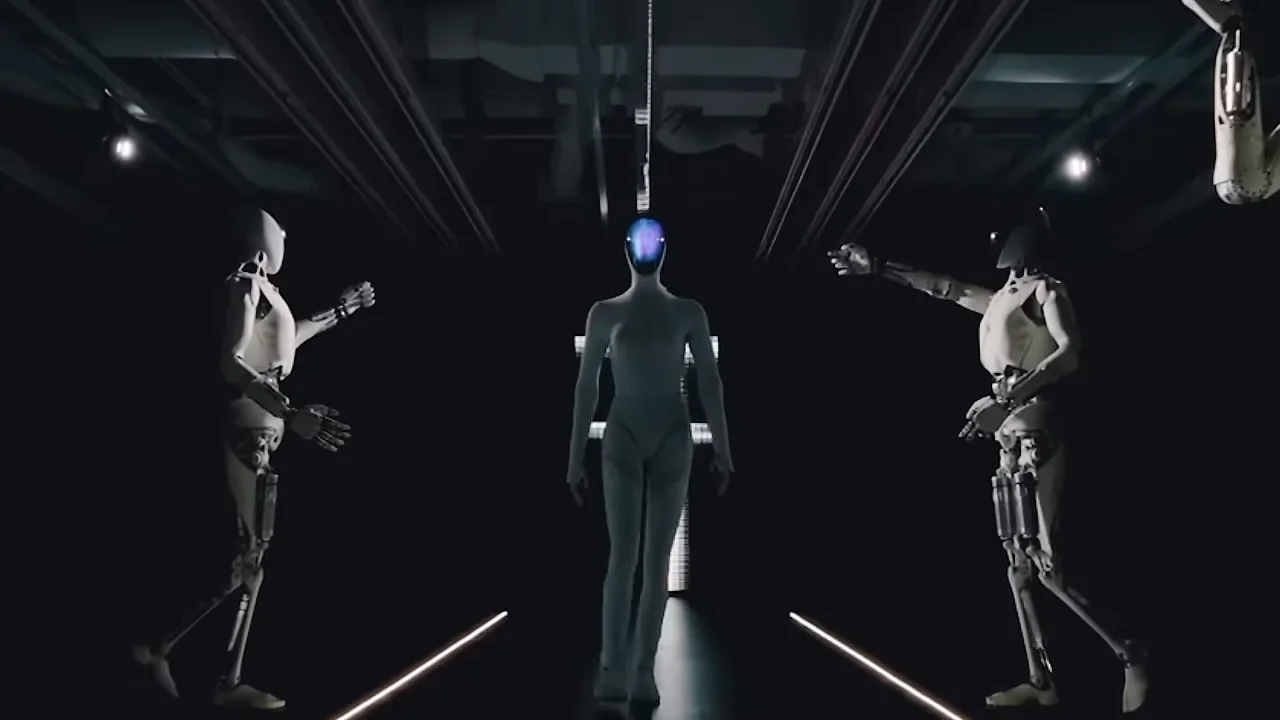 Xpeng Sets 2026 Target for Mass-Produced ''Iron'' Robot, Eyes 1 Million Units by 2030
During its Q3 earnings call, Xpeng CEO He Xiaopeng confirmed the ''Iron'' robot will enter mass production in late 2026, a timeline that places it in a direct race with Tesla''s Optimus.
-
 Generations in Dialogue: Multi-agent systems and human-AI interaction with Professor Manuela Veloso
Generations in Dialogue: Bridging Perspectives in AI is a new podcast from AAAI featuring thought-provoking discussions between AI experts, practitioners, and enthusiasts from different age groups and backgrounds. Each episode delves into how generational experiences shape views on AI, exploring the challenges, opportunities, and ethical considerations that come with the advancement of this transformative technology. […]
-
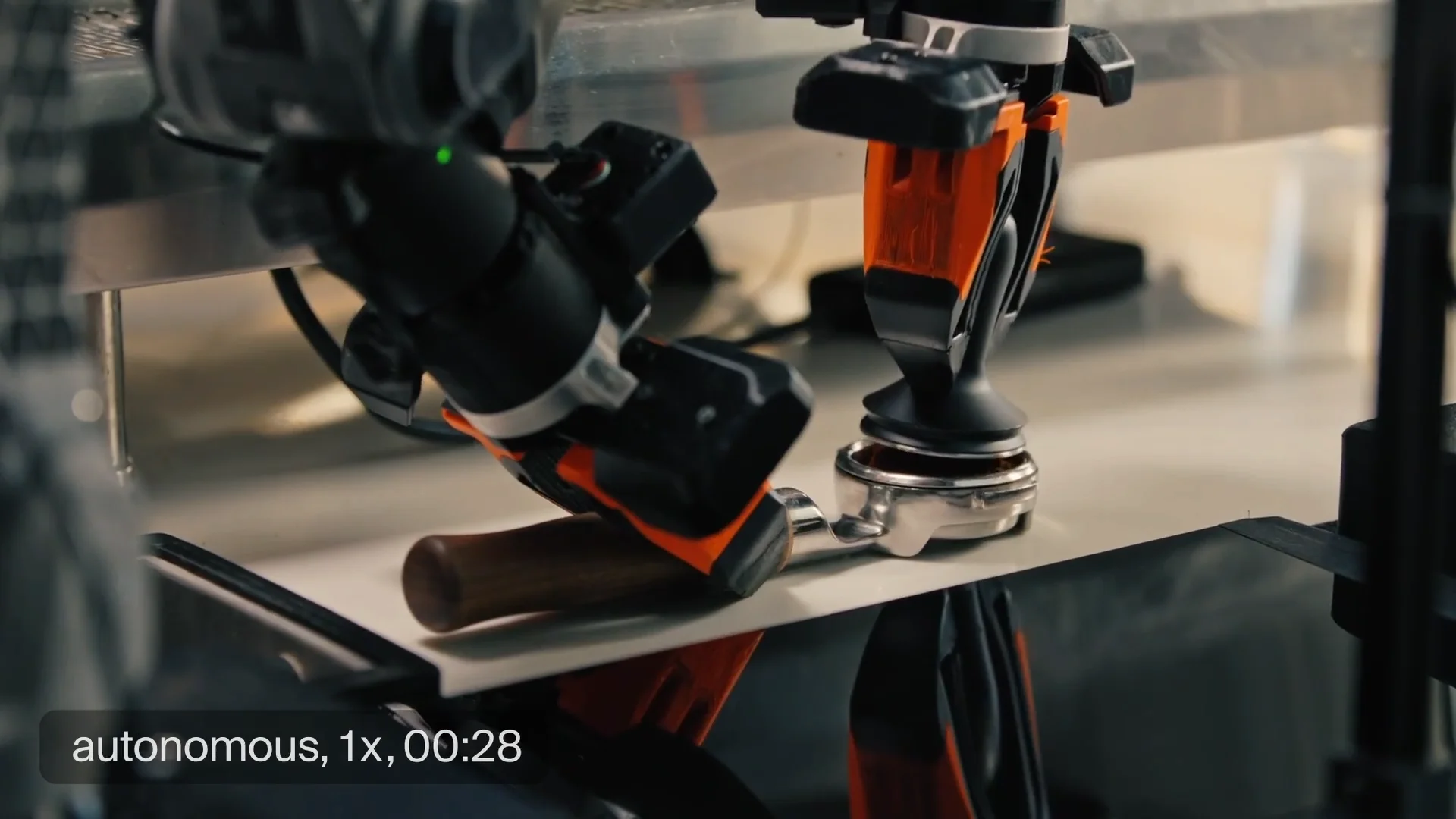 Physical Intelligence Claims ‘RL is Back’ With New Model That Learns From Its Own Mistakes
Physical Intelligence has unveiled π*0.6, a new VLA model that utilizes a training method called "Recap." By combining human demonstrations with autonomous reinforcement learning, the company claims to have doubled performance throughput on complex tasks like laundry folding and espresso making.
-
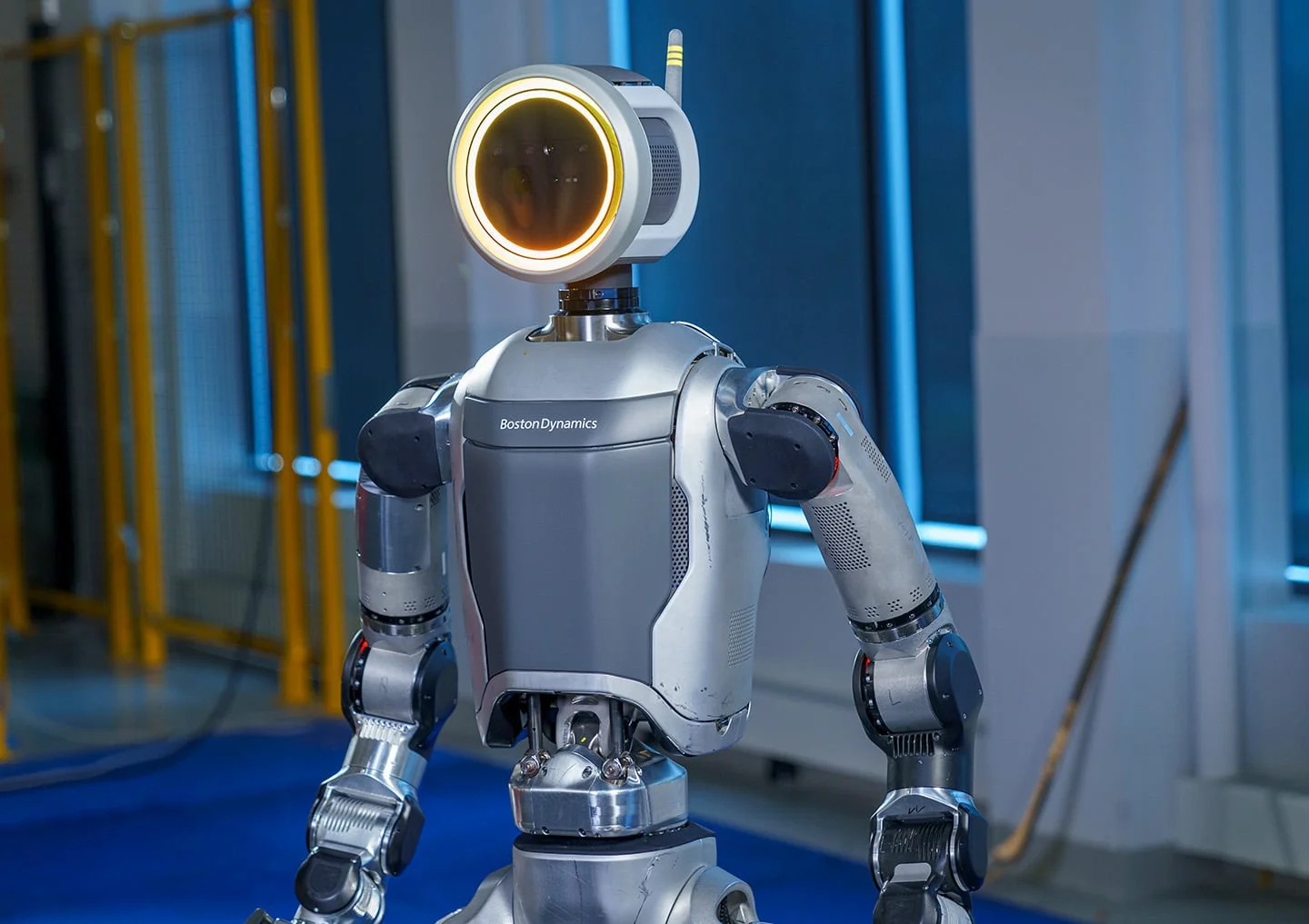 Hyundai Motor Group Details Massive KRW 125.2 Trillion Investment, Targeting Robotics and ''Physical AI'' Infrastructure
Hyundai Motor Group is committing KRW 50.5 trillion to future technologies, including plans for a new AI data center, a "Physical AI Application Center," and a dedicated robotics manufacturing and foundry facility.
November 17, 2025
-
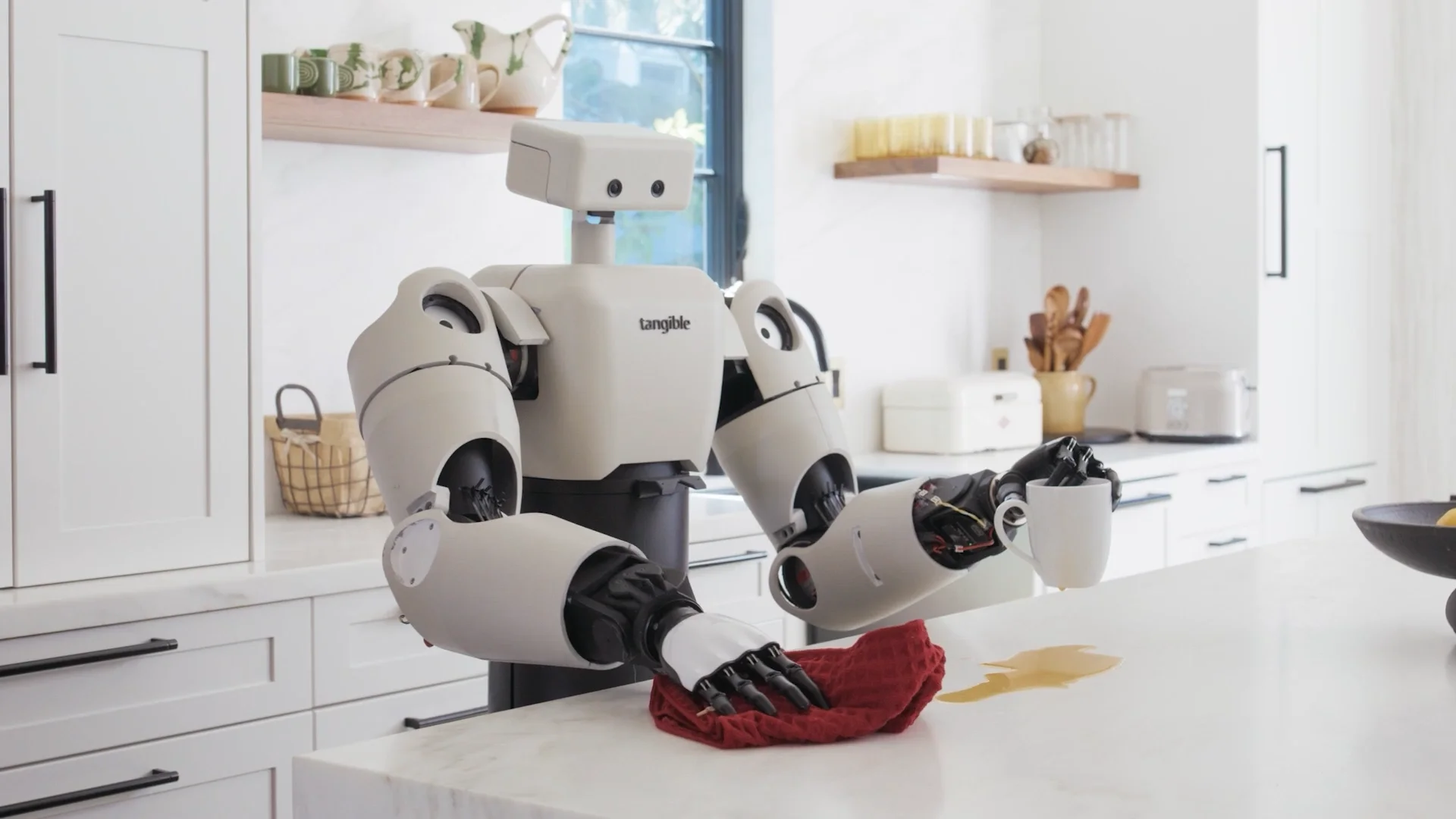 Meet Eggie: Tangible Robotics Joins the Wheeled-Humanoid Race, Betting on Dexterous Hands
Just days after Sunday Robotics' reveal, Tangible Robotics has emerged from stealth with "Eggie," a wheeled home robot that shares a "full stack" philosophy but makes a different bet on hardware: fully dexterous, human-like hands.
-
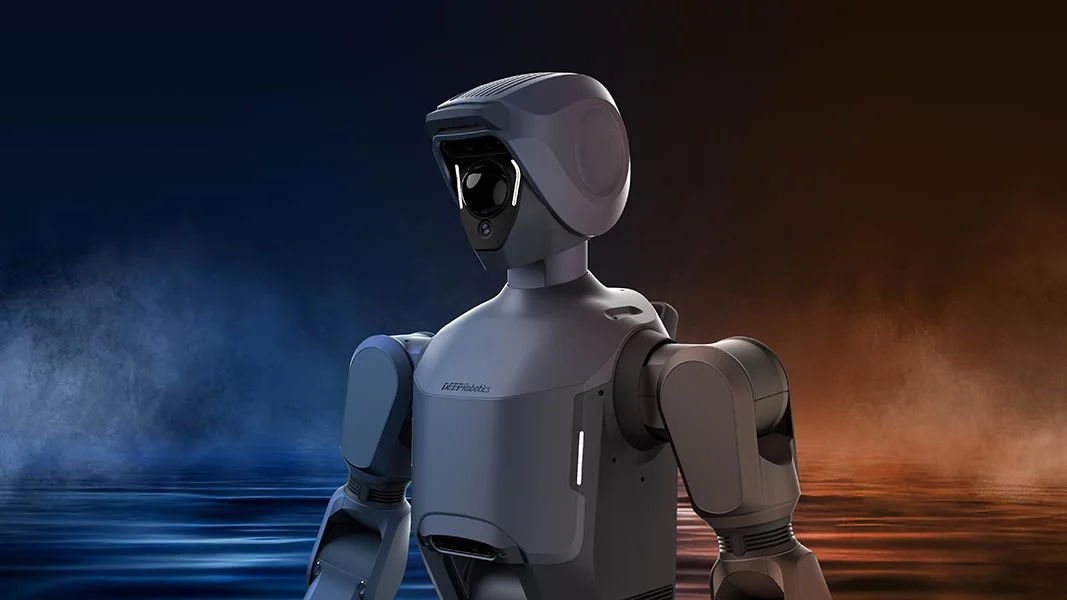 Deep Robotics Joins IPO Rush, Capping Quadruped Success with Humanoid Ambition
The quadruped robotics specialist completes a key corporate restructuring, signaling it is the latest major Chinese firm to prepare for a public offering as it expands into the humanoid market.
-
 Sunday Robotics' Third Teaser Reveals "In-House" Dual-Gripper and a Wheeled, Non-Humanoid Body
In its most significant reveal yet, Sunday Robotics'' third video shows a wheeled robot with a vertical lift. A custom, dual-gripper end-effector—built "entirely in-house"—is shown performing a complex two-glass pickup, revealing a "utility-first" strategy that's a major departure from the humanoid race.
-
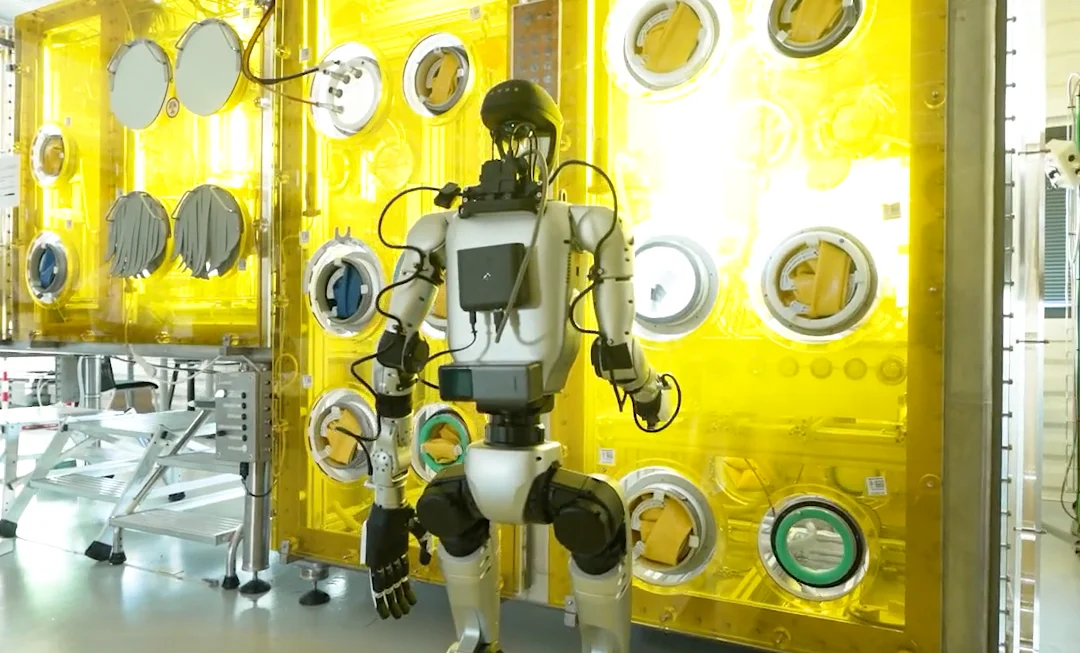 Capgemini and Orano Deploy Humanoid Robot ''Hoxo'' for Nuclear Operations
Nuclear materials giant Orano and tech partner Capgemini are testing a humanoid robot, Hoxo, at a French facility. The project, which uses a Unitree G1, aims to enhance safety and performance in sensitive industrial environments.